

1. Introduction
1.1 Origin of distiller's grains
Distiller's grains, which is also known as vinasse, are a significant by-product generated during the production of ethanol, alcoholic beverages, vinegar, and biofuels, representing an important biomass resource. The classification of distiller's grains exhibits pronounced regional divergence, particularly between China and other major producing countries, reflecting systematic differences in feedstock composition, fermentation and distillation technologies, biorefinery integration models, and national policy frameworks for biomass utilization.
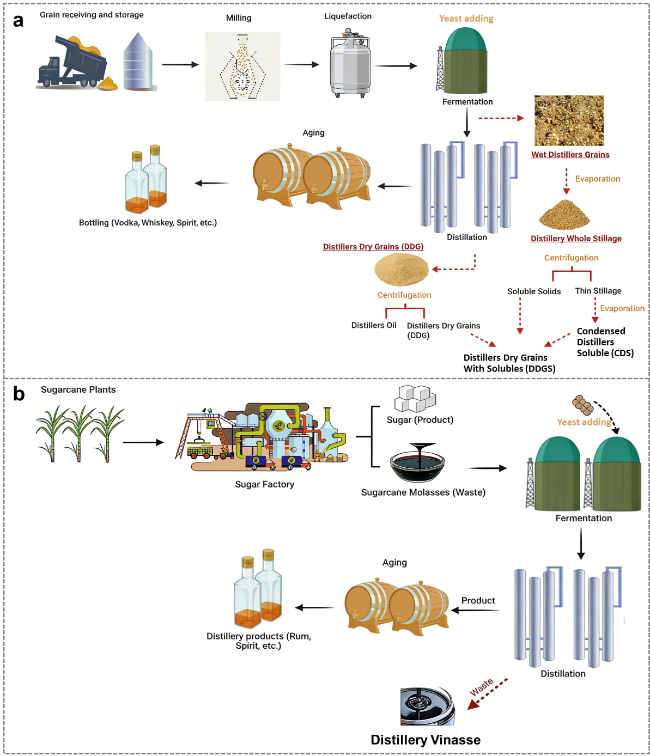
Figure 1. (a) Distillery industries and by-products (Distiller's Grains and Distillery Stillage). (b) Distillery industries and by-products (Distillery Vinasse) [1]. |
In other countries, distiller's grains are primarily produced through two pathways. As shown in Figure 1a, dry milling is commonly used in European and American countries. In this process, cereal grains such as corn, barley, and wheat are first crushed, liquefied, and subjected to biological fermentation [1,2]. The starch is enzymatically hydrolyzed into sugars, which are then fermented by yeast to produce ethanol and carbon dioxide. After ethanol is extracted via distillation, the remaining wet material is referred to as wet distiller's grains (WDG). This WDG is subsequently centrifuged to separate the solid residue from the liquid fraction, known as thin stillage. Thin stillage is then concentrated via thermal evaporation to recover soluble solids, which are processed into condensed distiller's soluble (CDS). Alternatively, WDG may undergo direct thermal drying to yield dried distiller's grains (DDG).
In the United States, approximately 90% of distiller's grains are derived from corn-based dry-mill fuel ethanol production. Owing to their high protein (27-30 wt%) and dietary fiber content, distiller's grains are widely employed as nutrient-dense feed ingredients in ruminant and monogastric livestock production systems, supported by a mature, globally integrated commercial trading infrastructure [3]. In the European Union (EU), significant attention is given to the resource utilization of winemaking by-products. The annual output of vinasse is considerable. For instance, in 2022, the EU wine industry produced approximately 525 million liters of ethanol, corresponding to the generation of about 6.565 billion liters of distiller's grains as by-products. The high moisture content of these by-products poses substantial challenges for storage, transportation, and further resource utilization [4,5].
Brazil is one of the leading global producers of sugarcane [6]. Distiller's grains are generally generated by a sugarcane-alcohol co-production process, as illustrated in Figure 1b. The process begins with the crushing and purification of sugarcane, yielding sucrose as the primary product and sugarcane molasses as a major by-product. This molasses serves as the raw material for alcohol production, in which sugars are converted into ethanol through yeast-induced fermentation. The resulting fermentation broth is treated by distillation, and the ethanol components are then separated and concentrated. The obtained distillate is further refined into alcohol products through an aging process[7]. The residual liquid remaining after the distillation process is known as alcohol waste or distillery vinasse. It is a dark brown solid-liquid residue with a pungent odor, containing water, a high concentration of organic substances such as protein, cellulose, hemicellulose, lignin, residual starch, and yeast, and inorganic ions. Their output is substantial, with approximately 10 to 15 liters generated per liter of ethanol produced [8].
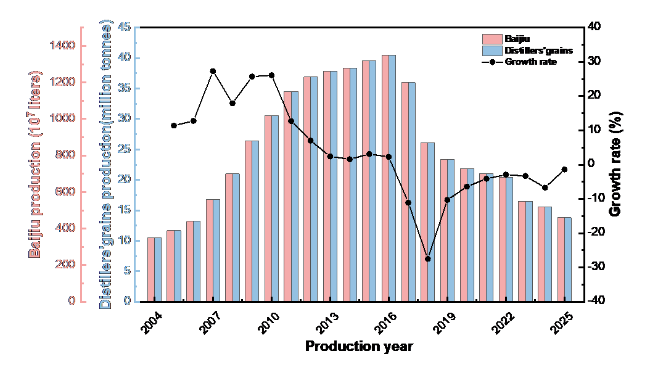
Figure 2. Annual output of Chinese Baijiu and distiller's grains, between 2004 and 2025(Data source: National Bureau of Statistics of China). |
In China, distiller's grains are predominantly generated as a co-product of Baijiu production, a traditional solid-state fermentation process which is a unique Chinese liquor manufacturing process. As one of the world’s six internationally recognized distilled spirits, Baijiu functions not only as a culturally embedded alcoholic beverage but also as a vehicle for dietary traditions and regional gastronomic identity [9]. Chinese Baijiu encompasses a variety of flavor styles, with typical representatives including Maotai, Luzhoulaojiao, Wuliangye, and Fenjiu. As shown in Figure 2, Baijiu production and consumption experienced steady growth from 2004 to 2016. Although a slight decline was observed from 2017 to 2025, overall output has remained substantial, resulting in the generation of a significant quantity of distiller's grains [10]. The production process of Chinese Baijiu is shown in Figure 3. The sorghum, wheat, and corn are used as raw materials. After cooking, cooling, and mixing with Daqu starter, jiupei is formed, which is then distilled to produce Baijiu. Meanwhile, the distiller's grains are obtained as the main by-product. The annual output of by-products is more than 100 million tons, mainly in the form of wet distiller's grains (wet DGS) with high moisture content and easy to decay. In general, the classification and utilization of distiller's grains are strongly influenced by the regional raw material availability, industrial model, and environmental policies [11].
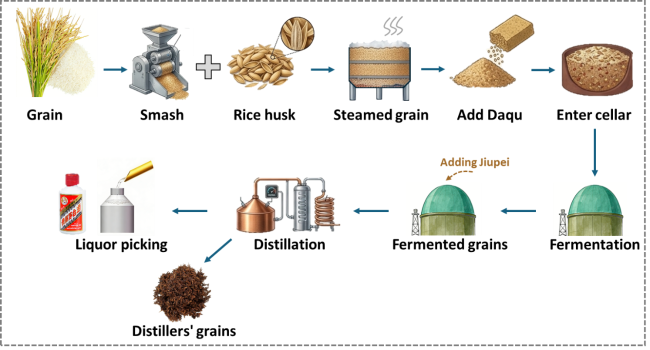
Figure 3. The production process of Chinese Baijiu. |
1.2 Basic properties of distiller's grains
The fundamental properties of distiller's grains are affected by the types of raw materials, production techniques, and regional variations, which show a high degree of complexity. Distiller's grains typically exhibit a dark brown appearance and a characteristic pungent odor. As shown in Table 1, the pH ranges from 2.9 to 5.3 depending on the raw materials, reflecting an acidic nature. The moisture content of distiller's grains is generally high, while the solid content varies significantly with raw materials. For example, the total solid content in sugarcane juice vinasse ranges between 27-81 kg·m-3, with organic matter constituting the major fraction. The organic loading of distiller's grains is extremely high, as indicated by widely varying chemical oxygen demand (COD) and biochemical oxygen demand (BOD) values across different sources. Sugarcane juice vinasse shows COD levels of 27-30 g O2 L-1 and BOD between 5-17 g O2 L-1. In contrast, sugarcane molasses vinasse exhibits higher values, with COD of 85-95 g O2 L-1 and BOD around 39 g O2 L-1. Agave vinasse demonstrates even greater organic strength, with COD ranging from 56-122 g O2 L-1, which is several hundred times higher than that of domestic sewage, showing its significant potential for biological pollution.
| Parameter | Unit | Sugarcane Juice Vinasse | Sugarcane Molasses Vinasse | Grape Vinasse | Beet Vinasse | Sweet Sorghum Vinasse | Agave Vinasse |
|---|---|---|---|---|---|---|---|
| pH | - | 3.3-4.9 | 4.5-4.8 | 2.9-4.2 | 4.3-5.3 | 4.5 | 3.4-3.8 |
| BOD | g O2 L-1 | 5-17 | 39 | 14-19 | 27-45 | 46 | 21-33 |
| COD | g O2 L-1 | 27-30 | 85-95 | 26-50 | 55-91 | 80 | 56-122 |
| Total Solids | kg L-1 | 27-81 | - | - | - | - | 27-94 |
| Total Nitrogen | mg L-1 | 102-628 | 153-1230 | 105-650 | - | 800 | - |
| Total Phosphorus | mg L-1 | 71-130 | 1-190 | 65-118 | 41 | 1990 | - |
| Potassium | kg L-1 | 1.7-2 | 4.9-11 | 0.12-0.8 | 10 | - | 0.24-0.34 |
| Sulfate | mg L-1 | 1356 | 1500-3480 | 120 | 3500-3720 | - | 308-947 |
| Phenols | mg L-1 | 450-469 | 34 | 29-474 | 450 | - | 478-542 |
| Cu | mg L-1 | 0.35-0.67 | 0.3-1.7 | 0.2-3.3 | - | 37 | 0.4-4 |
| Cd | mg L-1 | - | 0.04-1.36 | 0.05-0.08 | <0.011 | - | 0.01-0.2 |
| Fe | mg L-1 | 16 | 12.8-157.5 | 0.001-0.077 | - | 317 | 35.2-45 |
| Mn | mg L-1 | 2.7-7.8 | 0.9-5 | - | 3.9 | - | - |
| Pb | mg L-1 | 0.04-0.44 | 1-8.8 | 0.55-1.34 | <0.011 | - | 0.065-0.5 |
| Zn | mg L-1 | 0.43-7.5 | 3.1-11.8 | - | 13 | - | - |
Chemically, distiller's grains are nutrient-dense, containing macronutrients (e.g., nitrogen, phosphorus, and potassium), sulfur-containing compounds (e.g., sulfate), bioactive phytochemicals (e.g., phenolic compounds), organic acids, and recalcitrant lignocellulosic components, including residual cellulose, hemicellulose, and lignin. For example, sugarcane juice vinasse typically exhibits total nitrogen levels ranging from 102 to 628 mg·L-1 and total phosphorus between 71 and 130 mg·L-1. At the same time, distiller's grains may contain various heavy metal elements, such as cadmium, lead, copper, manganese, and zinc, which pose certain ecological and health risks.
Distiller's grains from different raw materials exhibit distinctive compositional characteristics. For example, the content of polyphenols in grape distiller's grains is high, the potassium element in sugarcane distiller's grains is prominent (such as 4.9-11 kg·m-3 in sugarcane molasses Vinasse), and the total phosphorus content in sweet sorghum vinasse is very high, reaching up to 1990 mg·L-1. In summary, distiller's grains are a complex by-product with a high organic load and multi-component composition, embodying both nutritional value and pollution potential. This duality gives them dual attributes as both a recyclable resource and a target for pollution control.
In conclusion, the uniqueness of distiller's grains lies in their complex chemical composition. For instance, the typical distiller's grains of Baijiu (with sorghum as the main raw material) have a moisture content as high as 60-70%, and the dry matter contains approximately 10-20% crude protein, 15-30% cellulose, 10-20% hemicellulose, 10-15% lignin, and 5-15% ash. Compared with traditional biomass carbon sources such as straw and wood, the notable advantage of distiller's grains lies in its inherent richness in heteroatoms such as nitrogen and sulfur. The intrinsic heteroatoms (e.g., N, P, and S) and alkali metal species in distiller's grains simultaneously enable in-situ heteroatom doping and alkali-mediated activation during pyrolysis, eliminating the need for post-synthetic chemical modification. As a result, the obtained carbon materials exhibit rationally tunable electronic structures, high densities of electrochemically active sites, and well-developed hierarchical porosity, achieving their outstanding performance in electrochemical energy storage applications.
1.3 Traditional applications of distiller's grains
As shown in Figure 4, generally, distiller's grains are used in feed production, composting, anaerobic fermentation, briquette fuel, and other fields.
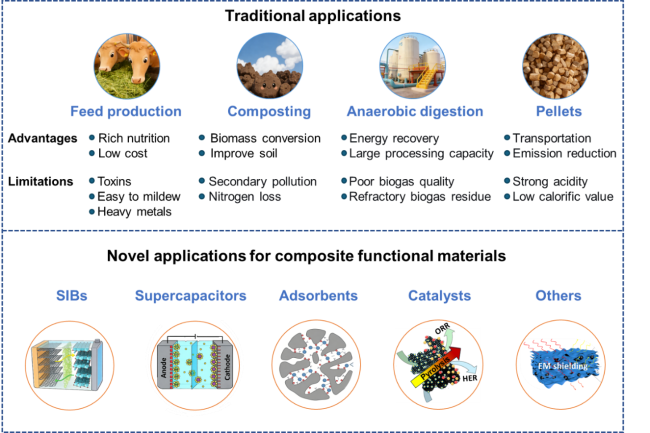
Figure 4. Utilization of distiller's grains. |
1.3.1 Feed production
Distiller's grains are widely utilized as a high-value animal feed ingredient, supporting livestock production and contributing to nutrient recycling in agroecosystems [25]. They contain substantial levels of crude protein, crude fat, residual starch, B-group vitamins, essential trace elements (e.g., Zn, Cu, and Mn), and bioactive compounds, rendering them nutritionally suitable for inclusion in balanced ruminant and monogastric diets. Their application helps mitigate feed resource constraints while enhancing meat quality and feed conversion efficiency [26-28]. Fresh or air-dried distiller's grains can be incorporated directly into livestock and poultry rations, offering a cost-effective and operationally simple feeding strategy. Alternatively, solid-state fermentation enables the biotransformation of distiller's grains into upgraded protein-enriched feed, thereby increasing their economic value and alleviating the global shortfall in sustainable protein sources. Fermentation generates microbial biomass, digestive enzymes (e.g., amylase, protease), B vitamins, organic acids (e.g., lactic acid), and other metabolites with documented prebiotic and antimicrobial activity [29,30]. These functional components improve feed palatability, enhance gastrointestinal digestibility, and support host metabolism and immune function.
However, the feeding value of distiller's grains is limited by several factors. Distiller's grains contain a lot of cellulose and hemicellulose, which are difficult to digest for non-ruminants, and exhibit low energy density [31]. Safety is another concern. Due to their high moisture content and acidic nature, distiller's grains are prone to spoilage during storage, encouraging mold growth and mycotoxin production that pose serious risks to animal health. At the same time, it may also contain heavy metals such as lead and cadmium, as well as harmful substances such as residual alcohol and aldehydes. Long-term feeding may lead to poisoning or accumulation in animals [32]. Additionally, they may contain heavy metals such as lead and cadmium, as well as residual alcohol and aldehydes. Long-term feeding without proper control may lead to toxicity or harmful accumulation in animals. In addition, the inherent acidity and special odor of distiller's grains can also reduce palatability, lowering feed intake. Therefore, their inclusion in diets must be strictly limited, as excessive use may cause digestive disturbances or symptoms of poisoning [33]. Finally, in order to prevent spoilage and reduce anti-nutritional factors, the pretreatment processes, such as drying and fermentation, also increase the cost and operation complexity.
1.3.2 Composting
Composting is a well-established aerobic biological treatment process for the valorization of organic solid waste [34-36]. During this process, microorganisms degrade the complex macromolecular organic constituents of distiller’s grains under controlled aerobic conditions, transforming them into stable humic substances and mineralized inorganic nutrients, thereby enhancing biogeochemical cycling. Composted distiller’s grains serve as high-quality organic soil amendments, improving soil fertility through increased nutrient availability (e.g., N, P, and K), modulation of soil microbial community structure and function, and stimulation of plant growth and physiological performance [37,38].
However, the composting of distiller's grains faces several practical challenges. The inherent high acidity and low carbon/nitrogen ratio of distiller's grains require strict initial conditions by adding additional alkaline substances and high-carbon materials, which increases the process complexity and cost [39]. Secondly, in order to promote microbial activity and nutrient balance, co-composting with manure, sludge, and others bio-active substances is often necessary, which may introduce secondary pollution risks such as heavy metals and pathogens. Moreover, during composting, a large amount of ammonia and nitrous oxide, a powerful greenhouse gas, will be produced, resulting in substantial loss of valuable nitrogen (accounting for over 70% of total nitrogen loss), and exacerbating air pollution and the greenhouse effect[40]. In addition, it is difficult to optimize the process. Simple composting often has inadequate humification and low fertilizer efficiency, while bioaugmentation with specialized microbial strains further raises cost and technical demands. Finally, composting requires considerable space and extended processing time. The low-cost systems occupy large areas, while the high-efficiency reactor-based systems have high investment, high energy consumption, and poor viability. If improperly managed, the residual phenols and heavy metals in the immature compost will also have toxic effects on crops[41].
1.3.3 Anaerobic digestion
Anaerobic digestion is a well-established, scalable biological process for the sustainable treatment of organic waste streams. It simultaneously produces two high-value co-products: energy-rich biogas (predominantly methane and carbon dioxide) and nutrient-dense digestate, suitable for agricultural reuse as a soil amendment [42-44]. Anaerobic digestion relies on the synergistic activity of diverse microbial communities, which progressively break down complex organic compounds into methane, carbon dioxide, ammonia, water, bacterial cells, and other products [45,46]. Given high organic content and abundance of readily degradable components, distiller's grains are a suitable fermentation substrate for anaerobic digestion. Through anaerobic digestion, methane can be produced, realizing both energy recovery and resource utilization.
Anaerobic digestion is regarded as a promising pathway for energy recovery from organic waste. However, the anaerobic digestion of distiller's grains involves several technical and economic constraints. The high content of rice husk and lignocellulose in distiller's grains makes it difficult for microorganisms to effectively degrade, slowing fermentation and promoting the accumulation of inhibitory intermediates, including volatile fatty acids (VFA) and furan derivatives. These by-products suppress methanogenic activity, thereby reducing methane and hydrogen yields [47]. Simultaneously, sulfur compounds present in the feedstock are converted into hydrogen sulfide (H2S) under anaerobic conditions, leading to equipment corrosion and reduced biogas quality. Moreover, raw biogas contains 40-70% carbon dioxide (CO2), necessitating costly purification steps such as desulfurization and decarbonization to enhance its utility, which substantially raises operational expenses [48]. After digestion, the resulting biogas residue has a poor physical structure, mainly rice husk debris and low water holding capacity, and may contain phytotoxic substances that inhibit crop growth, facing the problem of secondary treatment. In order to improve biodegradability, distiller's grains often require energy and cost-intensive pretreatment, further undermining the economic feasibility and scalability of the process.
1.3.4 Pellets
As a representative lignocellulosic biomass residue, distiller's grains can be employed as a solid biofuel for industrial thermal energy generation, a direct valorization pathway. However, their direct combustion or thermal utilization is constrained by inherently low bulk and apparent densities, which impair handling, storage, and transport efficiency. Mechanical densification into pellets enhances volumetric energy density, improves storage stability, and streamlines supply chain logistics. For instance, pelleting raises the bulk density from approximately 70 kg·m-3 to about 1000 kg·m-3 and reduces moisture content below 10% (wet basis) [49]. High density also reduces the costs of transporting and storing biomass. In addition, pelletizing also lowers greenhouse gas emissions compared to petroleum-derived fuels [50]. Nevertheless, distiller's grains face several challenges as pelletized fuel. First, the volatile content of distiller's grains is very high (exceeding 55% at low temperatures), primarily consisting of acids such as volatile fatty acids. This results in a pyrolysis oil with strong acidity, high oxygen content, and low calorific value, which can corrode and clog systems, impairing combustion stability and equipment durability. Moreover, the high concentration of inorganic matter in the ash and the low mechanical strength of distiller's grains further degrade fuel quality and combustion performance. Storage and transportation also pose difficulties. Distiller's grains are prone to decay and mold growth during long-term storage or long-distance transportation, due to high moisture content and strong acidity of distiller's grains. Drying treatment may alleviate this problem, but it raises processing costs.
Although the traditional utilization approaches of distiller's grains, such as feed, composting, anaerobic digestion, and pellet, have been implemented to varying extents, these methods generally suffer from low efficiency, limited added value, potential secondary pollution, or technical and economic bottlenecks. For instance, feed utilization is restricted by toxins and low digestibility. The composting process is accompanied by nitrogen loss and the risk of secondary pollution. Anaerobic digestion is confronted with challenges such as the difficulty in degrading lignocellulose and low biogas quality. When used as a solid fuel, it is plagued by problems, such as low calorific value and equipment corrosion. These limitations significantly hinder the large-scale, high-value, and environmentally sustainable utilization of distiller's grains.
In recent years, the conversion of biomass waste into high-value functional materials has emerged as a frontier research direction in sustainable resource utilization. Distiller's grains, as a structurally complex biomass rich in carbon, nitrogen, oxygen, and other essential elements, hold substantial potential for the synthesis of high-performance carbon materials and functional composite materials. Recent studies have demonstrated the successful applications of distiller's grains-derived materials in sodium-ion battery anodes, supercapacitor electrodes, adsorbents, and catalysts, with outstanding performance. However, the existing research remains largely fragmented across specific application domains, with limited systematic synthesis, comparative analysis, and forward-looking perspectives on the development of diverse functional materials and composite functional materials derived from distiller's grains.
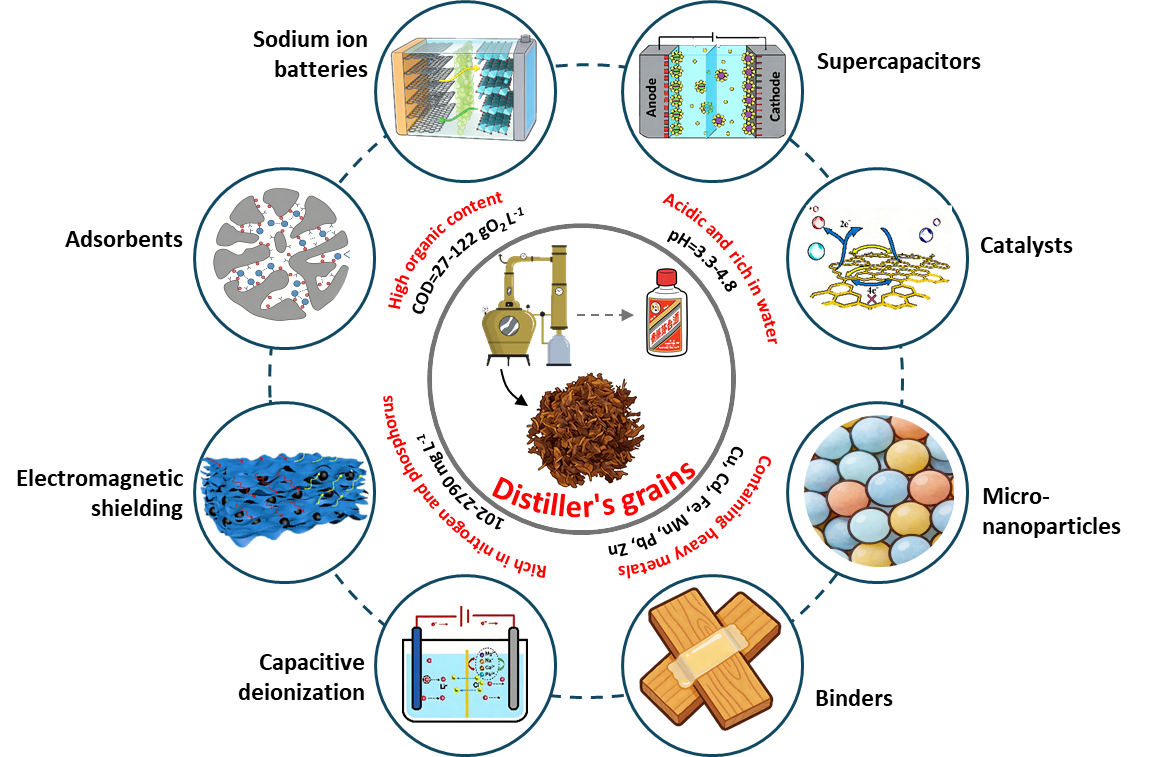
In sum, distiller's grains have been extensively applied in low-value applications such as animal feed, composting, and anaerobic digestion. Nevertheless, their high-value development and utilization remain a significant challenge transcending technological eras. Most existing review literature primarily focuses on the application of distiller's grains in traditional low-value domains, with limited systematic synthesis and forward-looking evaluation regarding their utilization in advanced fields. This review summarizes recent advances in the high-value utilization of functional materials and composite functional materials derived from distiller's grains in advanced applications, encompassing electrode materials for energy storage (such as sodium-ion batteries and supercapacitors), adsorbents and catalysts for environmental remediation, and emerging functional materials such as electromagnetic shielding materials, binders, and capacitive deionization media. The relationships between material synthesis strategies, including pyrolysis, activation, doping, and compositing, and their resultant performance characteristics are particularly elucidated. This work aims to achieve the high-value conversion of distiller's grains into functional materials and composite functional materials, thereby promoting the modernization of China's baijiu industry and fostering sustainable economic growth.
2. Advanced applications of distiller's grains
2.1 Sodium-ion batteries
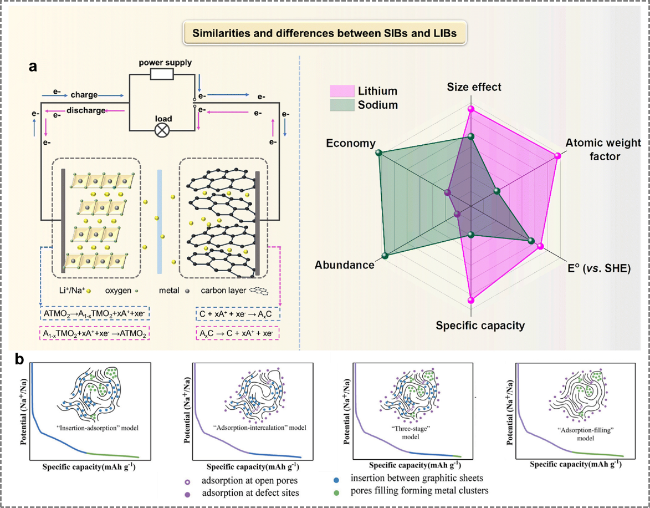
Compared with lithium-ion batteries, sodium-ion batteries (SIBs) have attracted significant attention due to the abundance of sodium resources and low cost [53,54]. As illustrated in Figure 5a, the working principle of SIBs involves the following electrode reactions. During the charging process, the cathodes (such as NaMnO2) undergo oxidation, resulting in the extraction of Na+ ions and the release of electrons. Na+ ions migrate to the anodes (such as hard carbons) through the electrolyte, while electrons are transferred to the anode through an external circuit. Consequently, the anode undergoes a reduction reaction with the insertion of Na+ ions. The reverse process takes place during the discharge process [55-57].
Amorphous carbons are considered promising anodes for SIBs due to their natural abundance, cost-effectiveness, and facile production [58,59]. Amorphous carbons can be divided into soft carbons and hard carbons (HCs) based on their graphitization degree at high temperature. Compared with soft carbon, HCs are hard to be graphitized even at temperatures higher than 2500 °C, showing a higher structural disorder degree, higher defect concentration, higher heteroatom content, larger layer spacing, and more complex pore structure [60].
As shown in Figure 5b, the sodium storage mechanism of hard carbon mainly involves three ways: surface adsorption, nanopore filling, and interlayer insertion. There are two controversial explanations for the mechanism, namely “intercalation-adsorption” and “adsorption-intercalation” [61,62]. A representative example is the “House-of-Cards” structural model introduced by Stevens et al [63]. According to the intercalation-adsorption mechanism, the sloping voltage region is attributed to sodium-ion intercalation into the quasi-graphitic interlayers, whereas the low-voltage plateau region arises from sodium storage via nanopore confinement. In contrast, Qiu et al. proposed that the sloping voltage region originates from sodium-ion adsorption on defect-rich surfaces and heteroatom-functionalized sites, whereas the low-voltage plateau region is associated with intercalation into expanded quasi-graphitic interlayers, consistent with the adsorption-intercalation mechanism [64]. Moreover, Bommier et al. proposed a tripartite “adsorption-intercalation-filling” mechanism, positing that sodium storage proceeds sequentially, i.e., initial adsorption onto defect-rich surfaces, followed by intercalation into expanded quasi-graphitic interlayers, and culminating in the confinement and reduction of sodium ions to metallic Na clusters within nanopores. There is another viewpoint that denies the embedding process based on the lack of observed changes in layer spacing and advocates the “adsorption-filling” mechanism [65].
At present, these contradictory conclusions drawn from different structural characterizations are precisely the core reason why the sodium storage mechanism of hard carbon remains undetermined. Although the mechanism remains controversial, the academic consensus is to systematically categorize the sodium storage process into four levels: (i) Rapid, non-faradaic capacitive adsorption on externally accessible carbon surfaces; (ii) Quasi-adsorption on internal surfaces that cannot be directly contacted by the electrolyte (such as defects, heteroatoms); (iii) Reversible intercalation and deintercalation of Na+ ions within expanded quasi-graphitic interlayers; (iv) The filling behavior of sodium metal clusters formed in nano-closed pores [52].
The intercalation/deintercalation of sodium ions between the layers of graphite is related to the interlayer spacing of graphite. An optimal interlayer spacing window of 0.37-0.40 nm enables reversible Na+ intercalation between carbon layers while facilitating ion transport into closed micropores, thereby synergistically boosting both sloping and low-voltage plateau capacities. Conversely, insufficient interlayer spacing (<0.37 nm) kinetically hinders Na+ intercalation and in-plane diffusion, leading to diminished sloping capacity. The excessive spacing (>0.40 nm) correlates with poorly developed closed micropores, thereby constraining the low-voltage plateau capacity associated with nanopore-confined Na plating [66].
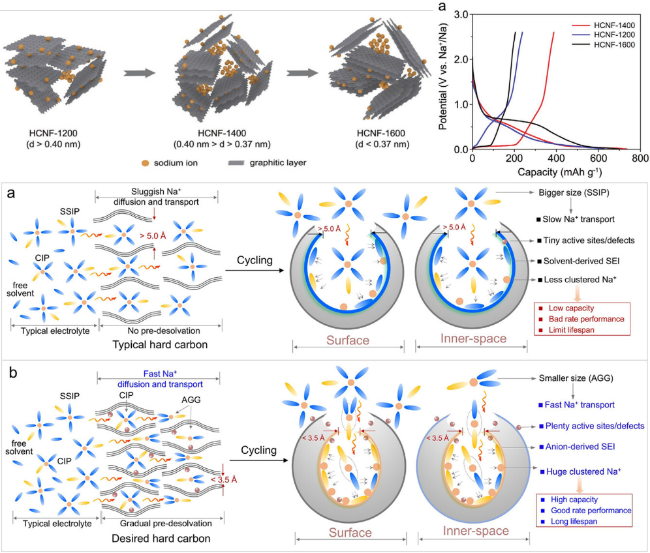
Figure 6. The influence of the aperture of the closed pore on the sodium-ion storage performance of HCs [67]. |
Secondly, the size of the nano-closed pores is also a key factor influencing the sodium storage performance of hard carbon materials. As shown in Figure 6a, the problems existing in typical hard carbon materials are that the pore opening size is usually larger than 5.0 Å, which makes it difficult for sodium ions to undergo pre-desolvation before entering the pores. The solvent-separated ion pairs are dominant, resulting in slow diffusion of sodium ions. Meanwhile, the active sites of the material are limited, which easily leads to the formation of thick and unstable solvent-derived solid electrolyte interphase (SEI) films, thereby causing problems such as low capacity, low initial coulombic efficiency, poor rate performance, and short cycle life. Figure 6b illustrates the rationally designed hard carbon architecture. Pore size is precisely tuned lower than 3.5 Å, and abundant oxygen-containing functional groups and topological defects are deliberately incorporated, enabling efficient pre-desolvation of Na+ before pore entry, stabilizing a highly coordinated electrolyte structure at the interface, and facilitating the formation of an ultrathin, ionically conductive, and mechanically robust SEI layer. Simultaneously, this structural design promotes confined Na cluster nucleation within nanopores, leading to significant improvements in reversible specific capacity, rate capability, and long-term cycling stability [67].
The unique advantage of distiller's grains as a precursor lies in their lignocellulosic structure and inherent oxygen/nitrogen functional groups, which are prone to form hard carbon with expanded interlayer spacing during pyrolysis. This is particularly conducive to the storage of sodium ions, a feature that many other biomass materials lack. By rationally controlling the pretreatment and carbonization processes, HCs anodes with desirable interlayer spacing and pore structures can be successfully prepared. Xu et al. utilized distiller's grains from the Chinese Baijiu industry as a precursor to synthesize vinasse-based HCs (HVC-1100). The process involves an initial pre-carbonization process at 500 °C for 2h, ball milling, and carbonization at 1100 °C for 1h. The HVC-1100 has a maximum layer spacing of 0.386 nm, which facilitates the rapid transport and storage of Na+ ions. The combination of this precisely tuned interlayer distance with an optimized closed-pore structure enables superior electrochemical performance. HVC-1100 achieves an initial coulombic efficiency (ICE) of 91.1% and superior rate performance in ether-based electrolyte, delivering 320 mAh g-1 at 0.05 A g-1 and retaining 202 mAh g-1 even at 10 A g-1. Moreover, it demonstrates excellent long-cycling stability, achieving the capacity retention of 93.7% after 8000 cycles at 5 A g-1 [68].
Heteroatom doping is an effective strategy for modifying HCs to enlarge their interlayer spacing [70]. As illustrated in Figure 7a, Wang et al. successfully synthesized a silicon-doped porous HCs for sodium-ion batteries (SIBs) using Wuliangye distiller's grains as a biomass precursor. The synthesis involved pre-carbonization at 500 °C for 2 h, followed by high-temperature carbonization at 1100 °C for 3 h, with tetraethyl orthosilicate serving as the silicon source for subsequent doping. Silicon atoms can substitute carbon atoms within the carbon skeleton to form Si-C bonds, which increases the interlayer spacing from 0.377 nm to 0.388 nm. The expanded interlayer spacing not only mitigates volume expansion during sodium (de)intercalation but also enhances electronic conductivity, thereby significantly improving sodium storage performance. The optimized silicon-doped porous HCs (HC-1100Si-1) deliver a reversible capacity of 280.6 mAh g-1 at 20 mA g-1, with a capacity retention of 102.6% after 100 cycles. Furthermore, a full cell assembled with HC-1100Si-1 anode and magnesium-doped Na0.67MnO2 cathode delivers a high reversible capacity of 281.5 mAh g-1 with 91.9% capacity retention after 100 cycles within 2-3.85 V, demonstrating promising application potential [69].
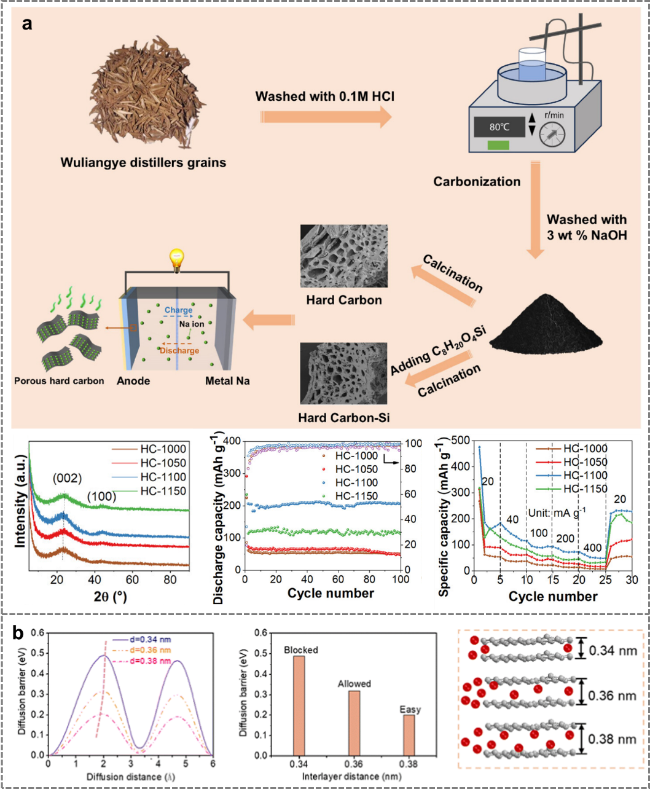
Figure 7. (a) Preparation of distiller's grains-derived hard carbon by two-step carbonization combined with silicon doping for application in sodium-ion batteries [69]. (b) Density functional theory (DFT) calculations elucidate the mechanistic role of interlayer spacing in governing sodium-ion diffusion kinetics [69]. |
As shown in Figure 7b, the DFT calculation was adopted to further reveal the regulation mechanism of the interlayer spacing on the diffusion behavior of Na+ ions. The energy barriers for Na+ ion insertion into HCs were calculated when the interlayer spacings were 0.34, 0.36, and 0.38 nm, respectively, to further explore their diffusion behavior in HCs. When the interlayer spacing is 0.34 nm (similar to that of graphite), the energy barrier is 0.49 eV, and Na+ ions cannot be inserted. However, when the interlayer spacing increases to 0.36 nm, the energy barrier drops to 0.32 eV, indicating that Na+ can be intercalated between the layers. When the interlayer spacing further increases above 0.38 nm, the energy barrier is lower than 0.20 eV, indicating that Na+ ions can easily intercalate between the layers. It can also be observed that the diffusion rate of sodium ions between the same graphite layers is not uniform, which is related to the length of the graphite microcrystals. The wider the interlayer spacing, the shorter the distance that sodium ions need to move to overcome the maximum energy barrier during diffusion [71].
Distiller's grains, serving as a precursor for the fabrication of hard carbon anodes in sodium-ion batteries, are primarily converted through two strategies: direct carbonization and heteroatom doping. The direct carbonization approach is relatively straightforward, enabling effective structural control through parameter optimization. This method facilitates the successful synthesis of hard carbon with an interlayer spacing of 0.386 nm, which delivers a high initial Coulombic efficiency of 91.1%, excellent rate capability (202 mAh g-1 at 10 A g-1), and robust cycling stability, retaining 93.7% of its capacity after 8000 cycles. However, this method is critically dependent on the compatibility between the precursor and the processing conditions, and the high-temperature carbonization step incurs considerable energy consumption, thereby compromising reproducibility and hindering cost-effective manufacturing. Heteroatom doping, exemplified by the incorporation of silicon-containing precursors, actively modulates the electronic structure of the material. Expanding the interlayer spacing from 0.377 nm to 0.388 nm simultaneously enhances structural stability and electrical conductivity, yielding a capacity retention of 102.6% after 100 galvanostatic cycles and a high reversible full-cell capacity of 281.5 mAh g-1. However, this approach entails increased synthetic complexity and higher reagent costs, while precise control over doping uniformity remains challenging.
2.2 Supercapacitors
Supercapacitors exhibit fundamental electrochemical distinctions from sodium-ion batteries, characterized by exceptionally high power density (up to 10 kW·kg⁻¹), subsecond charge/discharge kinetics, and exceptional cycle stability exceeding 100,000 cycles [72-74]. Energy storage in supercapacitors is governed predominantly by two complementary mechanisms: electric double-layer capacitance (EDLC), which originates from the electrostatic adsorption of electrolyte ions at the electrode-electrolyte interface, and pseudo capacitance, which arises from fast, reversible surface or near-surface Faradaic redox reactions [75-77].
Porous carbons serve as the dominant electrode materials for supercapacitors, having an irreplaceable position due to their outstanding performance[78,79]. The advantage of distiller's grains as a carbon source lies in their role as a low-cost industrial by-product. The specific organic composition and original porous structure make it more reactive in subsequent activation processes and easier to construct an ideal micro-mesoporous hierarchical structure. Furthermore, distiller's grains are intrinsically rich in heteroatoms such as nitrogen and oxygen, enabling in-situ self-doping during carbonization. This not only introduces pseudo capacitance for enhanced specific capacitance but also improves the surface hydrophilicity of porous carbon electrodes, thereby facilitating ion transport. Meanwhile, their organic composition allows for the facile construction of hierarchical porous structures with ultra-high specific surface area via chemical activation, which lays a critical foundation for achieving high capacitance and superior rate capability.
Chemical activation is a highly effective method for preparing high-performance porous carbons, commonly using activating agents such as KOH, NaOH, and ZnCl2. Among these, KOH is the most widely used activator, renowned for constructing hierarchical porous carbon structures with high specific surface areas, which significantly enhance electrochemical performance. The mechanism of KOH activation has been extensively studied [80-83]. The primary chemical reactions between KOH and carbon are as follows:
When the temperature is in the range of 400-600 °C, KOH reacts with C to produce K and K2CO3.
$2C + 6KOH → 2K + 2K_{2}CO_{3} + 3H_{2}$
Micropores are generated in this process. When the temperature reaches 600 °C, the KOH reaction is almost complete. Subsequently, at 600-700 °C, K2CO3 further reacts with carbon.
$K_{2}CO_{3} + 2C → 2K + 3CO$
In addition, as the temperature rises, a small amount of residual K2CO3 will gradually decompose into K2O, and K2O can still react with carbon to generate K:
$K_{2}CO_{3} → K_{2}O + CO_{2}$
$C + K_{2}O → 2K + CO$
$CO_{2} + C → 2CO$
During high-temperature activation above 700 °C, the generated metallic K volatilizes and intercalates into carbon matrix, causing irreversible microstructural expansion to form developed porosity.
Two-step activation methods, involving pre-carbonization at low temperature and Subsequent KOH activation at high temperature, are an effective strategy for the synthesis of distiller's grains-derived porous carbons [84-86]. The pre-carbonization removes water and volatile organic compounds to form a stable carbon skeleton, providing a stable and uniform precursor for the subsequent activation step. Subsequently, the pre-carbonized product with KOH activator was carbonized at high temperature to prepare porous carbons.
As shown in Figure 8, Shi et al. synthesized a porous carbon (HPC-K750) from sorghum distiller's grains via a two-step KOH activation process. The ball milling is introduced to mix KOH and carbonized distiller's grains to promote a highly reactive activation process, by generating numerous surface hydroxyl groups to enhance wettability and ensure uniform contact with KOH. Consequently, the resulting porous carbon exhibits a high specific surface area (3047 m2 g-1), micro-mesoporous structure, and a unique microstructure composed of graphene nanosheets. In 2 M KOH and 1 M H2SO4 electrolytes, it exhibits specific capacitances of 329 F g-1 at 1.0 A g-1 and 311 F g-1 at 1.0 A g-1, respectively. In a 2 M KOH electrolyte, the capacitance retention is 73% at a current density of 50.0 A g-1, showing its excellent rate performance. Meanwhile, after 10000 cycles of 5 A g-1, the capacitance retention rate remains at 88%. In 1 M TEABF4/AN, it exhibits a specific capacitance of 164 F g-1 at a current density of 1.0 A g-1. The supercapacitor assembled with HPC-K750 shows an energy density of 49.5 Wh kg-1 at a power density of 737 W kg-1. Even at a high power density of 10.8 kW kg-1, the energy density maintains 22.7 Wh kg-1 [87]. Han et al. used distiller's grains as a carbon source and KOH as a chemical activator to synthesize N/O self-doped activated carbon (DG-5-6) via a two-step method. DG-5-6 possesses a nitrogen and oxygen content of 1.62% and 19.27%, respectively, and a specific surface area (SSA) of 1026.77 m2 g-1. Its porous structure is dominated by a high proportion of ultramicropores, which effectively accommodate solvated ions, thus enhancing the specific capacitance. DG-5-6 delivers a specific capacitance of 345.2 F g-1 at 1 A g-1 in 6 M KOH electrolyte. Meanwhile, after 5000 cycles of 5 A g-1, the capacitance retention rate remains at 96.9%. Furthermore, a symmetrical supercapacitor assembled with DG-5-6 achieves an energy density of 12.2 Wh kg-1 at a power density of 6979.7 W kg-1 [88].
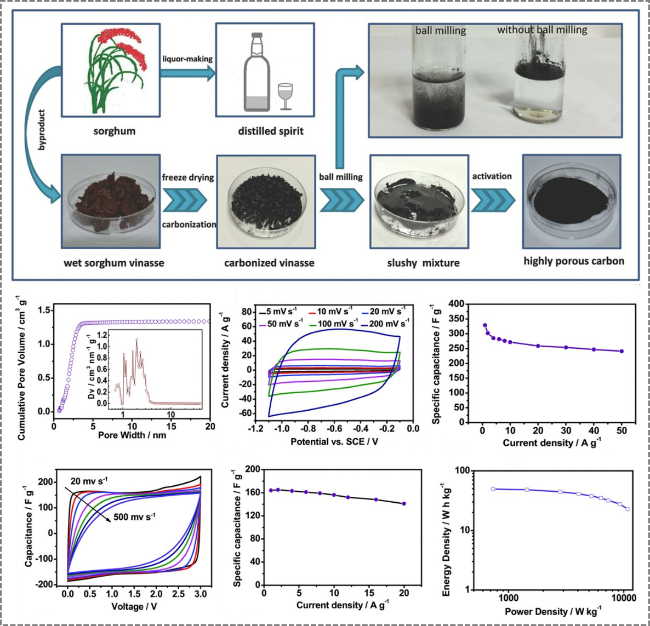
Figure 8. Preparation of distiller's grains-derived porous carbon by two-step KOH activation for application in supercapacitors [87]. |
Hydrothermal carbonization (HTC) is an innovative thermochemical method that converts wet or undried biomass, such as distiller's grains, into carbon-rich materials [89,90]. Unlike traditional pyrolysis, hydrothermal carbonization processes biomass in an aqueous medium at moderate temperatures (160-250 °C) and elevated pressure. Through reactions including hydrolysis, dehydration, decarboxylation, polymerization, and aromatization, the oxygen and hydrogen contents of the biomass are significantly reduced, thereby producing a carbon-rich, lignite-like solid [91]. Owing to its substantially lower energy demand compared with conventional carbonization processes, hydrothermal carbonization offers an environmentally sustainable and economically viable route for producing porous carbon materials from distiller’s grains. Wang et al. synthesized highly graphitized activated carbon (AC) from wet distiller's grains containing soluble dried distiller's grains with solubles (DDGS) by integrating hydrothermal carbonization, KOH activation, and brief microwave radiation. A small amount of inherent graphene oxide (GO) in the DDGS served as a structural template, promoting a morphological evolution from spherical to sheet-like carbon and enhancing the graphitization degree. The resulting AC possesses an oxygen content of 16.96% and a specific surface area (SSA) of 479.15 m2 g-1. The SEM image of AC shows an interconnected porous network with pore sizes of 100-1000 nm. Notably, the pores are dominated by micropores with an average size of 2.9 nm. In a 1 M Na2SO4 electrolyte, the DDGS-based activated carbon exhibited a specific capacitance of 101.5 F g-1 at 1 A g-1, and retained 70.1 F g-1 at a higher current density of 5 A g-1. Meanwhile, after 5000 cycles of 5 A g-1, the capacitance retention rate remains at 92.3%. A symmetrical supercapacitor assembled by the DDGS-based activated carbon achieved an energy density of 9 Wh kg-1 at a power density of 4000 W kg-1 [92].
Transition metals (such as iron) act as effective catalysts to promote graphitization in porous carbons. Enhanced graphitization significantly improves the electronic conductivity of these materials, thereby facilitating efficient charge transfer and leading to superior rate capability and long-term cycling stability. As shown in Figure 9, Wu et al. prepared nitrogen-sulfur co-doped porous carbons (NSHPC-700) using Chinese rice wine vinasse as carbon and heteroatom source, with KOH as the activator, and FeCl3·6H2O as both catalyst and co-activator. NSHPC-700 possesses a high specific surface area of 1357 m2 g-1, a hierarchical porous structure dominated by micropores, numerous defects, and a high degree of graphitization. Nitrogen (N) and sulfur (S) are co-doped into the carbon skeleton, with the contents of 0.59 at. % and 0.37 at. %, respectively. In a 6 M KOH electrolyte, NSHPC-700 delivers a high specific capacitance of 433.5 F g-1 at 1 A g-1 and maintains 304.5 F g-1 at a high current density of 20 A g-1. In a two-electrode system in 6 M KOH at 4 A g-1, after 60000 cycles of 5 A g-1, the capacitance retention rate remains at 92.3%. The symmetrical capacitor based on NSHPC-700 exhibited an energy density of 17.8 Wh kg-1 at a power density of 450 W kg-1 in a 1 M Na2SO4 aqueous electrolyte [93].
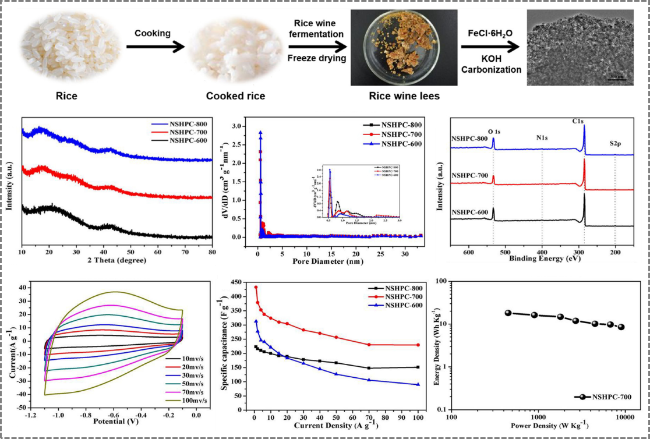
Figure 9. Preparation of distiller's grains-derived porous carbon by synergistic KOH activation and FeCl3·6H2O catalytic activation for application in supercapacitors [93]. |
In theory, the pure electric double-layer capacitance has a ceiling. Specific oxygen and nitrogen functional groups (such as quinone and pyridine nitrogen) on the carbon surface can undergo rapid and reversible Faraday redox reactions to contribute pseudocapacitance for the enhancement of overall capacitance [94-97]. In addition, heteroatom doping can improve surface hydrophilicity to enhance pore utilization efficiency [98].
As shown in Figure 10, Xu et al. mixed KOH, melamine (MA), and carbonized distiller's grains by ball milling, and then carbonized the mixture to prepare mesoporous carbon. By varying the melamine content, the pore structure could be effectively tuned. The prepared mesoporous carbons (NVPC-1) have a high mesoporous rate (73.3%), a large total pore volume (2.41 cm3 g-1), remarkably high specific surface area (3442.97 m2g-1), and nitrogen and oxygen content of 1.85 at. % and 9.08 at. %, respectively. In 6 M KOH electrolyte, NVPC-1 exhibits a specific capacitance of 413 F g-1 at 1.0 A g-1, and remains as high as 267 F g-1 even when the current density increases to 50 A g-1. The capacity retention rate of NVPC-1 was 107% after 10,000 cycles at 50 A g-1, indicating its excellent charge-discharge stability at high rates. In 6 M KOH, 1 M Na2SO4, and 1 M Et4NBF4/ACN electrolytes, the energy density of the symmetric supercapacitor at power densities of 600.5 W kg-1, 900.0 W kg-1, and 2500.6 W kg-1 are 16.7 Wh kg-1, 21.2 Wh kg-1, and 54.0 Wh kg-1, respectively. Even when the power density is 30.8 kW kg-1, 27.0 kW kg-1 and 63.3 kW kg-1, the energy density remains at 10.3 Wh kg-1, 13.5 Wh kg-1 and 17.4 Wh kg-1, respectively [99].
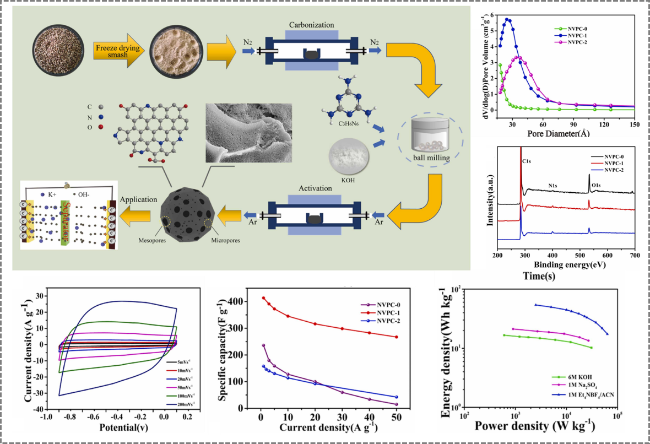
Figure 10. Preparation of nitrogen-doped distiller's grains-derived porous carbon by synergistic KOH activation and melamine doping for application in supercapacitors [99]. |
NaOH serves as an effective chemical activation agent for converting carbon-rich precursors into porous carbons exhibiting high specific surface areas and well-developed hierarchical porosity. The activation mechanism of NaOH closely parallels that of KOH [80,100]. Wei et al. obtained a hierarchical porous carbon material (SFPC-A13) from Maotai-flavor liquor Vinasse through a sequential process of pre-carbonization, carbonization, and NaOH activation. The hierarchical porous carbon SFPC-A13 possesses a high specific surface area of 3051 m2 g-1 and an oxygen content of 23.92 wt%. Its pore structure comprises both micropores and mesopores. In a three-electrode system, it delivered a specific capacitance of 354 F g-1 at a current density of 0.5 A g-1. A zinc-ion hybrid capacitor (ZIHC) was fabricated in a 2 M ZnSO4 electrolyte, employing a Zn foil anode and an SFPC-A13-based cathode. The ZIHC delivers a specific capacity of 221.1 mAh g-1 at 0.5 A g-1 and after 175000 cycles of 10 A g-1, the capacitance retention rate remains at 100%, meanwhile, achieving an energy density of 160.9 Wh kg-1 at a power density of 949.7 W kg-1 [101].
KOH and NaOH are complementary chemical activators in the synthesis of high-performance porous carbon materials derived from biomass, conferring distinct textural and functional properties. Owing to its stronger alkalinity and larger ionic radius of K+ (1.38 Å), KOH exhibits enhanced intercalation into and oxidative etching of the carbon framework at elevated temperatures (typically 700-800 °C), resulting in more vigorous activation kinetics. Thermodynamic and kinetic analyses reveal that the reaction of KOH with carbon is thermodynamically more favorable and kinetically more facile, as evidenced by its more negative Gibbs free energy change (ΔG) and lower apparent activation energy (Ea) [102]. This facilitates extensive micropore generation, yielding ultra-high specific surface areas (typically > 3000 m2 g-1) and a micropore-dominated pore architecture, thereby enhancing specific capacitance. Nevertheless, the strong corrosivity of KOH, its requirement for elevated reaction temperatures (> 700 °C), and the concomitant production of potassium-laden wastewater collectively impose substantial challenges, including accelerated equipment degradation, high energy demand, and non-negligible environmental hazards. In contrast, the smaller ionic radius of Na+ (1.02 Å) renders NaOH activation comparatively milder and enables effective pore development at lower temperatures (typically 600-750 °C), with its etching action preferentially yielding a higher proportion of mesopores and a limited fraction of macropores. Although this hierarchical pore architecture may lead to marginally lower specific surface area and gravimetric capacitance, it facilitates rapid ion transport through interconnected pore networks, thereby conferring outstanding rate capability. Moreover, the lower corrosivity of NaOH combined with its reduced optimal activation temperature translates into diminished demands on reactor materials and less stringent requirements for downstream environmental remediation.
Balancing mechanical strength, electrical conductivity, and electrochemical activity in porous carbons derived from distiller's grains remains a significant challenge. Compositing cellulose nanofibers (CNF/TONF), conductive agents (CCB/CNT), and distiller's grains-derived porous carbons (VAC) is an effective way to enhance overall performance.
As shown in Figure 11, Xiong et al. prepared a porous activated carbon from distiller's grains (VAC) with a microporous and mesoporous structure using a two-step KOH activation. A conductive TCNF/CCB/VAC (TCA) composite was subsequently fabricated via electrostatic adsorption, freeze-drying, and hot-pressing. A conductive network was constructed through the electrostatic adsorption between TCNF and CCB. The TCNF serves dual roles as both a dispersant for VAC particles and a mechanical framework, endowing the composite with flexibility and strength. A layered conductive network is formed through the tight stacking of the highly conductive TCNF layer and VAC. It is worth mentioning that after 12000 cycles of testing at a current density of 10 mA cm-2, the capacitance retention rate of TCA-3 is close to 100%. The TCA composite achieves a specific capacitance of 263 F g-1 (672 mF cm-2) in 1 M Li2SO4 electrolyte, and an energy density of 23.8 Wh kg-1 at a power density of 5.7 kW kg-1 [103]. Wang et al. prepared a hierarchical CNF/CNT/VAC (CCV) composite by first producing VAC via two-step KOH activation and then assembling it with CNF and CNTs through vacuum filtration and freeze-drying. Within the composite, CNFs constitute the structural framework, and CNTs provide continuous conductive pathways, facilitating electromagnetic dissipation. The VAC component provides substantial electric double-layer capacitance, while the CNF offers mechanical integrity, and the CNTs ensure rapid electron transport. The synergy of these components results in excellent overall energy storage performance [104].
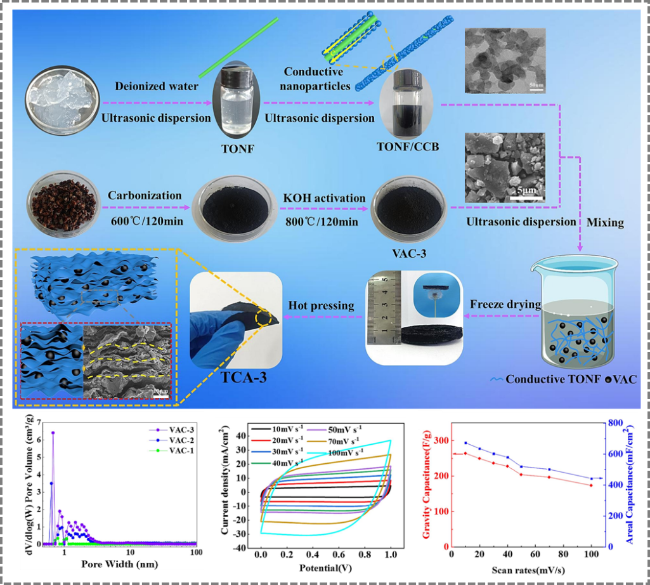
Figure 11. Preparation of conductive TONF/CCB/VAC (TCA) composite material by two-step KOH activation for application in supercapacitors [103]. |
The strategic merit of distiller's grains as a carbon precursor for supercapacitors arises from its dual advantage of being a low-cost and scalable industrial by-product and a naturally structured biomass feedstock. Its specific organic composition and initial porous structure make it more reactive in subsequent activation processes and easier to construct an ideal micro-mesoporous hierarchical structure. Moreover, distiller's grains inherently contain abundant nitrogen, oxygen, and other heteroatoms, enabling in situ heteroatom doping during carbonization without requiring external dopants. This intrinsic doping simultaneously augments specific capacitance through redox-active pseudocapacitance and enhances electrode/electrolyte interfacial properties, including electrolyte wettability and bulk electronic conductivity.
As shown in Table 2, porous carbon materials featuring high specific surface areas (exceeding 3000 m2 g-1), hierarchical porosity, and graphene-like nanosheet morphology can be synthesized from distiller's grains via established activation and carbonization strategies, including KOH/NaOH chemical activation, hydrothermal carbonization, pre-oxidation, and two-step activation. These structural attributes synergistically promote rapid ion transport and strong interfacial adsorption, leading to substantially improved specific capacitance (e.g., 329 F g-1 for HPC-K750 in 6 M KOH aqueous electrolyte) and exceptional rate capability. Moreover, strategic heteroatom doping (e.g., N, O, and S) to introduce pseudocapacitive contributions, coupled with hybridization with conductive nanomaterials, such as cellulose nanofibers or carbon nanotubes, to construct robust percolating networks, synergistically enhances the material's electrical conductivity, mechanical integrity, and surface electrochemical reactivity. With respect to cycling stability, the distiller's grains-derived porous carbons as supercapacitor electrodes demonstrate exceptional long-term durability, owing to their robust carbon framework and tunable surface chemistry. Heteroatom doping, particularly nitrogen and oxygen, not only augments pseudocapacitive contributions but also enhances interfacial stability at the electrode/electrolyte boundary. For example, KOH-activated HPC-K750 retains 88% of its initial capacitance after 10000 galvanostatic charge-discharge cycles at 5 A g-1, whereas the N/O self-doped DG-5-6 exhibits superior retention of 96.9% under identical testing conditions (5 A g-1, 5000 cycles). Concurrently, the integration of cellulose nanofibers or carbon nanotubes to construct a robust three-dimensional conductive network effectively mitigates structural degradation of the active material under prolonged galvanostatic cycling.
Table 2. Distiller's grains-derived porous carbons prepared by different methods for supercapacitors. |
| Preparation method | Porous carbons | Specific surface | Electrolyte | Current density (A g-1) | Capacitance (F g-1) | Cycling stability | Energy density (Wh kg-1) | Power density (W kg-1) | Ref. |
|---|---|---|---|---|---|---|---|---|---|
| KOH activation | HPC-K750 | 3047 | 2 M KOH | 1/50 | 329/240 | 88% after 10000 cycles | 49.5 | 737 | [81] |
| DG-5-6 | 1027 | 6 M KOH | 1 | 345 | 96.9% after 5000 cycles | 12.2 | 6979.7 | [82] | |
| NaOH activation | SFPC-A13 | 3051 | 6 M KOH | 0.5 | 354 | - | - | - | [95] |
| Hydrothermal carbonization | AC | 479 | 1 M Na2SO4 | 1/5 | 102/70 | 92.3% after 5000 cycles | 9 | 4000 | [86] |
| Transition metal introduction | NSHPC-700 | 1357 | 6 M KOH | 1/10 | 434/305 | 92.3% after 60000 cycles | 17.8 | 450 | [87] |
| Heteroatom doping | NVPC-1 | 3443 | 6 M KOH | 1 | 413 | 107% after 10000 cycles | 10.3 | 30800 | [93] |
| Composite material | TCA | - | 1 M Li2SO4 | 672 mF cm-2 | 263 | 100% after 12000 cycles | 23.8 | 5700 | [103] |
2.3 Adsorbents
Adsorbents are functional materials characterized by high specific surface areas, porous structures, and abundant surface functional groups, which could capture and immobilize environmental pollutants via physical adsorption or chemical interactions in wastewater treatment, gas purification, and soil remediation [105,106]. The adsorption performance of an adsorbent is affected by three factors: (1) a high specific surface area, which provides numerous active sites for adsorption; (2) a well-developed porous structure, which facilitates high adsorption capacity and efficient mass transfer; (3) tunable surface functional groups, which improve selectivity and binding affinity toward target pollutants [107,108].
Direct carbonization involves the high-temperature pyrolysis of raw materials under an inert atmosphere. Direct carbonization is a simple process and a low-cost way to convert distiller's grains into carbon adsorbents. As shown in Figure 12a, Onat et al. prepared highly porous activated carbon via one-step pyrolysis of a mixture of grape residue and distiller's grains at 800 °C. Without adding chemical activators, the activated carbons with a specific surface area of 1290.5 m2 g-1 and a total pore volume of 0.5667 cm3 g-1 are obtained based on the inorganic elements (such as potassium, sodium) inherently rich in distiller's grains as natural activators. The resulting activated carbons exhibit the adsorption capacities of 29.16 mg g-1 for tetracycline and 46.37 mg g-1 for ciprofloxacin. The adsorption behaviors meet the Langmuir isotherm and pseudo-second-order kinetic models, indicating promising antibiotic removal performance and circular economy potential [109]. As shown in Figure 12b, Liu et al. synthesized a low-cost and high-performance adsorbent (MVS600) from distiller's grains shell (VS) by mixing washed VS with phosphogypsum and deionized water, drying, and carbonizing at 600 °C. Owing to mesoporous structure, substantial pore volume (0.1492 cm3 g-1), and abundant surface functional groups (-OH: 18.6%; Ca-O: 19.1%), MVS600 adsorbs fluoride ions via multiple mechanisms, including electrostatic interaction, ion exchange, precipitation, and hydrogen bonding. The maximum adsorption capacity for fluoride ions reached 290.9 mg g-1 at 25 °C [110].
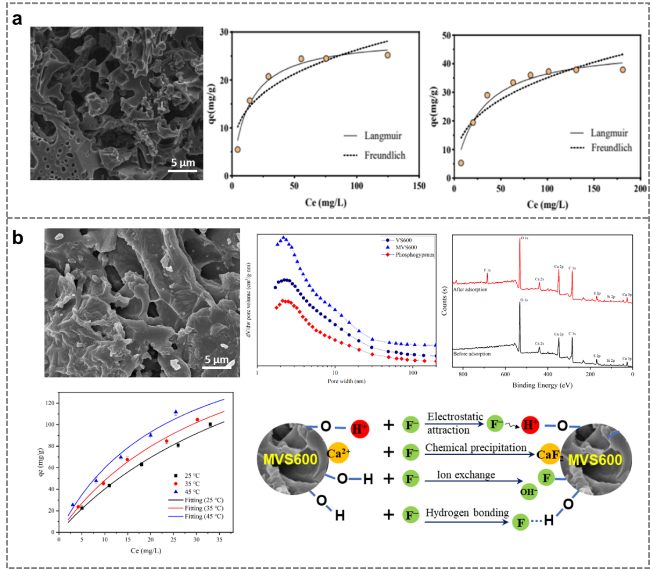
Figure 12. Preparation of distiller's grains-derived activated carbon by direct carbonization for application in pollutant adsorption. (a) Adsorption of tetracycline and ciprofloxacin by vinegar lees-derived activated carbon [109]. (b) Adsorption of fluoride by distiller's grains shell-derived activated carbon [110]. |
Hydrothermal treatment is a key method for the preparation of adsorbents, which can convert wet biomass into hydrochar using water as the reaction medium in a sealed pressure vessel, typically at 160-260 °C [111-113]. Compared with traditional pyrolysis, the hydrothermal method enables direct processing of high-moisture distiller's grains, eliminating the energy-intensive pre-drying step. As a sustainable and scalable strategy, it serves either as a green precursor pretreatment or as a one-pot direct carbonization route[114]. Nevertheless, the resulting carbons typically exhibit low specific surface area. Therefore, further activation is usually necessary to achieve the desired high performance [115,116]
As shown in Figure 13, Kazak et al. synthesized activated carbons from waste distiller's grains via hydrogen peroxide-mediated hydrothermal treatment followed by a two-step pyrolysis protocol, first drying at 230°C, then carbonization at 600-1000°C. The resulting materials exhibited a high specific surface area of 989m2g-1 and a total pore volume of 0.575cm3g-1, enabling a methylene blue adsorption capacity of 909.1±31.9mgg-1 (Langmuir model), with excellent reusability maintained over six consecutive adsorption-desorption cycles [117].
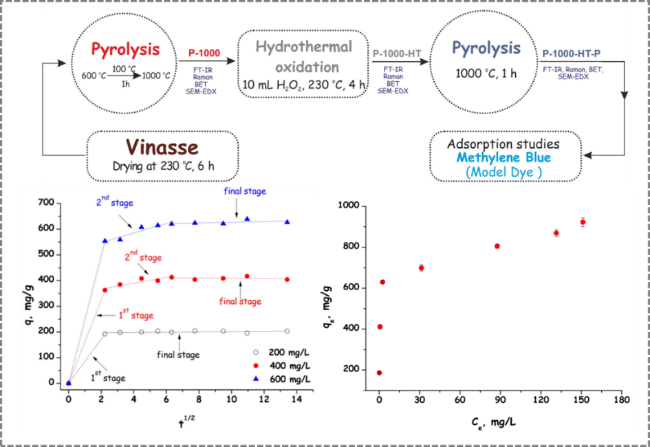
Figure 13. Preparation of distiller's grains-derived activated carbon by hydrothermal treatment for application in methylene blue adsorption [117]. |
Chemical activation has become a widely adopted method for preparing high-performance adsorbents owing to its high efficiency and controllability in increasing specific surface area and porosity, creating abundant active sites for pollutant adsorption [118]. Furthermore, Chemical activation can precisely regulate pore structure. By changing different activators and process parameters, the pore size distribution can be directionally optimized to match the adsorption requirements of various molecular pollutants.
As shown in Figure 14, Tang et al. prepared alkaline-modified biochar (KBC-2) by pyrolyzing distiller's grains at 600 °C, and treating by 1 M KOH solution. KBC-2 possesses a specific surface area of 239.65 m2 g-1 and a pore volume of 0.2115 cm3 g-1, exhibiting excellent Cr (VI) adsorption performance. Under optimal conditions (pH = 2, dosage = 3 g L-1), KBC-2 achieves a 99.99% removal ratio for a 50 mg L-1 Cr (VI) solution, corresponding to an adsorption capacity of 29.54 mg g-1. The adsorption behavior was well fitted by the Freundlich isotherm and the pseudo-second-order kinetic model, suggesting a process dominated by multilayer chemisorption. Further mechanistic studies revealed that the adsorption was primarily governed by electrostatic attraction, reduction (Cr (VI) to Cr (III)) mediated by oxygen-containing functional groups, and subsequent complexation [120]. Yu et al. synthesized porous carbons from fungal residue, distiller's grains, and biogas residue via a dual-activator approach with KOH and KHCO3. The prepared porous carbons exhibited a microporous-to-mesoporous ratio (0.70), a nitrogen content of 3.36 wt%, and a high specific surface area of 2326.5 m2 g-1, achieving the highest adsorption capacities for chlorobenzene (594.0 mg g-1) and benzene (394.3 mg g-1). Furthermore, prepared porous carbons demonstrated excellent regenerality, retaining over 82% of the initial capacity after 4 cycles [119].
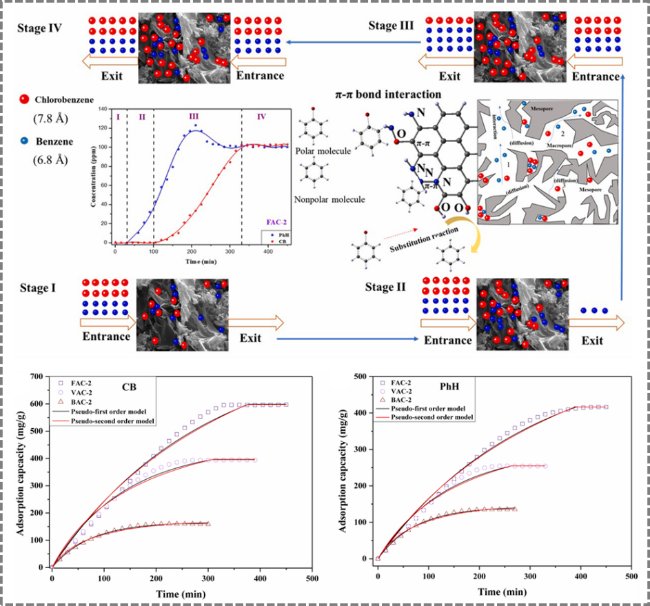
Figure 14. Preparation of distiller's grains-derived activated carbon by chemical activation for application in chlorobenzene (CB) and benzene adsorption [119]. |
Distiller's grains have a complex composition. The direct high-temperature activation would cause the instantaneous release of internal moisture and volatiles, causing the collapse of the carbon skeleton to impede pore development. Pre-carbonization can remove unstable components to construct a stable carbon skeleton through intermediate-temperature treatment under an inert atmosphere, providing an ideal foundation for the uniform penetration of chemical activators (such as KOH) and efficient pore formation [121].
As shown in Figure 15a, Li et al. synthesized activated carbons from distiller's grains via a sequential thermal-chemical activation protocol: drying, pre-carbonization at 450°C for 1h, KOH impregnation, and final carbonization at 700°C. The resulting materials feature a well-developed microporous architecture, with a micropore volume of 0.961cm3g-1 and an ultrahigh specific surface area of 2015m2g-1, attributes that confer strong adsorption affinity toward cationic methylene blue (MB). Owing to this favorable pore structure and abundant surface oxygen-containing functional groups, the adsorbent achieved a maximum MB adsorption capacity of 2251mgg-1 (Langmuir model). Moreover, it removed 99% of contaminants from industrial polyacrylonitrile wastewater within 60min, confirming its high practical applicability in real-world effluent treatment [122]. As shown in Figure 15b, Dong et al. prepared sustainable biochar adsorbents with a hierarchical pore structure from distiller's grains by a two-step strategy involving pre-carbonization and KOH activation. Compared with unactivated biochar, the activated biochars possess a more developed porosity and a higher specific surface area of 881 m2 g-1, exhibiting a Cr(VI) adsorption capacity of 144.5 mg g-1 and excellent reusability, retaining over 80% of initial efficiency after five cycles [123].
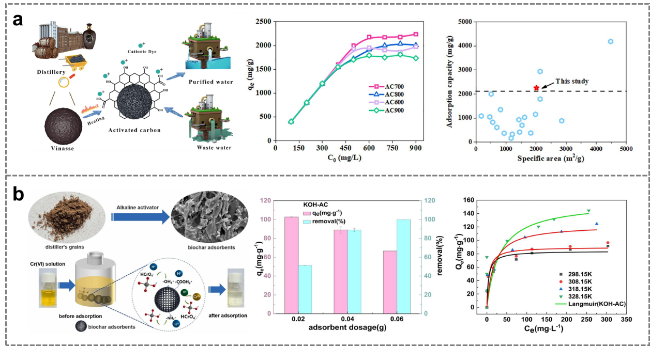
Figure 15. Preparation of distiller's grains-derived activated carbon by pre-carbonization combined with chemical activation for application in pollutant adsorption. (a) Adsorption of methylene blue by distiller's grains-derived activated carbon [122]. (b) Adsorption of Chromium (VI) by distiller's grains-derived activated carbon [123]. |
Due to the dense structure, it is difficult to achieve a uniform activation for distiller's grains. Therefore, the uniformity of carbon-based adsorbents from distiller's grains is poor. Pre-combustion, involving rapid flame treatment of the lees-activator mixture, serves as a key pretreatment to address this issue. It instantly fractures the rigid biomass skeleton, thereby generating initial porosity and expanding the reaction interface for KOH. Pre-combustion can effectively promote the formation of a well-developed pore network during the subsequent high-temperature activation [124]. Chen et al. prepared porous carbons from sorghum distiller's grains (SDGs) by pre-combustion and by KOH activation. The prepared porous carbons show a high specific surface area (1965 m2 g-1), a large pore volume (0.8788 cm3 g-1), and rich surface oxygen groups (C-O: 12.83%; C=O: 5.4%), resulting in an exceptional adsorption capacity of 2276.3 mg g-1 for methylene blue (MB), which is 47% higher than that achieved without the pre-combustion step [125].
Physical activation is a conventional thermal activation method for biochar production, based on the “carbonization-first, activation-later” principle. Distiller's grains are first carbonized to form a carbon skeleton with fewer pores and then activated by gases (such as CO2, H2O) at higher temperatures, where the pores are etched and expanded to form a developed porous architecture [126]. In contrast to chemical activation, physical activation eliminates the need for corrosive or hazardous chemical reagents, enhancing process safety, minimizing post-treatment purification requirements, and yielding a carbon product with lower inorganic residue, collectively contributing to improved environmental sustainability. Yang et al. prepared distiller's grains activated biochar from distilled spirit lees through pre-carbonization at 450 °C for 1 h, and steam activation at 800-850 °C for 1.5 h. The obtained ATAC exhibited a high specific surface area (623 m2 g-1), a total pore volume of 0.67 cm3 g-1, and an ash removal efficiency of 84.4%. The ATAC demonstrated good mechanical strength and maintained high adsorption capacities for iodine (515 mg g-1) and methylene blue (93 mg g-1)[127].
Conventional activation methods have some inherent limitations: (1) physical activation is environmentally friendly, but the induced porosity is generally underdeveloped; (2) chemical activation can create developed porosity but introduces the risk of chemical residues [128]. The combination of physical and chemical activation can synergistically create abundant micropores through chemical etching and expand micropores into mesopores via physical gasification to form transport channels, constructing an ideal adsorbent structure with a high specific surface area and hierarchical porosity.
As shown in Figure 16, Xu et al. prepared an activated carbon-silica composite (AC-SiO2) from distiller's grains by carbonization (600 °C, 1 h), KOH etching, and steam activation for the efficient removal of benzaldehyde from Chinese Baijiu. AC-SiO2 with a high specific surface area of 1213.0 m2 g-1 and abundant surface functional groups, such as Si-OH, Si-H, C=O, exhibits excellent hydrophilicity and interfacial synergistic adsorption capability. The benzaldehyde removal (68.7% in simulation, 85.5% in real liquor) with sustained capacity (>1.08 mmol g-1) and removal efficiency (>63.4%) over cycles could be achieved. The high adsorption capacity is attributed to the synergistic effect between the activated carbon and SiO2 components. Specifically, the highly graphitized carbons facilitate π-π stacking interactions with the benzene ring, while the surface hydrophilic groups of SiO2 anchor the aldehyde group via hydrogen bonding [129].
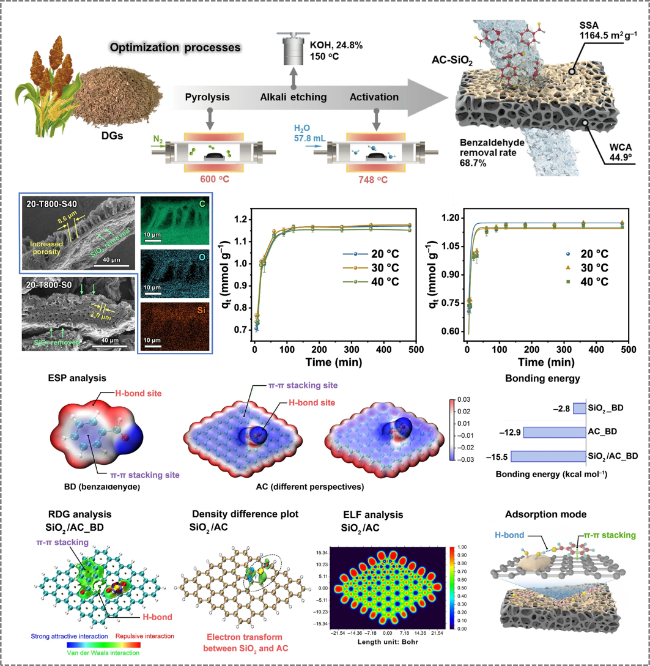
Figure 16. Preparation of distiller's grains-derived activated carbon by physicochemical activation for application in benzaldehyde adsorption [129]. |
Heteroatom doping represents a pivotal chemical strategy for enhancing the adsorptive performance of carbonaceous materials [130]. By modulating surface charge density, generating atomically dispersed active sites, tuning interfacial wettability, and imparting redox functionality, heteroatom doping induces a fundamental reconfiguration of the electronic structure and surface chemical environment, thereby enhancing adsorption capacity, selectivity toward priority contaminants, and kinetic uptake rates, while enabling effective treatment under complex, real-world environmental conditions [131]. Wang et al. treated distiller's grains-derived biochar with different concentrations of phosphoric acid to prepare modified biochars. Relative to unmodified biochar, the modified biochars possess a rougher, higher surface area and enriched oxygen-containing groups (P-O, C=O, C-O-P), leading to superior phenolic acid adsorption. The modified biochars demonstrate robust regenerability, maintaining about 40% of the initial capacity after five cycles [132].
Template methods, such as soft-template surfactants or hard-template mesoporous silica, are an effective strategy for guiding and replicating the formation of mesoporous or macroporous structures with uniform sizes and ordered arrangements. This precise control for the pore structure enables highly efficient mass transport while simultaneously creating shape-selective adsorption sites for pollutants with specific sizes and geometries (such as macromolecular dyes and antibiotics), thereby enhancing overall adsorption selectivity. Ngernyen et al [133]. used distiller's grains as the carbon source and Na2SiO3 or TEOS as the low-cost silicon source to prepare composites via a one-step sol-gel method. Specifically, the carbon-silica composite (CSCs) was synthesized by mixing distiller's grains with sulfuric acid, followed by the addition and blending of silica, and finally washing with water and drying. The composites prepared by Na2SiO3 and TEOS exhibit distinct structural and adsorption properties. The Na2SiO3-derived composite possesses a specific surface area of 313 m2 g-1, a total pore volume of 0.39 cm3 g-1, an average mesopore diameter of 5.00 nm, and a maximum adsorption capacity of 406 mg g-1 at pH = 2. In contrast, the TEOS-derived composite displays a higher surface area of 456 m2 g-1, a pore volume of 0.30 cm3 g-1, a smaller mesopore size of 2.62 nm, and a slightly enhanced adsorption capacity of 418 mg g-1 under identical conditions.
Magnetic adsorbents are composite materials that incorporate magnetic components within a porous matrix [134,135]. These materials can effectively overcome the key limitation of difficult separation and recovery through rapid collection via external magnetic fields [136]. This capability facilitates efficient adsorbent recycling in wastewater treatment, thereby significantly minimizing the risk of secondary pollution.
As shown in Figure 17a, Xu et al. prepared magnetic biochar composites (NFBC) from Baijiu distiller's grains through carbonization at 700 °C for 1 h and modification with nickel ferrite (NiFe2O4) for the efficient adsorption of levofloxacin (LEV). Compared with the unmodified biochar (BC), NFBC exhibits a developed porous structure, a higher O/C ratio, richer surface functional groups, and good magnetic responsiveness, showing a better adsorption capacity of 172 mg g-1 for LEV at pH = 6. The adsorption mechanism was primarily attributed to π-π electron donor-acceptor (EDA) interactions and hydrogen bonding. Simultaneously, the adsorption is enhanced by the incorporation of NiFe2O4, which enriches the surface of NFBC with oxygen-containing functional groups (e.g., FeOOH and FeO), resulting in higher surface energy [137]. As shown in Figure 17b, Kazak et al. prepared a novel magnetic hydrochar using two types of iron-rich industrial red mud wastes as raw materials through a hydrothermal CO treatment process. The prepared magnetic hydrochar possesses a porous structure (Vtotal = 0.071 cm3 g-1, SBET = 23 m2 g-1) and a saturation magnetization of 44.7 emu g-1, achieving facile magnetic separation from aqueous solution. The adsorption kinetics meet the pseudo-second-order, film diffusion, and intraparticle diffusion models. Under optimal conditions (pH > 5.0), the adsorption equilibrium is reached within 120 min. Magnetic hydrochar retains an adsorption efficiency of 79% after five cycles with no loss in magnetic separability [138].
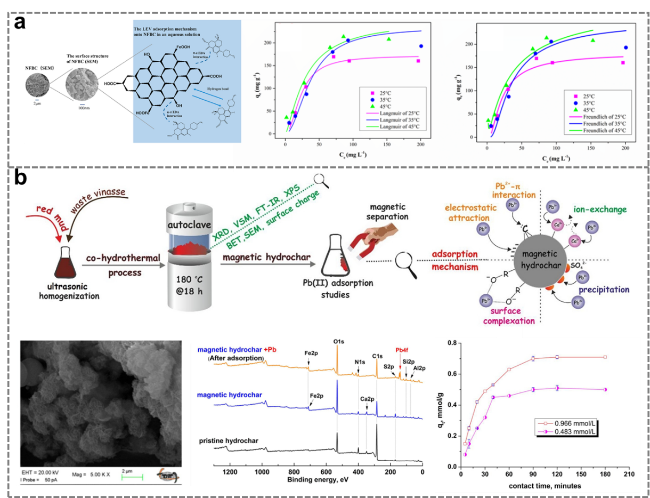
Gas adsorption separation technology exploits differences in molecular affinity, diffusion kinetics, and steric interactions between gas species and porous adsorbents to achieve high-selectivity separation of multicomponent gas mixtures [139,140]. Owing to its high selectivity, energy efficiency, and operational robustness, adsorption separation is widely deployed across energy and environmental sectors. Specifically, it enhances energy efficiency by facilitating natural gas purification to pipeline specifications and biogas upgrading via CH4 enrichment. Concurrently, it serves critical environmental functions in CO2 sequestration and VOC abatement, contributing to the reduction of greenhouse gas emissions and air pollutants [141].
Guo et al. prepared activated carbons (AC) from waste distiller's grains through an alkali-ion activation. The prepared AC has an ultra-high specific surface area of 3084 m2 g-1 and a substantial micropore volume of 0.80 cm3 g-1, showing superior adsorption affinity for C3H8 and C2H6, achieving the equilibrium capacities of 14.87 and 9.55 mmol g-1 at 273 K and 1 bar. As shown in Figure 18, Luo et al. prepared microporous activated carbons from waste distiller's grains through carbonization and chemical activation. The prepared microporous activated carbons exhibit a high CO2 adsorption capacity of up to 6.34 mmol g-1 at 273.15 K and 1 bar, and good reversibility. Furthermore, the microporous activated carbons can efficiently separate CO2 from CO2/CH4 or CO2/N2 mixtures. The excellent CO2 adsorption capacity can be attributed to a high specific surface area (up to 2950 m2 g-1), a large micropore volume (1.124 cm3 g-1), and abundant heteroatom doping (such as N, O). A stable CO2 adsorption capacity over repeated cycles without significant degradation confirms the durability [142].
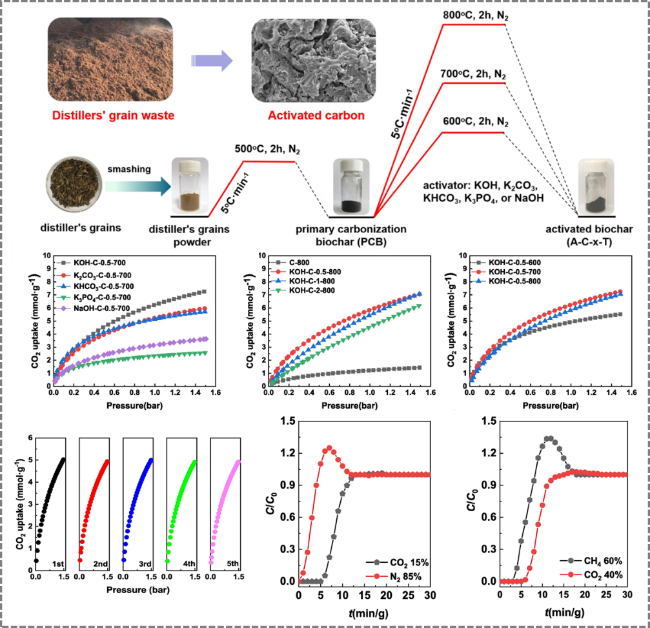
Figure 18. Distiller's grains-derived activated carbon for gas adsorption and separation technology [142]. |
The unique advantages of distiller's grains as a precursor for adsorbents stem from the fact that their lignocellulosic framework provides a foundation for constructing a stable porous carbon matrix, while the abundant proteins, polysaccharides, and inherent ash (containing K, Na, Ca, etc.) play multiple roles during the thermal conversion process. Heteroatoms such as nitrogen and oxygen can be in situ doped, generating a rich array of surface functional groups (such as -COOH, -OH), which significantly enhance the chemical affinity and selectivity for specific pollutants.
As shown in Table 3, the main methods for preparing porous carbon adsorbents from distiller's grains, their structural characteristics, and their adsorption performance for pollutant removal are summarized. Overall, the transformation pathways of intrinsic components in distiller's grains (including cellulose, proteins, and inorganic ash) can be strategically modulated via tailored synthesis approaches to deliberately engineer key structural features, such as high specific surface area, hierarchical porosity, abundant surface functional groups, and magnetic responsiveness. For instance, KOH activation can produce micropore-dominant materials with a specific surface area exceeding 3000 m2·g-1, which are suitable for the adsorption of volatile organic compounds; while hydrothermal treatment combined with H2O2 can retain a large number of oxygen-containing functional groups, enhancing the electrostatic and π-π interaction adsorption of dyes.
Table 3. Modification methods and adsorption mechanisms of distiller's grains-derived adsorbents. |
| Preparation/modification method | Main active sites introduced | Target pollutant | Main adsorption mechanism | Adsorption capacity (example) |
|---|---|---|---|---|
| Direct carbonization | Porous carbon skeleton | Antibiotic | Physical adsorption, electrostatic attraction | 29-46 mg g-1 |
| Hydrothermal treatment | Rich oxygen-containing functional groups (-OH, -COOH) | Dyestuff | Physical adsorption, electrostatic adsorption, π - π interaction | 909 mg g-1 |
| Chemical activation | High specific surface area and developed microporous structure | Heavy metal | Physical adsorption, electrostatic adsorption | 29.5 mg g-1 |
| Pre-carbonization | Preliminary carbon skeleton, partial pores | Dyes, heavy metals | Physical adsorption, electrostatic adsorption | 144.5 mg g-1 |
| Precombustion | Ash and inorganic mineral components | dyestuff | Physical adsorption, electrostatic adsorption, π - π interaction | 2276.3 mg g-1 |
| Physical activation | Abundant micropores and mesopores | Hydrophobic turbidity | Physical adsorption and hydrophobic interaction | 765.7-1001.0 mg g-1 |
| Physical-chemical combined activation | High specific surface area and rich functional groups | Volatile organic compounds | Physical adsorption, π - π interaction, hydrogen bond | 1.08 mmol g-1 |
| Heteroatom doping | N, O functional group, changing surface charge | Phenol | Physical adsorption, electrostatic adsorption, hydrogen bonding | - |
| Template method | Ordered pore structure (mesoporous) | Drug contaminants | Physical adsorption, electrostatic adsorption | 406-418 mg g-1 |
| Magnetic component modification | Fe3O4/γ - Fe2O3 nanoparticles | Antibiotics, heavy metals | Physical adsorption, electrostatic adsorption, π - π interaction, hydrogen bond | 172 mg g-1 |
Synthesis routes for distiller's grains-derived adsorbents exhibit distinct advantages and trade-offs, with method selection guided by a holistic assessment of performance, economic feasibility, and environmental sustainability. Direct carbonization offers the simplest synthesis protocol and the lowest production cost. However, it typically yields materials with only moderate porosity development, as evidenced by a specific surface area of approximately 1290.5 m2 g-1. Hydrothermal treatment enables direct processing of wet feedstocks with minimal energy input and negligible hazardous by-products. However, the resulting materials typically exhibit limited specific surface area, necessitating post-synthetic activation to achieve functional porosity. Chemical activation (particularly KOH activation) is the most effective strategy for achieving ultra-high specific surface areas (up to 2326.5 m2 g-1) and correspondingly high adsorption capacities. However, it entails the use of highly corrosive reagents and poses challenges related to residual alkali removal. Pre-carbonization-assisted chemical activation effectively preserves structural integrity by inhibiting framework collapse during activation, yielding materials with outstanding textural properties (including specific surface areas of up to 2015 m2 g-1), whereas physical activation (e.g., steam or CO2) offers an inherently green and residue-free process but generally exhibits lower pore-generation efficiency compared to its chemical counterpart. Physical-chemical co-activation synergistically engineers hierarchical porosity comprising interconnected micropores and mesopores to simultaneously enhance adsorption capacity and mass-transfer kinetics. However, it entails the highest process complexity among all activation strategies. Moreover, advanced functionalization strategies, including magnetic hybridization, hard/soft-template synthesis, and heteroatom doping, can be strategically employed to impart targeted functionalities to carbonaceous materials, such as magnetic separability, molecular-level selectivity, or tailored surface chemical affinity. However, these approaches often entail additional synthetic steps and may compromise intrinsic porosity. In summary, no single activation method universally satisfies all application requirements. Chemical activation, or its derived hybrid processes, represents the preferred choice when maximizing performance metrics and structural controllability is paramount. Physical activations emerge as a favorable alternative for the applications prioritizing environmental sustainability and operational safety. Meanwhile, the functional modification becomes indispensable in addressing targeted pollutant removal or enabling real-world engineering deployment.
2.4 Catalysts
Catalysts are used for enhancing reaction rates by altering the reaction mechanism and lowering the activation energy. Catalysts provide active sites for interaction with reactant molecules, which are not changed and retain their chemical composition and properties throughout the reaction process [147,148].
Distiller's grains as a catalyst precursor have significant comprehensive advantages. Its renewability, low cost, environmental friendliness, and multi-functionality make it stand out in the field of catalysis. As a globally abundant brewing by-product, distiller's grains are intrinsically rich in lignocellulosic biopolymers, including cellulose, hemicellulose, and lignin. This structural composition confers both a high inherent carbon content and natural heteroatom doping (notably N and O), eliminating the need for exogenous precursors in carbon-based catalyst synthesis. Through thermochemical conversion (such as carbonization and activation), it can be transformed into porous carbon materials with high specific surface area, enriched pore structure, and surface functional groups. These characteristics not only facilitate the mass transfer and adsorption of reactants but also enable the in-situ formation or effective anchoring of catalytically active sites. Meanwhile, the derived nitrogen-doped carbon materials exhibit electrocatalytic activity in the oxygen reduction reaction that is comparable to that of commercial platinum-carbon materials.
Tetracycline (TC), a broad-spectrum antibiotic valued for its high chemical stability, is widely used in human medicine and aquaculture. However, its persistence in the environment poses significant threats, including ecotoxicity, the induction of antibiotic resistance, and potential health risks [149]. Conventional treatment methods such as adsorption, biodegradation, and standard oxidation are often limited by inefficiency, narrow applicability, or the generation of harmful by-products. In contrast, catalytic degradation technology can efficiently mineralize TC into harmless small molecules (such as CO2 and H2O), providing a more fundamental solution to prevent drug resistance and eliminate environmental pollution.
As shown in Figure 19a, Liu et al. synthesized the catalyst (DB300@Fe) by first carbonizing DGS for 2 h in a nitrogen atmosphere, followed by the addition of ferric chloride and sodium borohydride solutions to the carbonized sample. DB300@Fe prepared at the low carbonization temperature, retained the highest concentration of oxygen-containing functional groups. These oxygen-containing functional groups fulfilled dual mechanistic roles: (i) acting as electron-donating sites that enabled interfacial electron transfer to Fe nanoparticles, thereby promoting their uniform dispersion and inhibiting oxidative degradation; and (ii) functioning as complementary adsorption centers that, in synergy with the graphitic carbon matrix, strengthened π-π interactions and hydrogen bonding with tetracycline (TC). Consequently, DB300@Fe achieved a TC removal efficiency of 95.08% at pH=7 and retained 65.45% of its initial efficiency after five consecutive adsorption-regeneration cycles, demonstrating robust operational stability. [143].
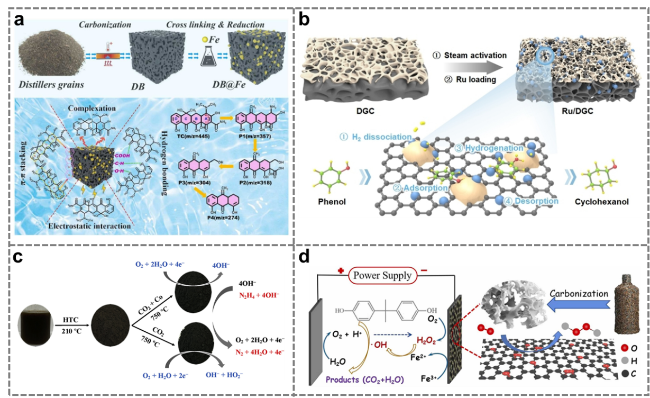
Figure 19. (a) Catalytic removal of tetracycline by distiller's grains-derived catalyst [143]. (b) Catalytic conversion of phenol to cyclohexanol by a distiller's grains-derived catalyst [144]. (c) Catalysis of the oxygen reduction reaction (ORR) by a distiller's grains-derived catalyst [145]. (d) Degradation of organic pollutants by a distiller's grains-derived electro-fenton catalyst [146]. |
Catalytic conversion is crucial in chemical manufacturing for accelerating reactions and improving efficiency. More importantly, catalytic conversion enables superior selectivity, which minimizes the formation of by-products and reduces energy consumption, paving the way for more sustainable and economical production. Cyclohexanol, as an important chemical raw material, is widely used for producing various high-value-added products [150]. For instance, the catalytic hydrogenation of phenol can produce cyclohexanol with high conversion and selectivity.
As shown in Figure 19b, Xu et al. prepared the carrier material (DGC-S5) from distiller's grains via pre-carbonization (600 °C, 1h and N2) and steam activation (800 °C, 1h) with 5 mL of water. The Ru/DGC-SX catalyst was subsequently prepared by incipient-wetness impregnation of DGC-SX with an aqueous RuCl3 solution, followed by centrifugation, washing, drying, and chemical reduction using NaBH4 to generate well-dispersed metallic Ru nanoparticles. Steam activation introduced abundant defects and oxygen-containing functional groups, increasing the specific surface area and micropore volume while promoting the formation of Si-OH/Si-H bonds, which collectively enhanced surface hydrophilicity. The enlarged specific surface area enabled uniform dispersion of Ru nanoparticles, thereby increasing the density of accessible active sites and significantly enhancing catalytic efficiency. The hydrophilic surface and oxygen-containing functional groups facilitated the electrostatic adsorption of Ru³⁺ ions during catalyst synthesis. During catalytic operation, phenol molecules were cooperatively adsorbed at the carbon-silica (C-SiO2) interface via π-π stacking interactions mediated by the graphitic carbon matrix and hydrogen bonding involving surface silanol (Si-OH) groups, thereby enriching the reactant concentration in proximity to the Ru active sites. Thanks to the unique interface structure and synergistic adsorption, Ru/DGC-S5 exhibited 100% phenol conversion and cyclohexanol yield under the optimal reaction conditions [144].
Oxygen reduction reaction (ORR) is a key cathodic process in electrochemistry, involving the multi-electron reduction of oxygen molecules on a catalyst surface [151]. However, the slow kinetics of ORR often become the rate-limiting step, posing a bottleneck for the energy conversion efficiency of devices. Therefore, the development of highly efficient and stable ORR catalysts is of paramount importance [152].
As shown in Figure 19c, Cazetta et al. synthesized a cobalt-modified, N, S-dual-doped nanoporous carbon (VPCO) from sugarcane distiller's grains. The synthesis comprised hydrothermal treatment (210 °C, 11 h), physical activation in CO2 at 750 °C for 3 h, and subsequent incorporation of cobalt (II) chloride hexahydrate. The Co-N active center is formed by the coordination between the cobalt species and the nitrogen species, which significantly improves the kinetics and efficiency of the catalytic reactions. For ORR, VPCO showed outstanding catalytic activity with an onset potential of 0.91 V (vs. RHE) and an electron transfer number close to 4, which indicates a highly efficient four-electron pathway. Meanwhile, for the hydrazine oxidation reaction (HzOR), it showed a low onset potential of 0.36 V (vs. RHE), demonstrating a low reaction overpotential and high intrinsic activity [145].
Advanced oxidation technologies (AOPs) are a class of environmental treatment technologies that use highly active free radicals to degrade recalcitrant organic pollutants. These radicals can mineralize contaminants completely or convert them into less toxic, small molecules [153]. AOPs are primarily applied to treat wastewater containing persistent organics such as antibiotics, endocrine disruptors, pesticides, and industrial chemicals, and they remain effective even in complex, high-salinity water matrices, demonstrating broad applicability. Xing et al. prepared nitrogen-sulfur co-doped mesoporous carbon (14.5-S/NMC) using a one-step blending carbonization. The process began with ball-milling a mixture of washed distiller's grains, silica, and sodium sulfide, followed by carbonization at 850 °C for 1 h under a nitrogen atmosphere, where the mass percentage of sodium sulfide to distiller's grains is 14.5. The resulting product was then washed with hydrofluoric acid and deionized water to obtain 14.5-S/NMC. Sulfur doping introduces defects and increases pores. Simultaneously, sodium sulfide reacts with water to generate hydrogen sulfide during carbonization. Then, hydrogen sulfide reacts with carbon to further promote the formation of the pore structure. In addition, a higher sulfur doping level introduces more nitrogen and sulfur functional groups. 14.5-S/NMC has a high specific surface area and abundant active sites for adsorbing persulfate (PS, Na2S2O8), promoting its reaction with sulfamethazine (SMZ). Specific functional groups such as pyridinic nitrogen, graphitic nitrogen, thiophene-like sulfur, and quinone-like oxygen were identified as key catalytically active sites. These groups facilitate electron transfer to activate persulfate (PS), generating both radical (such as SO4·- and ·OH) and non-radical species (such as O2·- and 1O2), which effectively promote the degradation of SMZ. Therefore, 14.5-S/NMC showed the best PS activation performance, and achieved the SMZ degradation of 93.4% and the total organic carbon (TOC) removal of 50.5% [154].
The electro-Fenton (EF) process is an advanced electrochemical water treatment technology that enables in situ H2O2 generation via the cathodic two-electron oxygen reduction reaction (2e- ORR), followed by Fe2+-catalyzed decomposition of H2O2 to produce highly reactive hydroxyl radicals (·OH), which non-selectively oxidize and mineralize organic pollutants [157,158]. However, the efficiency of EF technology is limited by the performance of cathode materials. Oxygen-rich distiller's grains can be converted into oxygen-doped porous carbon, which serves as an effective cathode in the EF system for H2O2 production and subsequent degradation of bisphenol A (BPA).
As shown in Figure 19d, Hu et al. synthesized oxygen-doped porous carbon (OPB) by grinding and mixing distiller's grains with KHCO3, followed by carbonization at 800 °C for 2 h under a N2 atmosphere. The resulting OPB possesses a high specific surface area, which provides abundant active sites for oxygen adsorption and diffusion, thereby promoting the electrochemical generation of H2O2. Furthermore, the oxygen functional groups retained after KHCO3 activation enhance the material's hydrophilicity and interfacial reactivity, facilitating the conversion of H2O2 into ·OH in the presence of Fe2+. Owing to this synergistic effect of large specific surface area and abundant oxygen functional groups, the OPB-modified EF system achieved an H2O2 yield of up to 15.46 mmol L-1 and enabled complete degradation of 20 mg L-1 bisphenol A (BPA) within 30 min [146]. As shown in Figure 20a, Qu et al. prepared Fe3O4/Fe0-loaded carbon composites using a one-pot method. The synthesis process involved grinding and mixing jarosite, distiller's grains, and Na2CO3, followed by a two-stage pyrolysis at 450 °C and 800 °C under a nitrogen atmosphere. Na2CO3 activation promoted the formation of a porous structure and retained abundant nitrogen/oxygen functional groups. Simultaneously, the iron species in jarosite were reduced to Fe3O4 and Fe0, which significantly improved the catalytic activity. Under optimized conditions (-0.7 V, neutral pH), the prepared composites achieved a removal ratio of 82.64% for DMP and 51.46% for TOC within 5 hours, while maintaining an exceptionally low iron leaching concentration of 0.039 mg L-1 [155].
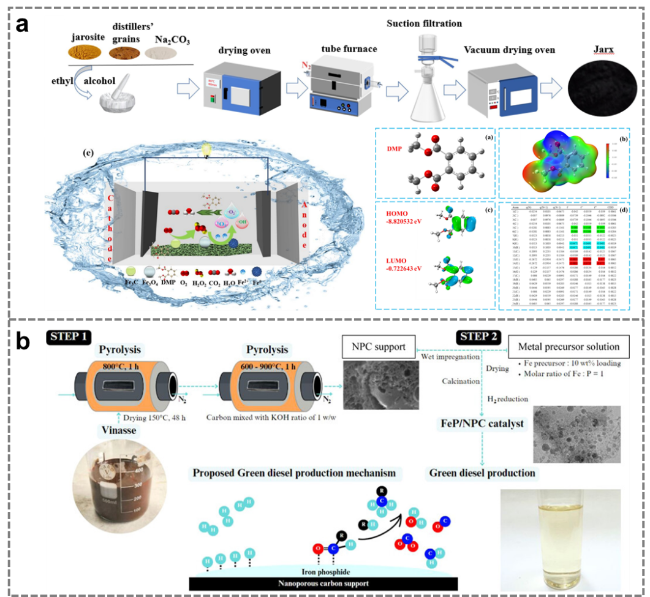
The hydrodeoxygenation (HDO) for converting biomass oils into high-quality green diesel involves the removal of oxygen as water or gaseous products under high temperature and pressure in the presence of a catalyst. This process produces linear alkanes with a chemical composition identical to that of petroleum diesel. The resulting green diesel possesses a high energy density, excellent oxidation stability, superior low-temperature fluidity, and full compatibility with existing infrastructure, making it a direct drop-in replacement for conventional diesel [159]. As shown in Figure 20b, Phetcharat et al. synthesized nanoporous carbons (NPC) via a two-step process of pre-carbonization of distiller's grains at 800 °C, and chemical activation with KOH (1:1 mass ratio) under nitrogen atmosphere. The FeP/NPC catalyst was subsequently prepared by impregnating NPC with Fe(NO3)3·9H2O and (NH4)2HPO4, followed by calcination at 800 °C and reduction at 600 °C under a hydrogen atmosphere. During synthesis, KOH etching created a hierarchical micro/mesoporous structure in the carbon, which facilitates mass transport. Simultaneously, the precursor was converted into an iron phosphide (FeP) phase, which serves as the active component. This FeP catalyst preferentially favors the decarboxylation/decarbonylation (DCO/DCO2) pathway over hydrodeoxygenation (HDO), thereby selectively producing Cn-1 hydrocarbons and enhancing the yield of diesel-range (C15-C18) fractions. Owing to this synergistic structure and active phase, the optimized FeP/NPC catalyst achieved complete conversion of palm oil with 68.5% selectivity toward green diesel at 340 °C [156].
Catalysts derived from distiller's grains can be synthesized via multiple pathways, with their performance fundamentally governed by the synergistic engineering of the carbon support's hierarchical porosity, surface functional chemistry, and well-dispersed active sites. Significant trade-offs exist among synthesis methods with respect to catalytic efficiency, economic viability, and operational complexity. The Fe-loaded carbon catalyst prepared via direct carbonization exhibits high tetracycline removal efficiency (95.08%) and low fabrication cost, yet suffers from underdeveloped porosity and limited mass-transfer capability. Catalysts fabricated via hybrid physical/chemical activation followed by noble metal (e.g., Ru) loading deliver both high specific surface area and a hydrophilic surface interface, enabling quantitative phenol hydrogenation selectivity (100%), albeit at substantially elevated material and processing costs. Doping and composite strategies, including heteroatom doping (e.g., N and S) and transition-metal phosphide integration (e.g., FeP), enable precise spatial and electronic modulation of catalytically active centers, yielding exceptional performance in oxygen reduction reaction (ORR) (onset potential: 0.91 V vs. RHE), persulfate-based advanced oxidation (93.4% pollutant degradation efficiency), and hydrodeoxygenation (HDO) of bio-oil (68.5% diesel-range hydrocarbon selectivity), albeit at the expense of synthetic complexity involving hazardous precursors and multi-step processing. The green one-pot synthesis strategy, leveraging waste-derived precursors for in situ formation of functional composites, exhibits high catalytic activity and exceptionally low metal leaching (0.039 mg L-1) in aqueous pollutant degradation, yet suffers from limited compositional tunability due to the inherent heterogeneity and variable reactivity of feedstock materials. Overall, the selection of methods requires a balance among catalytic performance, preparation cost, environmental friendliness and process feasibility.
Table 4. Economic analysis table of distiller's grains-derived catalysts vs. traditional catalysts [160-163]. |
| Materials | Cost | Energy consumption | Life cycle carbon emissions | Contamination during preparation | Disposal | Comprehensive potential |
|---|---|---|---|---|---|---|
| Baijiu distiller's grains-derived catalyst | CNY 200-300 per ton | Hydrothermal carbonization: 500-800 kWh per ton High-temperature activation: 1000-1500 kWh per ton | 1-2.5 tons CO2e per ton | Waste water and waste gas | Low toxicity | High |
| Traditional catalysts (such as the noble metal Pt/C) | CNY 2-4 million per ton | High-temperature synthesis and processing: 3,000-5,000 kWh per ton | 8-20 tons CO2e per ton | Toxic chemicals | Hazardous waste | Medium |
Based on the analysis of the above preparation strategies and by comparing the economic and environmental benefits of the distiller's grains-derived catalysts with traditional catalysts (such as noble metal Pt/C, molecular sieves, etc.), their advantages and challenges can be further clarified. As shown in Table 4, in terms of economy, distiller's grains have extremely low raw material costs, ranging from 200 to 500 CNY per ton, which is far lower than that of precious metal catalysts (Pt/C at approximately 2 to 4 million CNY per ton). In terms of environmental benefits, the life cycle carbon emissions of the distiller's grains catalyst (1-2.5 tons CO2e/ton) are significantly lower than those of traditional catalysts (8-20 tons CO2e/ton). Moreover, its preparation process generates less pollution, and it is less toxic when discarded, making it easy to handle or reuse. This aligns with the principles of green chemistry and a circular economy. While the distiller's grains-derived catalyst currently exhibits limitations in active site density, operational stability under extended use, and scalability of synthesis protocols, its compelling advantages in economic affordability and environmental sustainability render it a promising candidate for substitution in mild-condition applications, including environmental remediation (e.g., low-temperature VOC oxidation) and selective biomass upgrading. Consequently, it offers a technically viable and strategically aligned pathway toward the green transformation of conventional catalytic systems.
2.5 Other applications
2.5.1 Electromagnetic shielding
Electromagnetic shielding is a protective strategy that attenuates electromagnetic wave propagation through conductive or magnetic materials, primarily via reflection, absorption, and multiple internal reflections, to mitigate external electromagnetic interference (EMI) and prevent unintended leakage of internally generated electromagnetic energy [165,166].
As shown in Figure 21a, Wang et al. first prepared vinasse activated carbon (VAC) via a two-step KOH activation. Then, a CNF/CNT/VAC (CCV) composite is fabricated with a multi-layer hierarchical conductive structure through vacuum filtration and freeze-drying. The multi-layer hierarchical structure is primarily formed by the self-assembly of cellulose nanofibers (CNF), which serves as the material's skeleton. Concurrently, the ice crystal intercalation in the freeze-drying process constructs an internal multi-layer porous architecture guided by the ice template. The interconnected CNT network forms a highly conductive interface, achieving high shielding effectiveness. The multi-layer porous structure promotes multiple reflections and scattering of electromagnetic waves, facilitating the dissipation of electromagnetic energy as heat. Consequently, the CCV composite exhibits a remarkable average shielding effectiveness of 69 dB at a thickness of 0.9 mm, effectively blocking 99.99997% of incident electromagnetic energy. Even when the thickness is 0.3 mm, the CCV composite can retain a high shielding effectiveness as high as 34.7 dB (99.97% attenuation) [104]. Xiong et al. prepared activated carbons with micro-mesoporous structures from distiller's grains through a two-step KOH activation. Subsequently, the ternary composites (TCA) by conductive TEMPO-oxidized cellulose nanofibers (TONF), conductive carbon black (CCB), and vinasse activated carbons (VCA) are successfully constructed by electrostatic adsorption, freeze-drying, and hot pressing. CCB is assembled onto the TOCNF framework via electrostatic interactions, forming highly conductive pathways with a remarkably low resistance of 85 Ω. The conductive layer further forms a continuous point-to-point network structure with the activated carbon (AC), synergistically enhancing intelligent electromagnetic interference (EMI) shielding, which achieves an excellent shielding effectiveness (SE) of 37 dB. Furthermore, a dynamic crosslinker vitrimer can be introduced to construct an intelligent TCA-V composite with shape memory function, showing an SE of 35.1 dB even after 1000 bending cycles, highlighting its potential for flexible wearable applications [103].
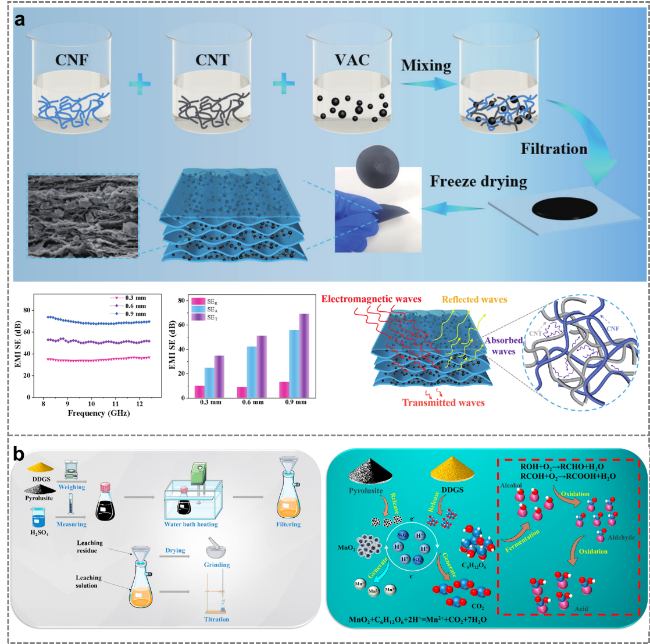
2.5.2 Leaching manganese ore
China's manganese industry exhibits a high degree of import dependence, primarily attributable to the low grade of domestic manganese ores and the inherent limitations of conventional hydrometallurgical leaching processes (such as the “Two-Ore Method”), which suffer from complex reaction pathways, low metal recovery efficiency, high energy intensity, and significant environmental emissions [164,167]. As an abundant, low-cost, and carbon-rich biomass feedstock, distiller's grains offer significant potential for resource recovery. The cellulose fraction can be efficiently hydrolyzed to fermentable sugars under mild acidic conditions, which act as effective reductants for the reductive leaching of pyrolusite (MnO2). Utilizing distiller's grains in this context represents a sustainable, energy-efficient, and cost-effective alternative to conventional manganese extraction processes [168]. The pollution and energy use are reduced, and the distiller's grains are valorized, producing significant environmental and economic benefits [169,170].
As shown in Figure 21b, Liu et al. used distillers dried grains with solubles (DDGS) as a clean reductant for the leaching of pyrolusite by optimizing key parameters, including sulfuric acid concentration, temperature, and time. Under the optimized conditions (3.5 mol L-1 H2SO4, DDGS/pyrolusite mass ratio of 0.4, and liquid-solid ratio of 3 mL g-1), a high manganese leaching efficiency of 91.55% is successfully achieved. Compared with conventional leaching methods, the use of DDGS as a reductant offers higher leaching efficiency, lower cost, and avoids the introduction of extra metal impurities, significantly simplifying subsequent purification [171].
2.5.3 Capacitive deionization
Capacitive deionization (CDI) is an environmentally friendly, low-energy technology for water desalination, which faces challenges related to the limited capacity and stability of electrode materials [175,176]. Distiller's grains, serving as a widely available, low-cost, and eco-friendly biomass precursor, can be transformed via specific activation into carbon electrodes possessing high specific surface areas and developed porous networks, thereby potentially improving the desalination efficiency and performance of CDI systems [177].
As shown in Figure 22a, Chen et al. prepared activated carbon (TDG-KH-3) with an ultra-high specific surface area of 3098.07m2 g-1 and a hierarchical porous structure from Fenjiu distiller's grains by pre-carbonization, KOH activation, and hierarchical acid treatment. TDG-KH-3 has the enhancements in specific surface area, pore volume, and surface chemistry (via carboxyl group introduction and silica removal), which shortens ion diffusion paths and offers abundant active sites for ion adsorption. TDG-KH-3 shows an outstanding CDI performance, achieving a high capacity of 41.85 mg g-1, an ultra-fast rate of 17.67 mg g-1 min-1, and excellent cycling stability [172].
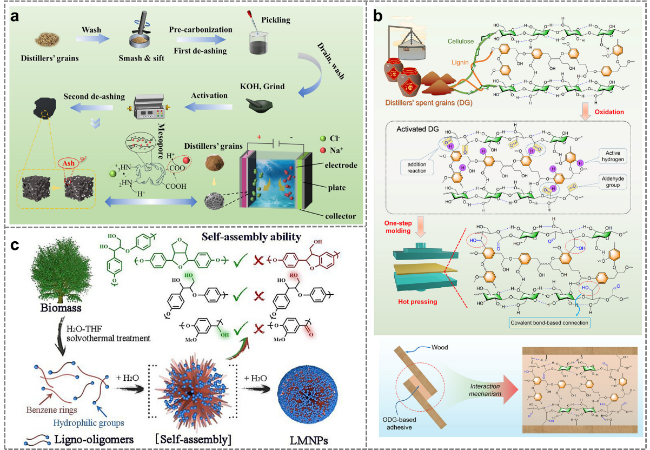
2.5.4 Binders
Distiller's grains, an abundant and inexpensive biomass resource rich in protein, fat, and fiber, can be functionally modified by selective oxidation [178]. During this process, the cellulose fraction undergoes controlled oxidation to generate aldehyde functionalities, which subsequently condense with lignin moieties, thereby conferring intrinsic adhesive properties [179].
As shown in Figure 22b, Feng et al. developed a novel technology for the high-value utilization of distiller's grains by the selective oxidation with sodium periodate (NaIO4). The C2-C3 bonds of the cellulose chains are cleaved to introduce aldehyde groups (3.90 mmol g-1), obtaining oxidized distiller's grains (ODG). The oxidized distiller's grains (ODG) powder serves as a solvent-free, bio-based wood adhesive (ODG-ADH). Upon hot-pressing, the aldehydes cross-link with wood lignin to form a solid interface, endowing the adhesive with a high bonding strength (2.28 MPa) and superior solvent resistance, evidenced by >84% strength retention after 2-hour water immersion, meeting the requirements for practical applications [173]. Liaw et al. developed a method to valorize Corn distiller's dried grains with solubles (DDGS) as a green filler for medium-density fiberboard. DDGS is treated by sodium hydroxide and acetic acid to denature the proteins (primarily zein), exposing more polar groups and enhancing interfacial bonding with wood fibers. The treated DDGS was blended with pine particles at 10-50 wt.% and hot-pressed at 190 °C to fabricate a medium-density fiberboard. The medium-density fiberboard exhibits excellent flexural strength and water resistance, meeting the ANSI A208.1-2009 standard, showing a potential to replace traditional formaldehyde-based synthetic resins [180].
2.5.5 Micro-nanoparticles
As shown in Figure 22c, Jiang et al. prepared lignin-derived micro- and nanoparticles (LMNPs) using a water-THF cosolvent system. Lignin oligomers are efficiently extracted from diverse lignocellulosic biomass feedstocks, including pine wood, corncob residue, and distiller's grains. Subsequently, LMNPs are constructed by solvent-induced self-assembly. LMNPs with uniform spherical morphology are obtained from corncob residue and pine wood, with a hydrophobic core (from π-π stacking of benzene rings) and a hydrophilic shell, exhibiting excellent colloidal stability (zeta potential: -23.6 to -26.0 mV) and high thermal stability (initial decomposition temperature: 274.5-296.8 °C) [174].
2.5.6 Phase change materials
Phase change materials (PCMs) are highly effective for latent heat storage and are widely employed in thermal management systems. However, their practical application is hindered by intrinsically low thermal conductivity and susceptibility to leakage during phase transitions [184,185]. A promising strategy involves immobilizing phase change materials within biomass-derived activated carbon matrices. Distiller's grains, a byproduct rich in lignocellulosic components, can be converted into high-surface-area activated carbons. The shape-stable composite fabricated by impregnating PCM into activated carbon derived from distiller's grains exhibits enhanced thermal conductivity, increased latent heat capacity, and exceptional long-term cycling stability, rendering it suitable for building energy efficiency enhancement and advanced thermal energy management [186].
Gowthami et al. fabricated a shape-stable composite phase change material by constructing a hybrid matrix of expanded graphite (EG) and carbonized beet pulp/distiller's grains (BAC), and vacuum impregnation of paraffin (RT24). The resulting composite exhibits a high thermal storage capacity (melting latent heat of 132.15 J g-1), excellent thermal stability (only 3% latent heat loss after 1000 cycles), and a thermal conductivity of 300% higher than pure paraffin, demonstrating its potential as a clean energy material for solar thermal storage systems [187]. Lu et al. prepared polylactic acid/distiller's dried grains with solubles (PLA/DDGS) composites via twin-screw extrusion blending. DDGS is uniformly dispersed within the PLA matrix as an organic filler, introducing abundant hydrophilic groups and bioavailable nutrients to microorganisms, significantly changing the surface morphology and crystallization behavior. The incorporation of DDGS can also accelerate PLA biodegradation in soil (from 0.1% to 10.5% over 24 weeks), which is evidenced by a lower tan δ temperature, increased surface cracking, reduced storage modulus, and higher glass transition temperature, demonstrating the dual function as a low-cost filler that promotes biodegradation while maintaining excellent properties [188].
3. Conclusions
Distiller's grains are a large group of by-products from the industries of Chinese Baijiu, ethanol, and ethanol derivatives, which are acidic and have a dark brown appearance, high water content and pungent odor. Distilled grains contain organic compounds such as phenols and organic acids, as well as residual original components, i.e., cellulose, hemicellulose, and lignin. In addition, there are inorganic elements, such as nitrogen, phosphorus, potassium, sulfur, cadmium, lead, copper, manganese, zinc, etc., in distiller's grains. The traditional applications of distiller's grains for feed production, composting, anaerobic digestion, and pellets will cause serious damage to the environment and living animals under long-term operation. The conversion of distiller's grains into functional materials and composite functional materials for advanced applications such as sodium ion batteries, supercapacitors, adsorbents, catalysts, etc., is a valorization pathway.
The distiller's grain-derived hard carbon anode for sodium ion batteries has an expanded graphitic interlayer spacing and abundant structural defects, which can rapidly diffuse and absorb sodium ions. Distiller's grains exhibit high thermochemical reactivity and can be easily activated by simple KOH and NaOH to prepare porous carbons with ultra-high specific surface area (>3000 m2 g-1). As supercapacitor electrodes and adsorbents, the distiller's grains-derived porous carbons can demonstrate excellent adsorption performance. The abundant self-heteroatom dopants can serve as additional adsorption sites to enhance the adsorption performance. The distiller's grains-derived composite functional materials can achieve superior catalytic performance in ORR, persulfate activation, and hydrodeoxygenation. In addition, the distiller's grains-derived functional materials and composite functional materials have also demonstrated excellent performance in applications, such as electromagnetic shielding, leaching manganese ore, capacitive deionization, binders, micro-nanoparticles, and phase change materials.
Although interesting progresses have been achieved in the research on distiller's grains-derived functional materials and composite functional materials, several key challenges still deserve our attention in the future.
(1) Component heterogeneity. The composition of distiller's grains is influenced by factors such as the type of raw grain, brewing process, season, and manufacturer, resulting in significant differences in the content and proportion of organic matter (cellulose, phenols, etc.) and inorganic matter (nutrient elements and heavy metals). This directly affects the performance consistency of its derivative functional materials and composite functional materials.
(2) Process specificity. The distiller's grains exhibit high structural activity due to relatively mild steps of microbial removal of the lignocellulose barrier. In addition, complex components such as proteins and heavy metals are also present in the distiller's grains. Therefore, the structural characteristics of distiller's grains derived functional materials and composite functional materials by traditional processes are significantly different from those of other biomass-derived materials, directly affecting the precise selection of the material preparation process.
(3) Application prospects. The comprehensive cost of the magnificent transformation from crude distiller's grains to functional materials and composite functional materials must also be lower than or close to the target commercial materials, and their specific performance indicators must strictly exceed those of the existing commercialized materials. Only in this way can they have application prospects.
(4) Large-scale application. The short storage time caused by high moisture content and easy spoilage, the significant decrease in performance due to factors such as uneven reactions, heat transfer, and reduced product separation efficiency in batch production, as well as the wastewater treatment resulting from the use of corrosive reagents, restrict the large-scale application of distiller's grains functional materials and composite functional materials.
4. Perspectives
Based on the four key challenges, specific future solutions are envisioned as shown in Figure 23.
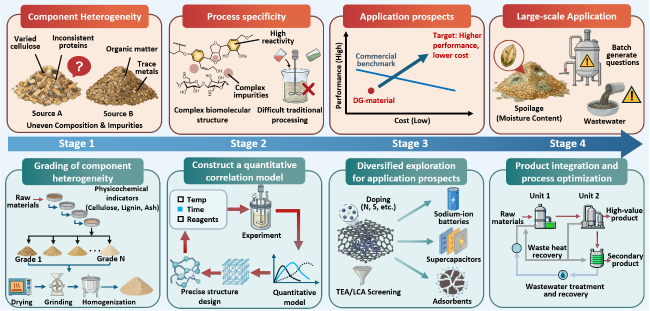


Figure 23. Prospective roadmap of distiller's grains-derived functional materials and composite functional materials. |
(1) Grading of distiller's grains for component heterogeneity. The source-based grading for distiller's grains from different sources and batches is necessary based on quantifiable physicochemical indicators, such as cellulose content, lignin content, nitrogen content, and ash content. A standardized pretreatment process, involving dehydration, drying, grinding, and homogenization, should be further established. The novel, highly adaptable pretreatment processes could be further developed according to the key performance-oriented indicators. Systematically building a model between pretreatment process parameters and distiller's grains characteristics provides a reference for the homogenization of distiller's grains.
(2) Quantitative correlation model between preparation process parameters and distiller's grains characteristics for process specificity. The classic preparation methods are used to prepare distiller's grains-derived functional materials and composite functional materials. The green and controllable new methods are further developed to prepare functional materials with stable structural parameters. The quantitative relationship between the structural parameters and the preparation process parameters is summarized to guide the precise selection of the material preparation process.
(3) Diversified exploration for application prospects. To address the bottleneck issues of specific applications, diversified means such as atomic doping and the combination of active homogeneous or heterogeneous materials could be carried out for distiller's grains-derived functional materials to achieve precise modification, enhancing their target performance. According to the relationship between performance improvement and cost increase, the competitive advantage window of distiller's grains-derived functional materials should be clearly defined. The most competitive distiller's grains-derived functional materials should be comprehensively compared with commercial products, including technical economic analysis (TEA) or life cycle assessment (LCA), to screen out the direction that is most likely to be industrialized first.
(4) Product integration and process optimization for large-scale applications. Taking the production process of the most promising distiller's grains-derived industrialized functional materials as the main focus, and integrating other similar promising industrialized functional material production processes, a stepwise product production line is constructed to maximize profits. For instance, low-ash and high specific surface area supercapacitor porous carbon electrode materials are the mainstream products, while high-ash and medium specific surface area porous carbon is used as adsorbent materials, and high-ash and low specific surface area porous carbon is used as soil conditioners or additives. The production process should be further optimized to achieve closed-loop production, such as using waste heat to heat the distiller's grains to achieve moisture removal and long-term storage, and mineralizing pollutants in the wastewater and recovering or harmlessly discharging chemicals. In addition, the applications of distiller's grains functional materials in emerging fields such as carbon dioxide capture, solid-state batteries, or photocatalysis should be explored to provide alternatives for the upgrading of large-scale applications.
In summary, the is review aims to successfully transform the traditionally difficult-to-handle and environmentally risky distiller's grains waste into a series of functional materials with outstanding performance in cutting-edge fields such as energy, environment, and catalysis. This review summarizes the inherent advantages of distiller's grains, such as high reactivity and self-doping elements, and introduces the preparation of distiller's grains-derived functional materials and composite functional materials, as well as their applications in sodium-ion batteries, supercapacitors, adsorption, catalysis, and other fields. It also distills the core challenges faced in the complete chain from raw materials to applications, including composition, process, cost, and scale-up, and proposes systematic solutions such as grading processing, green preparation, application matching, and industrial integration. This review provides a clear and feasible technical roadmap for this high-value path to move from the laboratory to practical application. This work not only provides the most efficient value-added direction for the resource utilization of distiller's grains but also offers important methodological references for the upgrading and recycling of other organic solid wastes, and has significant scientific significance and practical influence on promoting the development of a circular economy and achieving the “dual carbon” goals.