

1. Introduction
1.1 Necessary and significance of developing hydrogen storage material
The increase of anthropogenic carbon dioxide emissions, and consumption of fossil fuels boost the development of new energy to improve the global environment and achieve carbon neutrality [1-4]. Hydrogen has been considered as one of the most promising substitutes for fossil fuels because of its high-gravimetric energy density (142 MJ•kg-1), non-toxicity and clean-burning characteristics [5-10]. However, hydrogen is a very low-density gas at room temperature and pressure, which results in a very low volumetric energy density [11-14]. Hydrogen storage technology is the core link in the hydrogen energy industry chain and is crucial to the realization of the “hydrogen energy economy”, which are technologies developed to overcome the inherent low-density defects of hydrogen [15-18]. Despite the continuous development of hydrogen storage technology, it still faces several key constraints that limit the large-scale application of hydrogen energy. Such as, low volumetric energy density, high cost and the others [19-21]. Numerous efforts have been exerted to explore appropriate strategy to store hydrogen, such as high-pressure, cryogenic and solid-state hydrogen storage systems [22-24]. Currently, methods for hydrogen storage consist of high-pressure gaseous state, low-temperature liquid state and solid material hydrogen storage. Compared to conventional hydrogen storage technologies, the hydrogen storage from solid materials occupies the dominant position because of their volume-based density, remarkable reliability and considerable energy efficiency [25-27]. Magnesium hydride (MgH2) is a main representative of Mg-based hydrogen storage materials, which have small density, no pollution, low price, high hydrogen storage capacity [28-31]. However, high thermodynamic stability causes high de-hydrogenation temperature (above 420 ℃) in this system and leads to slow sluggish kinetics [32-34]. The design of efficient catalysts is critical to design active sites with highly active structures to facilitate dissociation and hydrogen release for MgH2 hydrogen storage system [35-37]. Therefore, intensified endeavors are carried out to reduce the thermodynamic stability and kinetic barrier, aiming to meet the practical utilization in the portable and stationary industries, such as alloying [38-44], nanoparticle sizes [45-50], and catalysts doping [51-56]. The hydrogen absorption and desorption reaction pathways as well as the thermodynamic properties of MgH2 can be effectively enhanced through the incorporation of these methods into the MgH2 system [57-59]. As shown in Fig. 1, the past decades have witnessed a significant increase in both publications and citations, along with a diverse classification of these articles. Within this field, the development of rational strategies is crucial for enhancing the performance of MgH2 hydrogen storage systems.
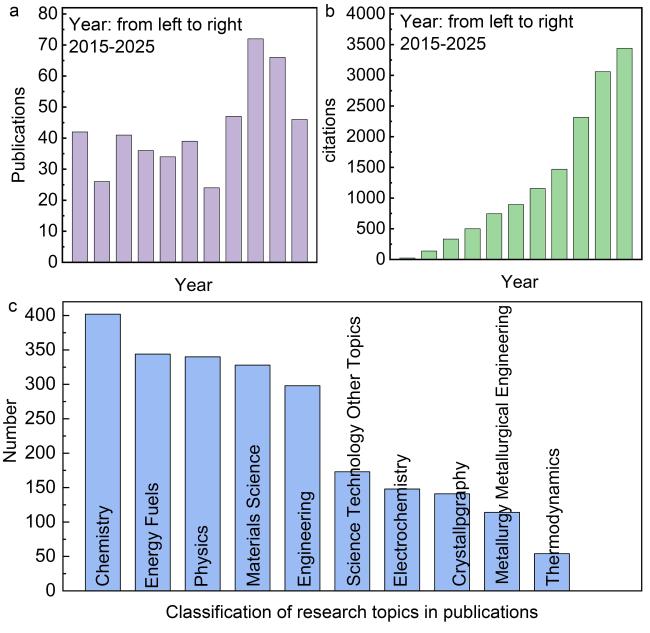
Fig. 1 (a, b) Amounts of publications and citations, (c) corresponding classification of research topics in publications using “Ti-based materials OR Ti materials OR Titanium-based composites”, “Magnesium hydrogen storage” as keywords since 2015. |
1.2 Overall research progress and basic content
Transition metal-based catalysts, for example, Ti, Ni, Co, Fe and the others as the metal sites significantly presented excellent performance in different fields [60-63]. Based on this, transition metal-based materials have promising in improving the reaction kinetic parameters of MgH2. Illustratively, Ti-based catalysts convey higher catalytic behavior during de/re-hydrokinetic process [64-66]. Among these methods, the introduction of additives is an effective design strategy to enhance hydrogen storage performance of Mg-based composites [67,68]. Ti-based compounds, such as Ti-halides, Ti-hydrides, Ti-oxides and so on are widely used in the field of catalytic modification of MgH2 hydrogen storage system [69-73]. Additionally, the confirmation of structure and determination of structure-activity relationship is important for the investigation of the reaction mechanisms [74-76]. Recently, a comprehensive review of solid-state hydrogen storage based on absorption was conducted involving synthesis methods, hydrogen storage properties, and recent advances [77-81]. Research on the electrochemical hydrogen anion (H-) driven hydrogen storage mechanism was developed and designed material with anti-α-AgI crystal structure, which exhibits excellent hydrogen anion conductivity and electrochemical stability, which can achieve high-capacity reversible hydrogen storage at low temperatures [82]. Niobium oxide (NbOx) nanoparticles are constructed to enhance the kinetic barriers of hydrogen storage in MgH2, which conveyed excellent performance [83]. Therefore, the summary of recent advances and mechanism investigation of Ti-based additives on MgH2 hydrogen storage performance is necessary to provide reference for developing the research in hydrogen storage field.
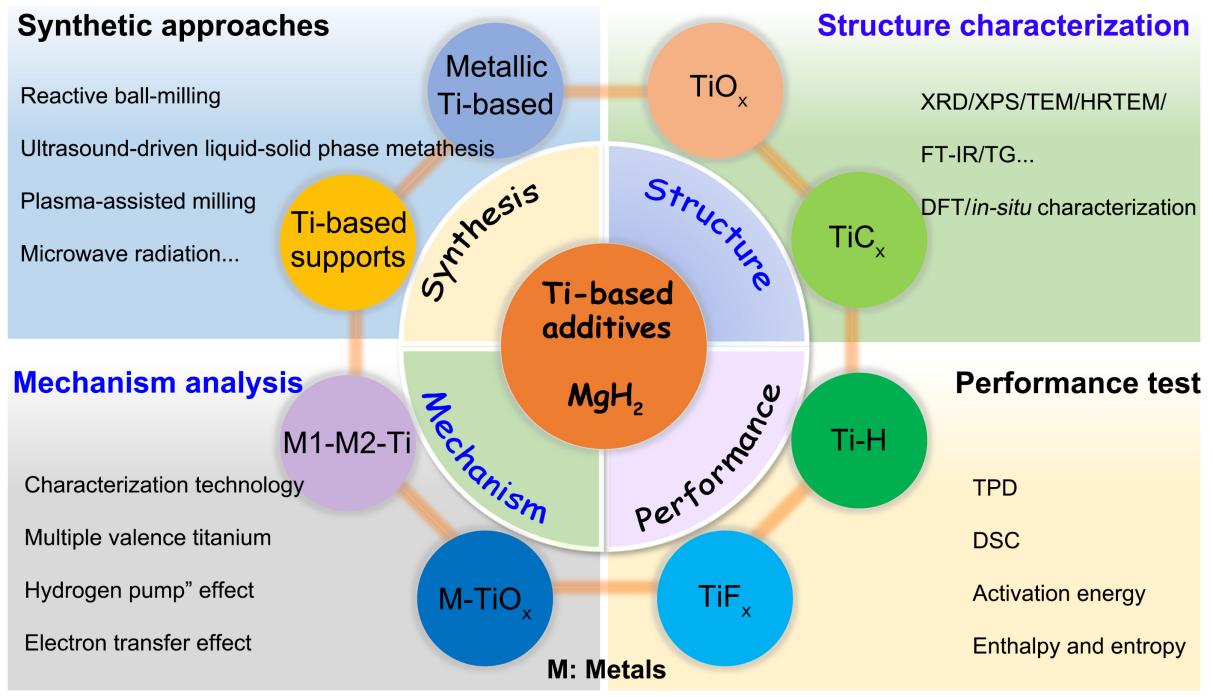
In this review, the advances insights into Ti-based materials for MgH2 hydrogen storage on the aspects of design paradigms, activity evaluation and mechanism elucidation are systematically summarized. The detailed discussion consists of reaction mechanism, structure-activity relationship of Ti-based additives, universal synthetic approaches, testing techniques in hydrogen storage system. The existing problems that remain unsolved and potential solutions are put forward and deliberated upon. Finally, the final summary and future outlook of the Ti-based additives on MgH2 hydrogen storage system was discussed in the aspects of the design of additives, the characterizations of Mg-based composites, the insights into structure-activity relationship, the construction of diversified hydrogen storage system and the development strategy of hydrogen storage technology in MgH2 hydrogen storage system. The combination of study on experimental and computational results in Mg-based hydride can provide support for developing high-efficiency Ti-based materials for the hydrogen storage field (Fig. 2).
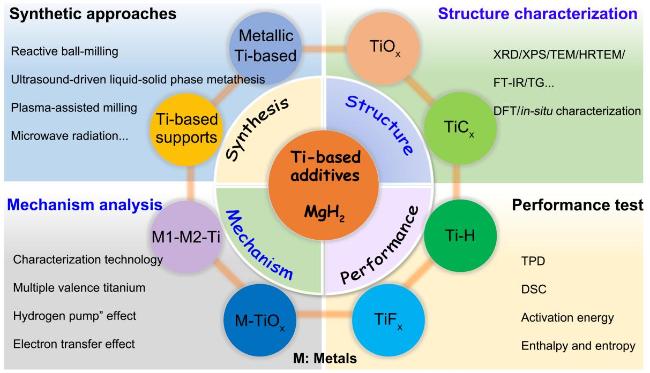
Fig. 2 Schematic illustration of Ti-based additives on hydrogen storage of MgH2. |
1.3 Features and significance of this review
Hydrogen energy as a carrier of clean energy has become increasingly prominent. Although MgH2 has a theoretical hydrogen storage capacity of 7.6 wt.%, its high dehydrogenation temperature and slow reaction kinetics limit its practical application [84,85]. Remarkable research has been done in MgH2 hydrogen storage to reduce dehydrogenation temperature, involving the design of high-efficiency additives, exploring hydrogen storage mechanisms, and the exploration of practical applications [86,87]. However, challenges still exist in current research. Therefore, it is necessary to present a comprehensive and in-depth review to convey the whole research in design strategy, hydrogen storage performance improvement and mechanism insights. The application of Ti-based additives significantly improves the hydrogen absorption/desorption performance of MgH2-based material, which is significant for promoting efficient and safe hydrogen energy storage technology. The features and implications of this review are as follows.
(1). Investigation of action mechanisms of Ti-based additives: Revealing reaction pathways is significant for boosting hydrogen storage efficiency of MgH2. Ti-based additives have the ability to significantly reduce dehydrogenation temperature and increase the performance of MgH2 during hydrogen storage system. The analysis of reaction mechanism is significant for understanding reaction mechanism. It is vital to reveal the action mode of Ti-based additives affecting the chemical reaction kinetics on MgH2 surface, including the decomposition of MgH2 molecules, the diffusion of hydrogen atoms, and the microscopic processes of new phase formation. In this review, the action mechanism of MgH2 on Ti-based materials is summarized, which is important for designing high-efficiency materials that enhance activity, stability, and boost the release of hydrogen. In this review, the action mechanism of MgH2 on Ti-based materials is summarized and this is important for designing high-efficiency materials, enhancing activity and stability, and boosting the release of hydrogen.
(2). Exploration of structure-activity relationship: The investigation on structure-activity relationship of Ti-based materials based on MgH2 can provide valuable evidence for hydrogen storage science. A close relationship between structural design and performance improvement exists in MgH2 hydrogen storage system. Understanding the structural properties of Ti-based additives is vital for the development of hydrogen storage. After introducing Ti-based additives, the crystal structure of MgH2 may change, leading to a decrease in nanosize and an increase in specific surface area. The in-depth discussion of structural changes in hydrogen storage performance is significant for the design of optimized hydrogen storage materials and provides theoretical guidance for researchers in hydrogen storage fields. This review can provide a scientific foundation for designing innovative materials, and promote development of the hydrogen storage field of MgH2.
(3). Reflection on strategies for materials design: The key of design strategy lies in improving hydrogen storage performance and reducing the dehydrogenation temperature of hydrogen storage materials, which can provide a foundation for efficient and reliable hydrogen energy storage. This review presents some reflections on materials design and points out the importance of design strategies. The rational design of materials from the aspects of the optimization of catalytic active sites, regulation of structure, development of composite designs can greatly improve activity and provide scientific guidance and technical support for the development of materials with high-efficiency. It provides solid technical support and broad innovation space for future hydrogen energy storage, promoting the revolution of hydrogen energy technology.
In conclusion, this review plays a role as a bridge to connect basic scientific research and industrial application. This review has the following advantages: (1) building a comprehensive knowledge framework that allows researchers to have a clearer understanding of MgH2 hydrogen storage system. (2) understanding the action mechanism of Ti-based materials in hydrogen storage system. (3) reflecting the latest achievements in this field and has the ability to stimulate more innovative thinking and realize the hydrogen economy society.
2. Advances in mechanism investigation
2.1 Technologies in analyzing mechanism
MgH2 and its complex have attracted positive attention as a material because of their low cost, safety and resources abundance. Ti-based additives have consistently emerged as appealing candidates for enhancing the kinetics and modifying thermodynamics of various hydrides, thereby lowering their working temperatures [70,88]. Through XRD technology, the phase composites can be achieved by detecting the diffraction peak of the substances after reaction or not. And then according to the change of the diffraction peak of the substances, the active substances with optimistic effect can be obtained. This is helpful for confirming the real active substance during the process of hydrogenation and dehydrogenation. Additionally, combing XPS technology, the valence state of the materials surface can be investigated. Combing the above-mentioned results of XRD and XPS, a clear mechanism towards MgH2 can be provided. The XRD and XPS technology are the common and basal method to support the analysis on the hydrogen storage mechanism [89-91]. Our group has been done many works to explain the reaction mechanism in virtue of the XRD, HRTEM and XPS technologies. And through these operations, the change of the phase structure can be obtained (Fig. 3). And the other technologies, such as in situ technologies also play an important role in analyzing the mechanism of hydrogen storage materials. XRD and HRTEM of MgH2+5Na2Ti3O7-Ov was operated to reveal possible relevant mechanism. The results indicate the existence of Ov vacancies. The above results confirm that the Na2Ti3O7-Ov exists stably in MgH2+5Na2Ti3O7-Ov in different states [90]. Fig. 3a-3c is the fabricated K2Ti8O17 nanobelts, the compositional and structural analyses based on XRD and HRTEM demonstrate the stable oxygen vacancies in the K2Ti8O17 and responsible for enhancing kinetics of MgH2 dehydrogenation [91]. Additionally, XRD and HRTEM are used to confirm the reaction mechanism of Ti3C2-supported praseodymium(III) fluoride (PrF3) NPs (PrF3/Ti3C2) composite. The electron transfer among Ti-species of Ti0, Ti2+, and Ti3+ is the key to enhance hydrogen storage properties of MgH2 [92]. Through XRD technology, the changes in phase transformation and chemical valence state of MgH2/TiO2 at different states can be explored. In the as-synthesized MgH2/TiO2, MgO is not detected. After dehydrogenation, the peak positions of Mg and MgO were observed. In the subsequent process of hydrogen absorption, Mg phase transforms to MgH2 and Mg2TiO4. The Mg-Ti oxide phase possess a positive effect for MgH2 de/re-hydrogenation. Furthermore, 1H NMR test was used to confirm the catalytic substance. Additionally, in situ HRTEM and ex-situ XPS are used to present reaction mechanism of MgH2/TiO2. The results confirm that multi-valance of Ti species are responsible for the high stability and kinetically accelerated hydrogen sorption performances [93] (Fig. 3d-3f). XPS investigation was operated to demonstrate the effect of TiF4 during the decomposition of MgH2. The XPS results confirm that the change in the chemical state of titanium from Ti4+ to Ti3+/Ti2+ states and acts as an active site to enhance the dissociation of hydrogen atoms [94]. Based on this, the characterizations technologies are used to testify the existence of active substances or not and to provide for the design of high-efficiency materials to enhance the hydrogen storage performance. Furthermore, DFT calculation is also a technology to convey the reaction mechanism during the hydrogen storage system and a detailed information was presented in this review.
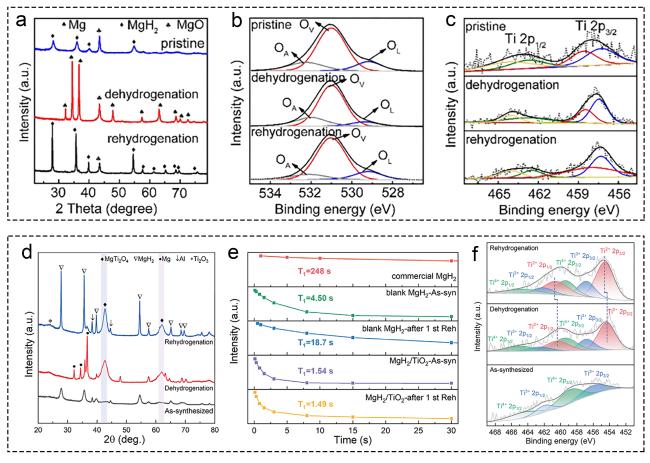
Fig. 3 Mechanism characterization and technology of Ti-based supports. (a-c) MgH2+K2Ti8O17. Reproduced with permission [91]. Copyright 2021, Elsevier. (d-f) MgH2/TiO2. Reproduced with permission [93]. Copyright 2022, Springer. |
2.2 Reaction mechanism
2.2.1 Multiple valence titanium mechanism
Multiple valence titanium mechanism refers to the generated multiple valence of titanium during the process of hydrogen absorption and release. The generated Ti-based species during the reaction process is the active substances in improving the hydrogen storage performance of Mg-based composites. The generated multiple valence titanium can be analyzed by XRD, HRTEM, XPS and the other in-situ or ex situ methods. The key process in this mechanism is redox reaction following an electron transfer. Ni/TiO2 was introduced into MgH2 to improve the hydrogen storage properties. Combing the XRD, XPS, HRTEM technology, Ni reacts with Mg to form Mg2Ni particles after dehydrogenation, and then transform into Mg2NiH4 in the subsequent process of re-hydrogenation. During the process of hydrogen storage system, the contents of Ti4+ generated in ball-milled process is higher than that in the process of dehydrogenation, and the Ti3+/2+ has a relatively lower content. The results illustrate that higher valence of TiO2 was changed into lower Ti3+/2+ during the process of dehydrogenation. The multiple valence of Ti compounds has the ability to provide electron transmission channels on Mg/MgH2. The multiple valence of Ti4+/3+/2+ in the system can achieve e- from H- and give e- to Mg2+, thus boosting the generation of H2 and Mg. The enhanced hydrogen storage properties of MgH2-Ni/TiO2 was assigned to the synergistic catalytic effect of Mg2Ni/Mg2NiH4 and the multiple valence of Ti4+/3+/2+ compounds [95] (Fig. 4a). TiO2@C was prepared and showed efficient performance on MgH2. During the analysis of the materials, TiO2 in the material reduces to lower valence during hydrogen storage process. The multiple valence of Ti leads to the weaker bonding of Mg‒H, improving the dissociation of hydrogen decreasing activation energy of MgH2 [96] (Fig. 4b). Self-assembly of TiO2 NPs on Ti3C2Tx are synthesized and present excellent hydrogen storage performance MgH2 system. M-TiO2/Ti3C2Tx was generated after introducing into MgH2 system. The interfaces can act as hydrogen diffusion channels to improve the electron transfer and thus promote the performance. Multiple valence Ti of Ti4+, Ti3+, Ti2+, Ti0 promote the interaction between MgH2 and Mg, H2 and thus improve the hydrogen storage kinetics [97] (Fig. 4c-4e). Ni/Ti3C2 is fabricated and shows optimal catalytic activity. The electron transfers in multiple valence Ti of Ti0, Ti2+, Ti3+, Ti4+ are responsible for the enhancement of catalytic performance [98] (Fig. 4f). TMTiO3 (TM = Ni and Co) were prepared and present excellent hydrogen storage performance in MgH2 system. Ni element transforms into Mg2NiH4 and Mg2Ni, and Ti element exist with a series of valences of Ti2+, Ti3+, and Ti4+. The synergistic interaction of Mg2Ni/Mg2NiH4 with multivalent Ti leads to advantageous high-efficiency hydrogen desorption characteristics in the MgH2 system [99] (Fig. 4g). A MgH2/TiO2 heterostructure with enhanced hydrogen storage performances was designed and the synergistic effects of multi-valance of Ti species accelerated electron transportation accelerated hydrogen storage performances of the composite [93] (Fig. 4h). Additionally, the other metal-based material also conveys the multiple valence metal mechanism. NbN NPs with intrinsic multiple valence of Nb5+-N/Nb3+-N were prepared and used in MgH2 system. NbN NPs presented superior catalytic effect on de/re-hydrogenation kinetics for MgH2/Mg system. The existence of Nb3+-N and Nb5+-N as the medium and play an important role for electron transfer and thus has the promising in enhancing the catalytic kinetics in system (Fig. 4i) [100].
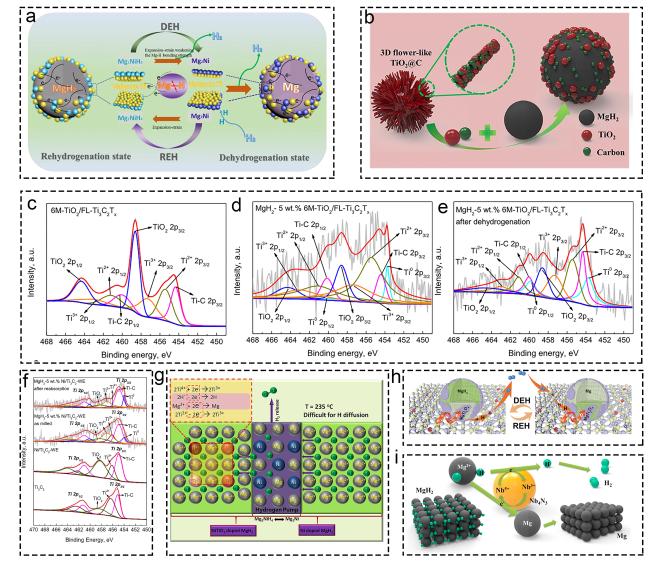
Fig. 4 Investigations on multiple valence titanium mechanism: (a) MgH2-Ni/TiO2. Reproduced with permission [95]. Copyright 2019, Elsevier. (b) MgH2+fl-TiO2@C. Reproduced with permission [96]. Copyright 2019, Elsevier. (c-e) XPS characterization of various materials before and after dehydrogenation. Reproduced with permission [97]. Copyright 2022, Elsevier. (f) Ti3C2-based MgH2 at different states. Reproduced with permission [98]. Copyright 2021, Elsevier. (g) Ti and Ni in MgH2 hydrogen storage system. Reproduced with permission [99]. Copyright 2018, American Chemical Society. (h) MgH2/TiO2. Reproduced with permission [93]. Copyright 2022, Springer. (i) NbN doped MgH2. Reproduced with permission [100]. Copyright 2020, Elsevier. |
In conclusion, the multiple valence Ti mechanism referred to Ti element undergoes valence state changes during reaction (such as the conversion of Ti3+ and Ti4+), which can act as a "reaction center" can promote the dissociation of hydrogen molecules and the transport of hydrogen atom. The valence change of Ti element allows it to capture electrons from hydrogen molecules to dissociate them into H⁺. The Ti element in this mechanism has a definite, variable valence state. When the initial form of the material is a compound of Ti (rather than elemental Ti), experimental characterization has the ability to observe the presence of Ti in different valence states and its changes during the reaction.
2.2.2 “Hydrogen pump” effect mechanism
“Hydrogen pump” mechanism is an effect between the generated active substances and MgH2 system. Many studies have found that Ti usually forms TiH2 or TiHx with hydrogen during the reaction. These hydrides are very stable and difficult to reversibly dehydrogenate. However, the presence of TiH2 or TiHx greatly accelerates the process of hydrogen absorption and release of Mg. This differs from the reversible changes in Ti valence states in the “multiple valence Ti mechanism” and therefore requires new theories to explain it. “Hydrogen pump” mechanism can regard Ti-based catalyst particles as a miniature “pumping station” can efficiently completes the “inhalation” and “discharge” reaction of hydrogen at the phase interface of the materials. This mechanism is particularly useful for interpreting the system of Ti or TiHx. It highlights the physical role of materials as hydrogen atom diffusion channels and interfacial reaction platforms. For example, characterizations through XRD and TEM reveal a recognized reciprocal phase shift between Mg2Ni and Mg2NiH4. The generated Mg2Ni and Mg2NiH4 were called “hydrogen pump” effect. The “hydrogen pump” effect makes the rapid hydrogen release of MgH2/Mg. Additionally, Ti-based MXene turn into Ti0 during the process of ball milling, dehydrogenation and re-hydrogenation. Integrating both experimental and theoretical evaluations, the synergistic effect of Ti0 on Mg2Ni/Mg2NiH4 is responsible for the perfect reaction kinetics and reaction stability of MgH2. The synergistic effect of Ti on the Mg2Ni/Mg2NiH4 “hydrogen pump” could provide approaches to improve the hydrogen storage properties of MgH2 [101] (Fig. 5a, 5b). Moreover, “hydrogen pump” existed in Mg@Pt, and the results demonstrated that Pt on Mg particles conveyed a “spillover” effect to ameliorate hydrogen absorption kinetics [102]. DFT calculation and in situ TEM confirmed that H-stabilized Mg3Pt can be considered as a “hydrogen pump” for MgH2 dehydrogenation and then changed into Pt after the operation of desorption. Mg3Pt can change into Pt with the release of H atoms. Therefore, Mg3Pt can act as a “hydrogen pump” to transfer H atoms and facilitating the hydrogen release performance (Fig. 5c-5e).
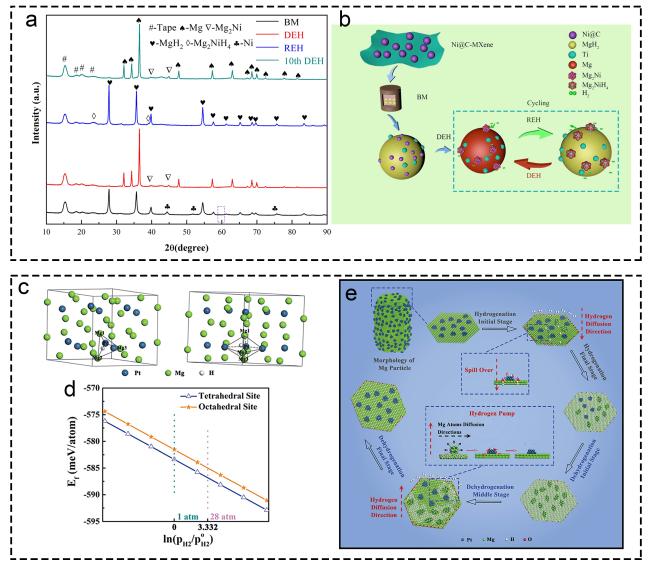
Fig. 5 Investigations on “Hydrogen pump” effect mechanism. (a, b) MgH2+10 wt.% Ni@C-MXene. Reproduced with permission [101]. Copyright 2020, Elsevier. (c-e) Mg@Pt. Reproduced with permission [102]. Copyright 2019, Royal Society of Chemistry. |
The “hydrogen pump” mechanism has similar significance in improving hydrogen storage performance. This all refers to the fact that the generated active substances play a crucial role in the generation of active substances during the process of MgH2 system. This can provide useful guidance in analyzing the reaction mechanism during hydrogen storage system.
2.2.3 Electron transfer effect mechanism
The study of detailed mechanism of electron transfer effect was conducted. These materials just like “electron catalyst” to improve the electronic environment. Electron transfer effect mechanism is explained at the electronic level rather than the atomic transport level. The addition of Ti adjusts the electronic structure of the Mg-based materials, changes the fermi level or density of Mg/MgH2, weakens the strength of Mg-H bonds, makes it easier for hydrogen atoms to break from the lattice of MgH2 and thus reduces the energy barrier of hydrogen desorption [103]. The creation of dispersed Co metal nanoparticles on TiO2 (Co/TiO2) showed an enhanced catalytic impact on the hydrogen de/absorption characteristics of MgH2. The impact of electron transfer is vital in improving the efficiency of hydrogen storage. Electrons in TiO2 valence band (VB) are stimulated by the conduction band (CB), leading to their migration to Co surfaces due to TiO2 elevated Fermi level compared to Co. Consequently, the Co surfaces are abundant in electrons, resulting in holes remaining on TiO2. Due to its d-band electron configuration, the material exhibits a stronger bond with H (Co-H) compared to Mg-H, thereby easing the process of storing hydrogen. Furthermore, the presence of electrons surrounding Co simplifies the transition of Mg2+ into Mg. The presence of H- at the junctures of Mg/MgH2 and Co/TiO2 creates openings near TiO2, resulting in the creation of H2. Electrons surrounding Co will shift e- to H atoms, leading to the subsequent process:
$H + e^{-} → H^{-}$
$Mg + 2h^{-1}→Mg^{2+}$
In terms of Mg, it will get the holes from the TiO2 and Mg2+ is formed. Thus, Co/TiO2 composite acts as “nano redox reactor” can greatly promote the dissociation and release of hydrogen, thus boosting the reaction kinetics of MgH2. Additionally, the increase of charge carriers will have the ability to enhance redox reaction of catalysts, and further promote the catalytic kinetics of hydrogen de/absorption [104]. Additionally, DFT show that the introduction of Ti can significantly reduce the enthalpy change of dehydrogenation reaction, and provide evidence from the perspectives of electron local function (ELF) and charge density distribution [105].
In conclusion, for the whole reaction process, the mechanism containing the generation of multiple valence titanium, and the “hydrogen pump” effect maybe exist during the dehydrogenation and hydrogen absorption reactions. The comparison of different reaction mechanisms was listed in Table 1. And from the above-mentioned results, the existence of multiple valence Ti has the promise in boosting the electron transfer.
Table 1. The comparison of different reaction mechanisms. |
| Mechanism | Key effect | Application scope |
|---|---|---|
| Multiple valence titanium mechanism | Valence state changes of Ti³⁺/Ti⁴⁺ to catalyze the dissociation of H2 and transport of H⁻ | Ti compounds or precursors |
| “Hydrogen pump” effect | Interface efficiently catalyzes the dissociation/recombination of H2 | Nanoscale metal Ti or in-situ TiHₓ system |
| Electron transfer effect | Weakening strength of Mg-H bond through charge rearrangement | Highly dispersed Ti or forms alloy/solid solution systems |
2.2.4 In-depth analysis of different mechanisms
The common goal of above-mentioned mechanism is to reduce the kinetic energy barrier of hydrogen absorption and release reaction of Mg-based hydrogen and thus facilitating the kinetics of hydrogen storage. Therefore, for the prepared materials, the investigation on the hydrogen storage mechanism still has many works to do. And the experimental and theoretical operations can be combined to understand the reaction mechanism in depth and explain their structure-activity relationship system. These mechanisms can occur simultaneously and synergistically. The “multiple valence titanium mechanism” and the “electron transfer effect mechanism” all involve the redistribution of electrons. However, the difference of these mechanisms is as follows, “multiple valence titanium mechanism” and the “electron transfer effect mechanism” focus on the explanation at the electronic level, while the “hydrogen pump” effect focuses more on physical images of atomic transport and interfacial processes. Additionally, the catalyst states are different, they correspond to different forms of catalysts (compounds, hydrides, doped atoms) and are therefore suitable for different experimental observations.
The classification of mechanisms stems from different explanatory models proposed by researchers for the same catalytic phenomenon based on different experimental phenomena and characterization techniques. When the materials precursor is Ti-based compound, researchers can observe valence changes of Ti through XPS and other methods, which are explained by the multiple valence titanium mechanism. When stable TiH2 formation and generate interface with Mg phase was observed. Although TiH2 appears to be “inactivated”, its performance is improved, giving rise to the “hydrogen pump” effect mechanism. This model can support by HRTEM and phase interface evolution. When Ti is highly dispersed in atomic form, the reaction mechanism is difficult to explain by interface or particle effects, theoretical calculations show changes in electronic structure, thus suggesting an electron transfer effect mechanism.
In summary, these three mechanisms reflect three different roles that Ti-based materials play in Mg-based hydrogen storage: redox mediators, hydrogen atom high-speed channels, and electronic structure regulation. Which mechanism is dominant depends on the chemical environment, size, distribution of the materials, and their interaction with the Mg-based matrix. In the actual reaction, these mechanisms conveyed coordination effect to enhance the hydrogen storage performance of Mg-based materials. It is necessary to comprehensively use advanced in situ characterization technologies and theoretical calculations to thoroughly clarify the reaction mechanism.
2.3 Theoretical research of Ti-based additives on hydrogen storage
2.3.1 Purified DFT calculation
The investigated on DFT calculation, such as, adsorption energy, charge transfer and electronic density of states is significant for the MgH2-based hydrogen storage system [106]. Ti-based materials have been done many researches on the pure DFT calculation. DFT investigation of Mg7XH16 (X=Ti, Zn, Pd, and Cd) was conducted for hydrogen storage applications. The calculated systems presented lower formation enthalpy and improved hydrogen releasing capacity [107]. DFT was used to reveal the effect TiO2/C/Ni and MgH2. Results confirm that the strong electronic interaction between TiO2/C/Ni and MgH2 weakened the Mg-H bond energy and elongated the Mg-H bond, thus boosting hydrogen storage performance [108]. The role of Ti, Nb, Al, and In in the diffusion of hydrogen atoms into Mg-based was studied by DFT calculations. Ti, Nb, and Al have been promising in substituting Mg in inner layers. The existence of the subsurface Ti or Nb atoms can enhance hydrogen atom diffusion. However, the doped Al or In atoms can provide support for the formation of MgH2 [109] (Fig. 6a-6d). DFT calculation was applied to investigate the surface stability of TiMn2 film and the hydrogen storage performance of Mg/TiMn2 interface. The interface between Mg and TiMn2 film is greatly facilitated the hydrogenation performance of Mg [110]. 2D Ti2C MXene as an additive was used to boost the dehydrogenation of MgH2. And the MgH2 molecule adsorption on 2D Ti2C and Ti2CT2 were also studied. The results confirm that TiH2 was produced in Ti2C/MgH2 interface during dehydrogenation process. The electron transfer into carrier and in situ formed TiH2, which has the ability to expedite the hydrogen storage performance of MgH2. Additionally, radial distribution functions (RDFs) are used to research the bond changes of Mg-H and Ti-H in Ti2C/MgH2 and Ti2CT2/MgH2 interface during the process of dehydrogenation. The results confirm that more H2 molecules was generated in the interface of Ti2C(OH)2/MgH2 [111] (Fig. 6e-6i). The structure, elastic modulus, Debye temperature, and heat capacity of four TiH2 were analyzed using DFT calculations. Findings verify the stability of tetragonal TiH2 compared to cubic TiH2. Cubic and tetragonal TiH2 exhibit a Debye temperature exceeding that of orthorhombic TiH2 [112] (Fig. 6j-6k). Additionally, investigations were operated on hydrogen storage system of MgH2 by Ti and Fe co-doping and the results confirmed that their addition presented excellent performance[113-116].
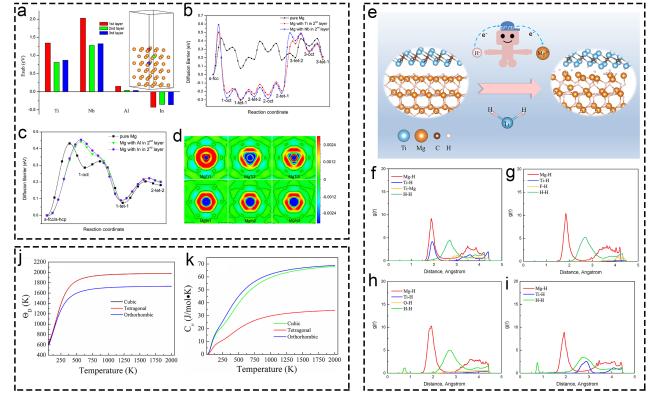
Fig. 6 Theoretical research of Ti-based additives on hydrogen storage based on pure DFT calculation. (a-d) The energy changes of Ti, Nb, Al, and In. Reproduced with permission [109]. Copyright 2017, Elsevier. (e-i) Mg-H, Ti-H and Ti-Mg bond of various structures. Reproduced with permission [111]. Copyright 2021, Elsevier. (j-k) Thermodynamic properties of TiH2 in Debye temperature and heat capacity. Reproduced with permission [112]. Copyright 2020, Wiley. |
2.3.2 Experimental verification guided by DFT calculation
The investigation on the experimental and theoretical studies plays a vital role in improving the dehydrogenation thermodynamics of MgH2 doped with additives. The experimental verification based on the results of DFT calculation is necessary for the researchers to study the hydrogen storage of MgH2 composites. Some works have been done in aspects of experimental and DFT. Combined with DFT calculations and experimental study, the thermodynamic effects of doped Ti and Ni on MgH2 reaction were studied [117] (Fig. 7). The results demonstrated that the introduction of Ti or Ni can decrease the reaction enthalpy and initial dehydrogenation temperature of MgH2. The local lattice distortion of MgH2 induced by dopants is responsible for the enhanced dehydrogenation thermodynamics. The electron structure analysis showed that the thermodynamics of dehydrogenation of doped MgH2 is closely related to bonding characteristics of M-H(where M = Mg, Ti, Ni) in the energy gap and lattice near Fermi level. Smaller energy gap and more pronounced covalent bonding characteristics suggest that the thermodynamics of dehydrogenation of MgH2 is more favorable. For instance, in the low-temperature region, the dehydrogenation onset and peak temperatures of the three ball-milled samples follow a decreasing order: MgH2, MgH2-Ti, and MgH2-Ni. Based on DFT calculation, the internal mechanism of in situ hydrolysis in a representative Ti-based MXene (TixC) system is studied and the results confirm that TixC undergoes hydrogen-driven structural restructuring, which boost the performance [118]. This experimental observation is in excellent agreement with the theoretical calculations of the enthalpy change (ΔH) and energy difference (ΔE).
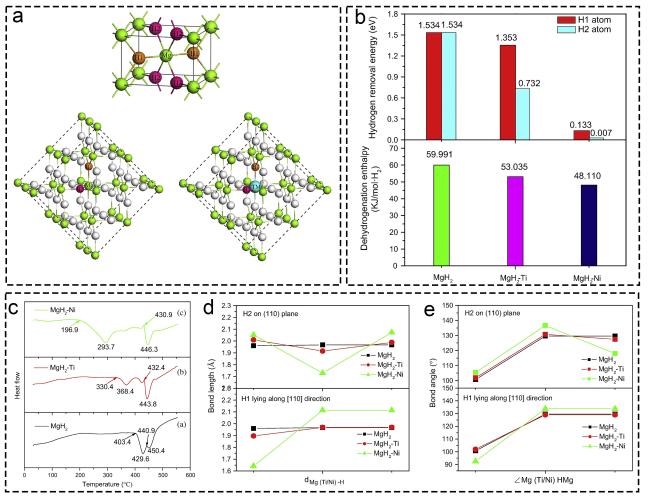
Fig. 7 Theoretical research of Ti-based additives on hydrogen storage based on experimental verification guided by DFT calculation. (a) MgH2 unit cell, Mg16H32 and Mg15TMH32 (TM = Ti or Ni). (b) Calculated dehydrogenation enthalpies and hydrogen removal energies of MgH2-based system. (c) DSC (differential scanning calorimetry) curves of MgH2-based materials. (d, e) Comparison of interatomic bond lengths and bond angles in MgH2-based system. Reproduced with permission [117]. Copyright 2015, Elsevier. |
In conclusion, theoretical research on Ti-based additives in hydrogen storage shows that for most Ti-based catalyst systems, especially those containing nanoscale Ti particles or hydrides, the excellent catalytic performance mainly comes from the “hydrogen pump” effect. DFT can provide solid quantitative evidence. Additionally, DFT calculations can support the existence of electron transfer effects, which can quantitatively or semi-quantitatively indicate that the strength of Mg-H bonds is weakened in the presence of Ti. And at the atomic scale, the reaction energy barrier is weak, which complements the “hydrogen pump” effect rather than repelling each other. For the multiple valence titanium mechanism, DFT calculations can confirm that the real catalytic active sites may be the generated interface after the reaction. Thus, in the field of application design of Mg-based hydrogen storage materials, the combination of experiment and theory is important for promoting the development of this field. Through experiments, the performance of Mg-based hydrogen storage materials under different conditions can be intuitively observed, such as hydrogen storage capacity, hydrogen absorption and release kinetics, cycle stability, etc. Theoretical research has the ability to provide direction and guidance for experiments. Using theoretical methods such as quantum mechanics and molecular dynamics, can gain an in-depth understanding of the structure and interactions of Mg-based hydrogen storage materials, and predict the properties and behaviors of materials. Theoretical calculations can provide guidance to understand the thermodynamic and kinetic mechanisms of hydrogen storage and explain the phenomena observed in experiments. The combination of experiment and theory can accelerate the research and development process of Mg-based hydrogen storage materials. In the practical application design, theoretical prediction can screen out material systems with potential excellent properties, and then verify and optimize them through experiments. If the experimental results do not match the theoretical predictions, the theoretical model can be further modified to more accurately describe the properties of the material. This cyclic and iterative process can greatly improve research efficiency and reduce the corresponding costs.
3. Design strategies of MgH2-based additives
3.1 Reactive ball-milling
Ball-milling is an effective strategy to reduce crystallite sizes and introduce more active sites, which have an important role in hydrogen dissociation [119-122]. Reactive ball milling (RBM) was operated during exothermic reactions between the gas- and metallic solid phases at almost room temperature and was considered as a powerful method to fabricate different materials [123-126]. RBM has been used to prepare metal hydrides, such as, MgH2 and their composite. The operation of ball-milling metal hydride materials has the ability to help generate fresh metal surfaces, increases surface area, forms defects and so on [127-129]. Synthesis by RBM under hydrogen atmosphere is a potential method to prepare hydrogen storage materials [130,131]. Mechanical ball-milling as a simple and efficient way has been used in the preparation of the Mg-based hybrids and play important role in energy storage. MgH2 and the synthesized catalysts with different forms and compositions can mix uniformly to generate nano-structured Mg-based composites. Illustratively, the defect was introduced into the composites during the process of ball-milling. And the introduction of defect and decrease of the NPs has the promising in providing abundant active substances for the hydrogen storage performance and decreasing hydrogen diffusion pathway, thus improving the catalytic kinetic performance of reaction activity of hydrogen storage materials [39,132,133]. A wet chemical ball milling strategy was used to design Mg-NiTiO3 and used in hydrogen storage properties of Mg [134]. TiFe was synthesized and doped into MgH2 to enehance the de/re-hydrogenation performance of MgH2. Compared with MgH2, the onset desorption temperature has a decrease after adding TiFe into MgH2, which present excellent performance for MgH2 hydrogen storage [135]. NbN NPs were milled with MgH2 and present excellent hydrogen storage performance of MgH2 [100]. Mechanical grinding was used to obtain Mg-based alloys La7Sm3Mg80Ni10+5 wt.% M (M = None, TiO2, La2O3). The addition of catalysts reduces the time of releasing hydrogen and the hydrogen desorption activation energy [136]. 2D vanadium nanosheets (VNS) were synthesized through wet chemical ball milling strategy and have high effective in boosting hydrogen storage performance of MgH2. The optimal material began to release hydrogen at 187.2 °C, and this temperature is inferior than that of MgH2 [137] (Fig. 8a-8c). PdNi bilayer metallenes are designed and used for hydrogen storage of MgH2. The d-band center of PdNi cluster is closer to the Fermi energy level than other hydrogen absorption system, making the adsorption of H-atoms easier (Fig. 8d). Through the corresponding experimental and theoretical simulations, active substance with in situ formation of PdNi alloy clusters, including Pd/Ni phase clusters and Pd/Ni single atoms, with appropriate d band centre, obtained by using metallene ball milling to enhance hydrogen storage capacity of MgH2 [138]. Few-layer MXene Ti3C2Tx supported Ni@C (Ni@C/FL-Ti3C2Tx) was served as an efficient catalyst for hydrogen desorption of MgH2. MgH2+10 wt% Ni@C/FL-Ti3C2Tx composite conveys superior kinetics and excellent cycling stability [139]. The transition metal phosphides are also used in preparing the corresponding catalysts. Namely, Ni2P as an additive was append to MgH2 through ball-milling strategy. The activation energy of desorption of Ni2P-doped MgH2 composite is lower than pure MgH2. MgH2-Ni2P transforms into Mg3P2 and Mg2NiH4 and thus instantly lower the hydrogen desorption temperature of MgH2 [140] (Fig. 8e).
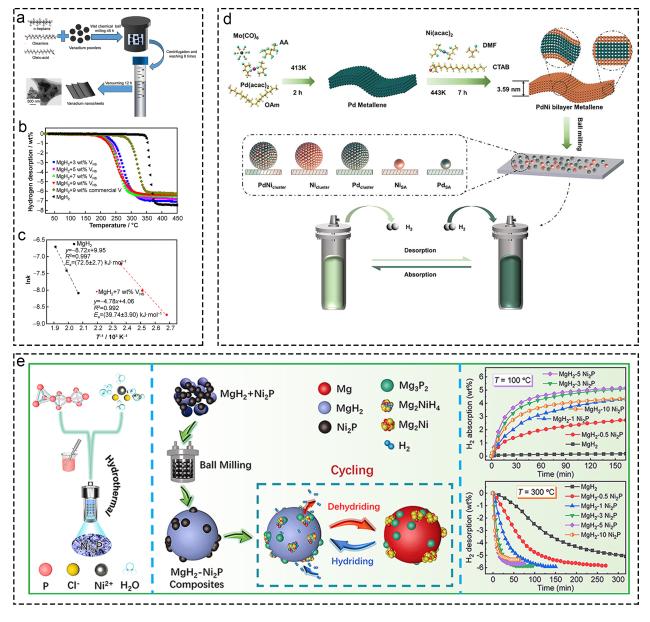
Fig. 8 Corresponding information and presentation of various catalysts on hydrogen storage of MgH2 and MgH2-based composites. (a-c) Vanadium nanosheets. Reproduced with permission [137]. Copyright 2021, Nonferrous Metals Society of China. (d) MgH2-PdNi, Reproduced with permission [138]. Copyright 2023, Wiley. (e) MgH2-Ni2P. Reproduced with permission [140]. Copyright 2022, Elsevier. |
Summarily, different planetary mill of stainless steel vials with volume and balls with diameter at a certain rotational speed for some times during the process of ball milling maybe has different effect on the hydrogen storage of Mg-based materials. The weight ratio of sample to ball, the time of ball-milling and the other milling parameters may have different effect on hydrogen storage properties. Through different contrastive experiments, the optimal parameters can be achieved and provide theoretical guidance for developing the hydrogen storage system.
3.2 Plasma-assisted milling
Plasma-assisted milling (P-milling) technology was developed by Professor Min Zhu group at South China University of Technology. P-milling refers to introducing cold field discharge plasma into mechanical vibration ball milling. The high-energy non-equilibrium plasma and mechanical ball mill are formed by using near-normal pressure gas in the ball mill tank [141,142]. Based on P-milling, a vibratory mill is established and dielectric barrier discharge plasma (DBDP) was introduced into the milling process, DBDP is a simple technique to create non-equilibrium plasma conditions at low gas temperatures and atmospheric-pressures. The introduction of DBDP can generate extra thermal explosion and high-energy electrons to powder during the process of ball milling and consider as an efficient method of powder crushing and alloying. The synergistic effect promotes the microstructure refinement, alloying, active activation, chemical reaction and accelerates the in-situ gas-solid phase reaction of the powder. These can greatly enhance the efficiency of ball milling, significantly decrease the pollution of ball mill, and form a unique structure to dramatically boost hydrogen storage performance [143] (Fig. 9a). Among those reversible hydrogen storage materials, Mg is a promising candidate because of its advantages of high hydrogen capacity, abundant resources, and low cost. However, the hydrogenation and dehydrogenation of MgH2 usually requires high temperatures because of its high thermodynamic stability and kinetic barrier. The kinetic properties of solid solutes are still sluggish, thus long ball milling is required. Based on this, during the process of hydrogen storage of MgH2, P-milling has the ability to implement the rapid formation of Mg-based solid solution and in situ induced Mg-based catalysts, thereby achieving the dual adjustment of thermodynamic and kinetic properties. Prof. Zhu group use P-milling technology has been done many research on the hydrogen storage of MgH2. For example, P-milling was used to design Mg-In for the first time and the results confirm that P-milling has the ability to promote the generation of Mg95In5, and following the in situ generation of MgF2 because of the reaction between Mg and polytetrafluoroethylene. The Mg(In)-MgF2 composite has a much lower ΔH than that of pure MgH2 [144]. Ultrafine WC-10Co hard metals with VC/V2O5 addition was prepared by assisted milling, reducing the particle size of W, Co and VC and improving mechanical properties of cemented carbide [145]. Mg85In5Al5Ti5 alloy was synthesized by P-milling and the dual-tuning effects of In, Al, and Ti boosts the corresponding thermodynamics and kinetics performance (Fig. 9b) [146]. Additionally, Al2O3, TiO2 and Fe2O3 are introduced into Mg powders and the passivated Mg-TiO2 composite presents optimistic hydrogen absorption properties of Mg and MgH2 [147]. TiO2 formed on the surface of Mg particles and the defects in Mg lattice boost hydrogen absorption properties.
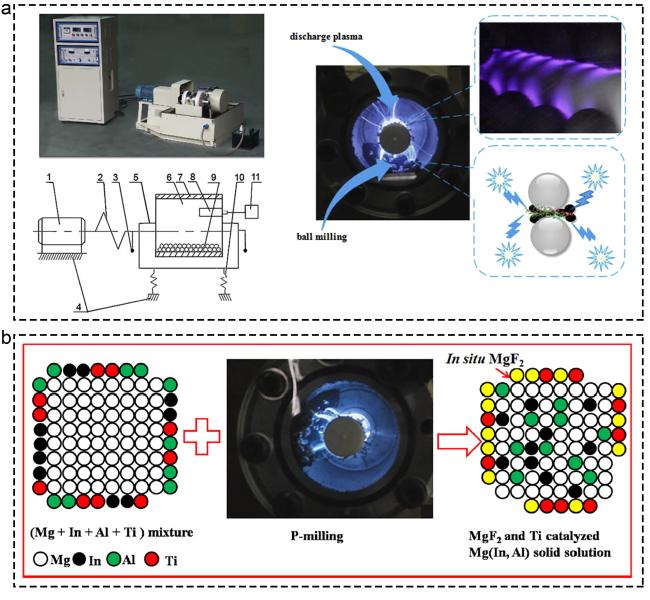
Fig. 9 Corresponding information and presentation of various catalysts on hydrogen storage of MgH2 and MgH2-based composites. (a) P-milling. Reproduced with permission [143]. Copyright 2017, Elsevier. (b) Mg85In5Al5Ti5 alloy by P-milling. Reproduced with permission [146]. Copyright 2015, Elsevier. |
In conclusion, for Mg-based hydrogen storage materials, P-milling has the ability to realize rapid generation of Mg-based solid solution, thereby realizing dual adjustment of thermodynamic and kinetic properties. P-milling provides a simple, economical, and pollution-free method for designing nano-materials or boosting mechano-chemical reactions, paving a way for future large-scale production of energy storage materials. Additionally, in addition to energy storage materials, the P-milling technology can also be used for the mass production of nano-sized metal and alloy powders, especially those that are difficult to synthesize by traditional ball milling technology.
3.3 Ultrasound-dri4.2.1.4 ven liquid-solid phase metathesis
Despite the attention MgH2 has received, its volume is stable and hydrogen can only be released at impractically high temperatures. On this basis, Liu proposed a new ultrasonic driven liquid-solid phase process by taking advantage of the difference of solubility of metal hydrides and chloride in thermocouple. Through this method, MgCl2 was dissolved in THF with mechanical stirring. Subsequently, LiH was added into THF solution and mixed using a magnetic stirrer. The obtained suspension was exposed to ultrasonic. Finally, ultrafine MgH2 NPs (4-5 nm) were successfully harvested without supports (Fig. 10a). Unprecedented hydrogen storage capacity achieved due to the thermodynamic destabilization and reduced power barriers (Fig. 10b). The synthesized NPs present rapid hydrogen cycling behavior compared with bulk MgH2 (Fig. 10c). Based on this, DFT calculation is conducted on the aspect of hydrogen molecular adsorption, desorption, and diffusion processes in MgH2 nanoclusters and block models (Fig. 10d) [148]. The ultrasound-driven liquid-solid phase metathesis strategy has the ability to synthesize a wide range of nanomaterials, which include complex metal hydrides with higher contents of intrinsic hydrogen.
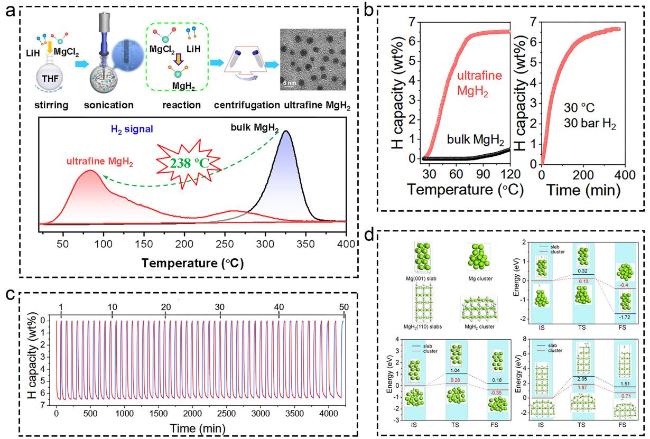
Fig. 10 (a-d) The corresponding information and presentation of ultrafine MgH2 catalysts on hydrogen storage of MgH2 and MgH2-based composites. Reproduced with permission [148]. Copyright 2020, Royal Society of Chemistry. |
3.4 Single atom incorporating
Single atom-based catalysts (SACs) are currently widely used in the fields of CO2 electroreduction [149], hydrogen generation [150,151] organic electrocatalytic synthesis [152,153], formic acid oxidation reaction [154], oxygen reduction reaction [155], biocatalysis [156] photocatalytic synthesis [157], and other fields [158]. The problem with hydrogen storage materials such as MgH2 is that the temperature of hydrogen absorption and release is high and the kinetic performance is poor. Thus, a catalyst is needed to reduce the reaction energy barrier. SACs can provide more active sites and have promising in promoting the adsorption and dissociation of hydrogen and enhancing hydrogen storage because of their high atom utilization and unique electronic structure [159,160]. For example, Pd single atoms on Sc2O3 NPs and the Mg-Pd alloy generated during the hydrogen absorption and desorption process have an efficient hydrogen pumping effect, thus boosting the kinetic properties of MgH2 [161]. Although SACs possess the advantages of higher efficiency and lower usage, possible challenges include stability, the tendency to aggregate, and inactivation during cycling of SACs existed in this field [162,163]. Therefore, the excavation of suitable catalysts based on SACs is necessary for the development of MgH2 hydrogen storage systems. Transition metal-based SACs, such as Ni [164,165], Fe [166,166], or the combinations with noble metal-based SACs like Ru [167,168], Pd [169], Rh [170]. Illustratively, the selection of carrier materials, such as, carbon [171,172], carbon nitride [173], graphene [174] has the ability to stabilize single atoms and prevent their aggregation. The design on the structures of catalysts such as, doping [175], coordination structure regulation [176,177], MgH2/single-atom heterojunctions [178], theoretical calculations were carried out to screen highly reactive metal single atoms, optimize their electronic interaction with the carrier, and enhance the hydrogen adsorption energy [179,180], defect engineering to stabilize single atoms and manipulate electronic structures [181,182], and so on. Additionally, developing low-temperature atomic layer deposition [183], pulsed electroreduction [184] and the others technology to realize the high loading and uniform distribution of single atoms. The above-mentioned modified strategies can increase the exposure of active sites and boost the reaction performance.
In summary, SACs can effectively catalyze the decomposition of MgH2 and the release of hydrogen through the isolated active sites of metal atoms, reducing the reaction energy barrier. The high atomic utilization rate and unique electronic structure of SACs can enhance the adsorption/desorption capacity of hydrogen and accelerate the phase transition process of Mg/MgH2. The atomic-scale dispersion of SACs avoids the agglomeration problems of conventional nanoparticle catalysts, thus maintaining catalytic activity over long cycles [185,186]. The combination of SACs with nanoparticles or two-dimensional materials to construct multi-level catalytic interfaces [187,188]. The application of SACs in the field of hydrogen storage is still in its infancy, and challenges such as large-scale preparation, high-temperature stability, and cost control need to be addressed [189]. Through multidisciplinary integration of materials science, chemical engineering, and artificial intelligence, it is expected that the practical application of SACs in on-board hydrogen storage systems or distributed energy resources will be realized in the future, promoting the commercialization of the hydrogen economy.
3.5 Other design strategies
Microwave assisted method was conducted under the generation of heat energy in the reactant molecules through microwave radiation energy, thereby facilitating the reaction. Due to the instantaneous, homogeneous and efficient nature of microwave radiation, the reaction speed can be greatly improved, and reduced the reaction temperature. Microwave radiation was used to enhance hydrogen storage of MgH2. TiO2-x generated through ball milling has the ability to absorb microwave radiation and act as “hot spots” (Fig. 11a, 11b) [190]. The production of Mg-Ti-H films was achieved through a one-step method employing microwave reactive plasma-assisted co-sputtering, and the composition of Ti playing a crucial role in the creation of these films [191]. The bottom-up approach for self-assembly was utilized in the creation of MgH2 nanoparticles fixed to the 3D Ti3C2Tx surface. Enhanced hydrogen storage capabilities were achieved through the nanoconfinement and the multiphasic connections between MgH2 (Mg), Ti-MX, and in situ formed TiH2 (Fig. 11c) [40]. Additionally, MgH2/TiO2 heterostructure was synthesized following the bottom-up self-assembly of MgH2 NPs anchored on TiO2 NS. The MgH2/TiO2 heterostructure conveyed rapid reaction kinetics, low temperature, and stability (Fig. 11d) [93]. An innovative 1D N-doped, hierarchically porous carbon nanofiber (pCNF), derived from MOF, has been developed and utilized in the synthesis of MgH2/Ni nanoparticles. The MgH2/Ni@pCNF variant exhibited quicker desorption rates and a reduced initial desorption temperature in contrast to the standard MgH2 (Fig. 11e, 11f) [192]. Additionally, Furthermore, Mg-Ti specimens, varying in Ti levels, were created by compressing nanoparticles cultivated through Inert Gas Condensation using separate Mg and Ti vapor sources [193].
Summarily, reactive ball-milling method is a common strategy for the hydrogen storage materials and presented excellent performance in enhancing the hydrogen release performance. Considering the development of the field of hydrogen storage, it is necessary to research other methods with high-efficiency, such as plasma-assisted milling, ultrasound-assisted milling, microwave assisted and so on, which are of great help for further enhancing the hydrogen storage performances of MgH2. Table 2 was the comparison of different reaction strategies. From the results of Table 2, we can obtain that the advantages and disadvantages of each method are different, and the scope of application is also different. The choice of method was based on a combination of research objectives, available resources, and cost-effectiveness.
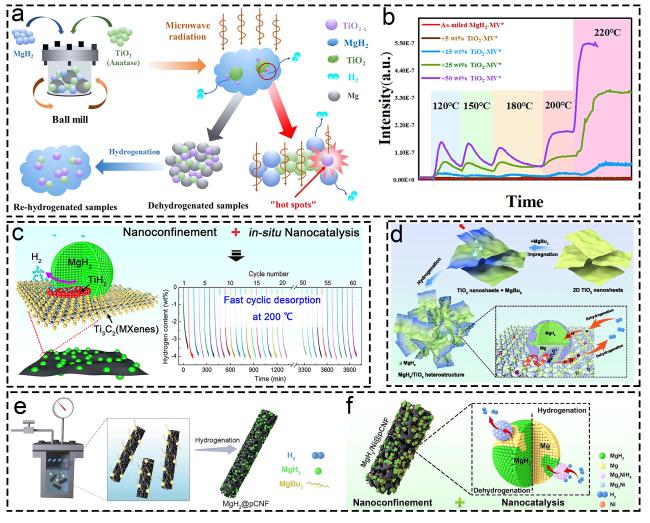
Fig. 11 Corresponding information and presentation of different catalysts on hydrogen storage of MgH2 and MgH2-based composites. (a, b) MgH2-TiO2. Reproduced with permission [190]. Copyright 2022, Elsevier. (c) MgH2@Ti-MX. Reproduced with permission [40]. Copyright 2021, American Chemical Society. (d) MgH2/TiO2. Reproduced with permission [93]. Copyright 2022, Springer. (e, f) MgH2@pCNF. Reproduced with permission [192]. Copyright 2022, Elsevier. |
Table 2. The comparison of different reaction strategies. |
| Methods | Advantages | Disadvantages | Cost | Applicable scenarios |
|---|---|---|---|---|
| Ball milling | 1. Easy to operate 2. Low cost 3. Wide applicability 4. Industrialization potential | 1. Less efficient 2. Introduce pollution 3. Limited particle refinement | Low | 1. Basic research 2. Preliminary exploration |
| Plasma-assisted milling | 1. Extremely efficient 2. Excellent dispersion 3. Clean and activate surface | 1. Complex equipment 2. Ultra-high cost 3. Complex process | High | 1. High-level research 2. Maximizing catalysis 3. Exploring extreme performance |
| Ultrasonication | 1. Achieved true nanoscale dispersion 2. Avoid unnecessary phase changes or reactions | 1. Solvents must be used 2. Extremely low yields 3. Not suitable for mass production | Medium | Basic mechanism research |
4. Universal research procedures in hydrogen storage system
4.1 Properties of hydrogen adsorption and desorption
Generally, the hydrogen absorption and desorption properties were evaluated by Sieverts' apparatus. Different groups have different method and the following are the measure method of our group [89-91]. And this maybe has some similar in testing the hydrogen absorption and desorption properties and can provide the guidance for the experiments of hydrogen storage. Typically, a certain quality of composites was sealed into a stainless steel tube in a glovebox. During the temperature-programmed desorption (TPD) test, the temperature was elevated from room temperature to the targeted temperature at a speed. From the TPD test, the initial dehydrogenation temperature can be obtained and then can judge the performance through TPD curves. For the isothermal experiments, the temperature was rapidly elevated to a specified temperature and maintained during the following test. After dehydrogenation, the sample was completely hydrogenated at certain temperature and press. From the above-mentioned results, the temperature of hydrogen release can be obtained [194-196]. This is a common method to judge the performance of composites in the hydrogen storage of Mg-based materials.
4.2 Evaluation of reaction kinetics and thermodynamics
4.2.1 Johanson-Mehl-AvramiKolmogorov model
The activation energy for the dehydrogenation process of composites was obtained by fitting the isothermal dehydriding curves at different temperatures using the Johanson-Mehl-AvramiKolmogorov (JMAK) equation. The JMAK equation is based on nucleation and growth events, and widely used to describe time-dependent kinetic behavior in isothermal solid-state reactions. The detailed information can be arranged as the following two format [39,142,144,197-199],
Herein, α is the reaction fraction, k is the rate constant, and η is the Avrami exponent. The hydrogen desorption fraction ranging from 0.2-0.5 was adopted to fit the kinetic curves. The Avrami exponent η was in the range 1.10 to 2.41, implying that the dehydrogenation reaction for the sample followed a diffusion-controlled mechanism. ln[-ln(1-α)] varies linearly with lnt, with a correlation coefficient of R2> 0.995, indicating that the JMAK equation is suitable for describing the dehydrogenation process [200-202].
Where, k is the rate constant, A is the pre-exponential factor, and Ea is the activation energy. Thus, the activation energy can be obtained by fitting lnk verses 1/T.
4.2.2 Kissinger’s method
In this formula, β is the heating rate; Tp is the peak temperature; R is the gas constant (R = 8.314 J mol−1·K−1); C is a constant. By fitting the linear relationship between β/Tp2 and 1000/Tp, the activation energy (Ea) can be obtained using DSC results at different heating rates. Kissinger’s method has advantages of being simple and requiring few tests. However, only a single rate-limiting step is assumed, the application of the equation is limited [212-214].
4.2.3 Reaction enthalpy and entropy
Illustratively, the value of the re/de-hydrogenation enthalpy (∆H) is an important indicator to measure the strength of the Mg-H bond. The strong of the Mg-H bond following the large of the absolute value of ∆H. The pressure-composition-temperature (PCT) curve can be obtained by calibrating the PCT equilibrium point in the process of hydrogen ab/de-sorption. The relationship between plateau pressure (Peq) and temperature (T) in the PCT curve can be described by the van’t Hoff equation [215-217]:
In this formula, P0 is the atmospheric pressure (1.01×10⁵ Pa); ∆H and ∆S are the enthalpy and entropy of the hydrogen ab/de-sorption, respectively; and T is the absolute temperature; R is the gas constant (R=8.314 J·mol−1·K−1). According to the linear fitting between lnP and 1000/T, ∆H and ∆S can be calculated [39,218-220].
5. Investigation on design of Ti-based additives
The refined regulation of active structures and active sites in catalysts is important for catalyst design and has promising in fabricating the performance in hydrogen storage field [221-223]. Methods for changing thermodynamic and kinetic properties of energy storage functional materials have attracted great interest [140,224]. Extensive work has been done on boosting hydrogen storage performance of MgH2 [225-228]. The in situ formation of MgH2 with small sizes without Ti element was synthesized and used hydrogenation at room temperature, which conveyed excellent hydrogenation variables [229]. Additionally, ultrafine MgH2 NPs were successfully fabricated without supports. The no Ti element materials conveyed excellent hydrogen storage for MgH2 compared with nonconfined ultrafine MgH2 [148]. The corresponding nano-structure has the ability to exert influences on the properties of solid hydrogen storage materials. Generally, the addition of additives or other catalysts has the ability to decrease the energy of metal-H bonds and reduce the reaction energies of MgH2 [230,73]. Among all the additives, unique electrical and chemical properties of Ti-based materials make them promising for MgH2 [90,91,71]. For example, many Ti-based materials, such as, MgH2-TiN [231], MgH2-Ti [232,233] and MgH2-TiO2 [234,235], MgH2-TiF3 [236-238] have been done in boosting hydrogen storage performance of MgH2. Thus, the summaries of the Ti-based materials are helpful for the development of the hydrogen economy and provide corresponding theoretical guidance for the researches in different fields.
5.1 Designs aimed at providing active sites
Metallic titanium (Ti) has been used in the research on hydrogen storage and presents excellent performance in elevating the performance in the field of hydrogen storage system [239-241]. Ti-added MgH2 alloys (MgH2-12Ti) present excellent performance in MgH2 system. The generated γ-MgH2, TiH1.924, and MgO during the process of reactive mechanical grinding is responsible for the enhancement of the hydrogen storage performance [242]. Ti element was added into MgH2 by milling in hydrogen atmosphere and reactive mechanical grinding of MgH2 with Ti decreases particle sizes and the formed β-MgH2, γ-MgH2, TiH1.924, MgO, and MgTi2O4 improve the hydrogen storage performance [243]. Mg-Ti materials with different Ti contents were synthesized via inert gas condensation with Mg and Ti and conveyed excellent performance [193]. Mg-Ti-H NPs were prepared by gas phase condensation of Mg-Ti vapors under H2 atmosphere. The increasing Ti content boosted the hydrogen storage activity [244]. AlCl3/Ti co-doped 4MgH2-Li3AlH6 was designed by solid ball-milled method and presented excellent dehydrogenation performance and the activation energy have a decrease [245]. The synthesized MgxTi1−x thin films conveyed a hexagonal close packed (HCP) structure, the generation of nanometer-sized clusters of Mg presented a lower desorption temperature [246]. MgH2-5 at% Ti-Mn-Cr was obtained through co-milling of MgH2 with Ti-Mn-Cr alloy and the material presented excellent desorption temperature of mechanically activated MgH2. The homogeneous distribution of the alloyed elements play an improtant role for enhancing the performance during the field of hydrogen storage [247].
Titanium hydrides (TiHx) garner significant attention for storing hydrogen due to their strong hydrogen affinity, superior catalytic efficiency, and affordability. Specifically, in the dehydrogenation phase, the formation of stable and metastable titanium hydrides is advantageous for producing the hydrogen product and metal Ti [112]. Calculations using DFT reveal that the metastable hydrides in the system of MgH2-TiH2 possess minimal hydrogen binding energy, rendering them better suited for storage in lower temperature hydrogen environments. The MgH2-TiH2 system undergoes significant plastic deformation (SPD) using the high-pressure torsion (HPT) technique. Due to the creation of nanostructured ternary Mg-Ti-H hydride, the dehydrogenation temperature achieved is less than that of TiH2 [248]. The catalytic role of TiH2 in enhancing the hydrogen sorption kinetics of MgH2 has been systematically demonstrated. Through gas-phase condensation of Mg/Ti vapors in a controlled He/H2 environment, we successfully engineered biphase nanostructured composites comprising immiscible MgH2 and TiH2 domains. The incorporated TiH2 phase exhibits dual functionality, demonstrating exceptional catalytic activity for hydrogen molecule dissociation/recombination while simultaneously creating rapid hydrogen diffusion pathways within the composite system (Fig. 12a) [249]. The in situ generation of TiH2 additive in Ti/MgH2 system are conducted and the formation of stable TiH2-x transforms to TiH2 upon recycling the powder during hydrogen storage process [250]. The disparity in lattice structure between Mg and TiH2 hydride hinders the growth of Mg grains, maintaining the rapid absorption rate of the MgH2-TiH2 nanocomposite during its cycling [251] (Fig. 12b, 12c). Hydrogen desorption in MgH2-TiH2 composite was investigated and the NPs displayed a small absorption-desorption pressure hysteresis even at low temperatures [252] (Fig. 12d, 12e). Furthermore, the intimate interface between TiH2 and MgH2 was studied and promoted H2 desorption from MgH2 [253]. The MgH2-TiH2 composite synthesized through high-energy reactive ball milling (HRBM) of Mg and Ti under hydrogen atmosphere exhibited enhanced hydrogen storage performance with superior capacity and accelerated hydrogen absorption/desorption kinetics [254-257]. Additionally, nano-TiH1.971 were prepared and present excellent performance, which remained stable in cycling and can serve as an active site for hydrogen transportation, thus boosting hydrogen storage properties of MgH2 [258]. Mg-Ti-H films are also investigated and used in the hydrogen storage system [191]. Theoretical calculations have identified TiH4 and VH4 metal tetrahydrides as high-capacity hydrogen-storage materials, demonstrating exceptional dehydrogenation performance [259]. Illustratively, the noble metal as the co-additives was expressed outstanding performance of hydrogen storage of MgH2. The addition of Pd and TiH2 improved the dehydrogenation performance of MgH2. 2MgH2-TiH2-0.1Pd composite decrease the dehydrogenation temperature of when compared with pristine MgH2 and 2MgH2-TiH2. This result confirm that the introduction of noble metal co-additives has the ability to enhance the hydrogen storage performance [260]. The incorporation of graphite into nano-MgH2-TiH2 composites has been systematically investigated, revealing a remarkable enhancement in hydrogen storage performance [256].
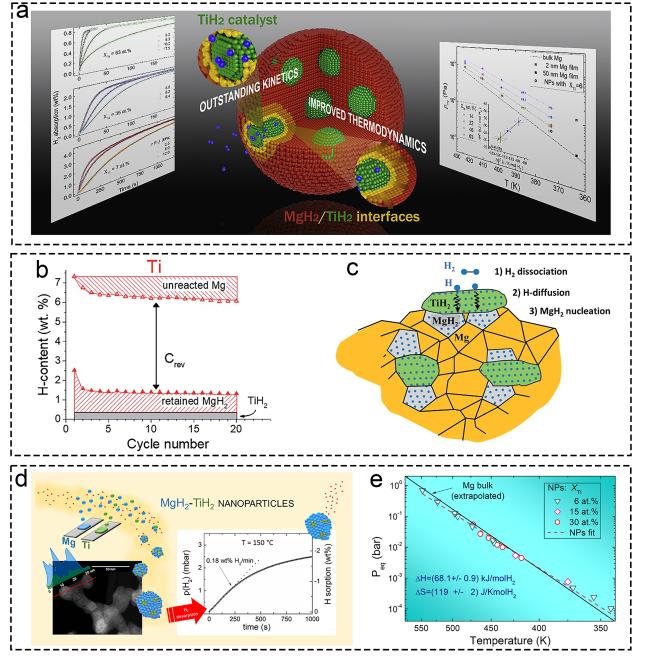
Fig. 12 Corresponding characterization from the morphology, performance and mechanism characterization of Ti-based materials. (a) Reproduced with permission [249]. Copyright 2020, Elsevier. (b, c) Reproduced with permission [251]. Copyright 2019, Royal Society of Chemistry. (d, e) 3D Ti3C2 MXene. Reproduced with permission [252]. Copyright 2017, American Chemical Society. |
5.2 Designs aimed at promoting electron transfer
Transition metals (TMs) and the corresponding compounds have been reported endow an effective influence on boosting hydrogen storage properties of MgH2. TMs and their oxides have the ability to increase the hydrogen storage performance of MgH2 [261,262]. Many works have been done in the field of hydrogen storage of MgH2. 2D graphene-like TiO2 (B) nanosheets was achieved as a highly efficient catalyst play a vital role in enhancing hydrogen storage properties of MgH2 and Mg-TiO2 composite presented excellent performance [263]. TiO2 nanosheets with high-surface-energy {001} facets were synthesized and present excellent hydrogen storage properties of MgH2 [72]. The enhancement is ascribed to the effect of nano-size and active {001} facets of anatase TiO2 (Fig. 13a, 13b). Moreover, the ball-milled MgH2-TiO2 with different morphologies was investigated and shown excellent hydrogen storage performance [264]. The reduced Ti containing in MgH2/TiO2 was prepared and its effect on hydrogen storage behavior of MgH2 was studied. The TiO2 NPs supported on 3D ordered macro-porous structure [265] and dispersed metal NPs on TiO2 [104] were synthesized and improved the hydrogen storage performance of MgH2. The results proved that the reduced Ti oxide phases presented promise in promoting the dehydrogenation performance of MgH2 system [266]. The effect of chemical interaction between MgH2 and TiO2 on the hydrogen storage performance of MgH2 was investigated and the results confirm that passive MgO can as an active in-built catalyst and boosting the dehydrogenation kinetics [267]. Black TiO2−x reduced by KH (K-TiO2−x) was added and used on the hydrogen storage performance of MgH2. The doped system present excellent performance in hydrogen storage of MgH2 at room temperature [268]. MgH2 ball milled with rutile and anatase TiO2 were studied and the results confirm that rutile TiO2 convey an excellent performance and decrease the apparent activation energy for desorption [269]. MgH2/TiO2 heterostructure was successfully fabricated via solvothermal strategy and shows rapid desorption kinetics. The abundant oxygen vacancies significantly improve the electrical conductivity of TiO2 and offer active substance for the transportation of electrons and hydrogen, thus enhancing hydrogen sorption kinetics [93]. Additionally, TiO catalyzed Mg-MgH2 was also design and conveyed a reduced apparent activation energy, thus improving the kinetics of hydrogen storage performance [270].
Additionally, carbon materials, such as, graphene, carbon nanotubes, have been proved to possess positive effect in improving cycling property during hydrogen storage process [271-273]. Although doping nano-catalyst is considered as an effective method to boost kinetics properties of hydrogen storage materials, the NPs generally suffer from agglomeration and inactivation during the process of hydrogen storage. Effective strategies are necessary to prepare nano-catalysts with high-efficiency. Carbon-supported TiO2 (TiO2@C) as an additive reduced the dehydrogenation operating temperatures. And the results of DFT calculations confirm that extended bond lengths and reduced bond strengths for Mg-H bonding exist when MgH2 adsorbs on TiO2 clusters, and boosting the hydrogen storage performance [274] (Fig. 13c-13f). 3D flower-like TiO2@C and TiO2 were synthesized and used for MgH2 system, the existence of amorphous carbon prevented the aggregation and growth of materials and reduced the desorption activation energy of H in MgH2 [96]. Monodispersed single-crystal-like TiO2 NPs are supported in amorphous carbon and exhibit excellent catalytic hydrogen storage performance of MgH2. And the existence of carbon protects the NPs and the synergistically catalytic roles of in-situ formation of TiO2 NPs, amorphous carbon and multi-valence Ti species in the nano-catalyst boost the hydrogen storage performance [275]. MWCNTs decorated with TiO2 (MWCNTs-TiO2) is achieved and improved the dehydrogenation kinetics of 2LiBH4-MgH2 [276]. Additionally, nanosized lithiated titanium oxide (LixTiO2) was prepared and the existence of LixTiO2 can reduce the time required for the first dehydrogenation [277]. Ni/TiO2 nanocomposite synthesized via solvothermal method enhanced the reversible hydrogen storage properties of Mg-based materials [95].
In nutshell, the TiOx have many positive effects on the hydrogen storage of Mg-based materials. Through the rational design of the Ti-based materials, we can develop the materials in the field of hydrogen storage system. However, there are many works that should be done in order to research the catalytic structure, catalytic performance and catalytic mechanism. Therefore, the investigation of high-efficiency materials is significant for the development of the field of various fields.
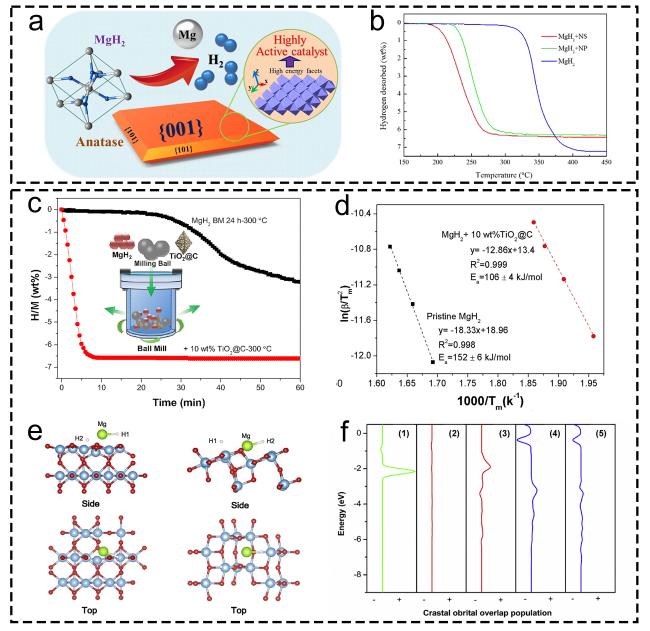
Fig. 13 Corresponding information and presentation of different catalysts on hydrogen storage of MgH2 and MgH2-based composites. (a, b) TiO2 NS with exposed {001} facets. Reproduced with permission [72]. Copyright 2019, Royal Society of Chemistry. (c-f) TiO2@C. Reproduced with permission [274]. Copyright 2018, Elsevier. |
Titanium-carbon composites (TiCx) have been used in hydrogen storage systems. MXenes as a TiCx composites have been used as high-efficiency catalysts for MgH2-based hydrogen storage material [278,279]. The preparation of MXenes needs certain amount of HF to etch out the Al layers from the transition metal aluminum carbides or nitrides (MAX) phases and these may have effect on environment [280,281]. Ti3AlCN MAX was applied directly to enhance kinetics and cycling stability of MgH2. With addition of Ti3AlCN, the onset dehydrogenation temperature of MgH2 has an obvious decrease [282]. The phase composition and dehydrogenation performance of the composites are investigated based on Mg/MAX. The MAX-phase reduces the dehydrogenation temperature of MgH2 [283]. Additionally, a MAX-phase carbide (Ti3AlC2) was prepared and the reaction effects of the as-prepared Ti3AlC2 on the hydrogen storage performance of MgH2 were studied [284]. From the above-mentioned results, the MAX-phase carbide presents excellent performance for the hydrogen storage system. However, the etching of Al layer has the ability to convey another effect on hydrogen storage performance. Some other transitional metal carbides, such as, Ti3C2 [285,286], Ni3C [287], Mo2C [288,289], and NbC [290,291] were synthesized to improve hydrogen storage behaviors of MgH2-based materials. MgH2-Ti3C2 shows optimized hydrogen storage performance (Fig. 14a, 14b) [292]. The surface Ti atoms on prepared Ti2C MXene with multivalence can serve as intermediate for electrons shifting between H+ and Mg2+, thus improving the hydrogen release temperature, activation energy and the overall changes on aspects of enthalpy [293]. Dispersed MgH2 NPs anchored on 3D Ti3C2Tx (Ti-MX) was synthesized and the nano-size effect generated by nano-confinement and multiphasic interfaces between MgH2 (Mg) and Ti-MX were responsible for superior hydrogen sorption performances [40] (Fig. 14c, 14d). A 2D Ti3C2 precursor presents superior catalytic performance towards the hydrogen storage reaction of MgH2 [294]. MgH2/5TiC/5Fe12Cr have superior hy/de-hydrogenation characteristics, following by a lower value of the activation energy. The enhanced catalytic performance is attribute to the synergistic effect of TiC/FeCr [295]. Furthermore, Ti3C2-supported praseodymium (III) fluoride (PrF3) NPs (PrF3/Ti3C2) exhibited excellent hydrogen storage performance toward MgH2. The onset temperature of dehydrogenation and the activate energy have an improvement during the process of the hydrogen storage system. The experimental findings indicate that the hydrogen storage characteristics of MgH2 are attributed to electron transfer mechanisms within Ti-based species and the synergistic coupling effects between Ti-species and PrF3 [92]. TiCX decorated on Mg NPs is designed and shown enhanced hydrogen storage kinetics of the nanocomposite because of synergistic effects of carbon confinement nanostructure [296]. In nutshell, TiCx-based composites convey excellent performance on the hydrogen release of MgH2. There are many works remains to be done for the enhancement of the catalytic performance.
5.3 Designs aimed at creating synergistic effects
Polymetallic Ti-based compounds also exhibited excellent performance in hydrogen storage materials. Ti−Cr−V alloys were synthesized and Mg-20 wt % Ti0.16Cr0.24V0.6 possess the lowest hydrogen desorption temperature [297]. Ni/Ti3C2Tx composites were also prepared and presented excellent performance of MgH2 [298]. Ultrafine bimetal NbTi nanocrystals were formed in situ following the ball milling of NbTiC MXene with MgH2. The sample starts releasing hydrogen from 195 ℃. DFT analyses elucidate that Ti-to-Nb charge redistribution within NbTi clusters significantly enhances the hydrogen storage reactivity of MgH2 [299] (Fig. 15a-15d). The TiMn2 intermetallic phase was strategically incorporated as a catalytic additive into MgH2, with the 10 wt% composite configuration demonstrating superior hydrogen sorption kinetics through enhanced interfacial charge transfer mechanisms [300] (Fig. 15e, 15f). TiFe as an additive was obtained and then doped into MgH2 through ball milling, then used to improve the de/re-hydrogenation properties of MgH2. The results confirm that the addition of TiFe boosted the hydrogen storage properties of MgH2 because of the existence of TiFe and CNTs [135]. Mg-TiFe0.8Mn0.2-graphite [301] and metallic glassy Ti2Ni are also used for enhancing the hydrogenation/dehydrogenation kinetics of MgH2 [302]. V or Ti-V-Cr alloy [303,304]; Ti, Zr, Al and C (Mg-Al-Ti-Zr-C powders) [305]; Zr0.4Ti0.6Co nanosheets and carbon nanotubes [306], nano-Ti [307], improved hydrogen storage performance of Mg-based materials. Additionally, the other Ti-based additives such as transition metal sulfides (MgH2-TiS2) [308] and TiB2 [309] also improved the reversible dehydrogenation properties of MgH2. Thus, it is significant for the development of materials with high-efficiency catalytic performance based on polymetallic Ti-based compounds.
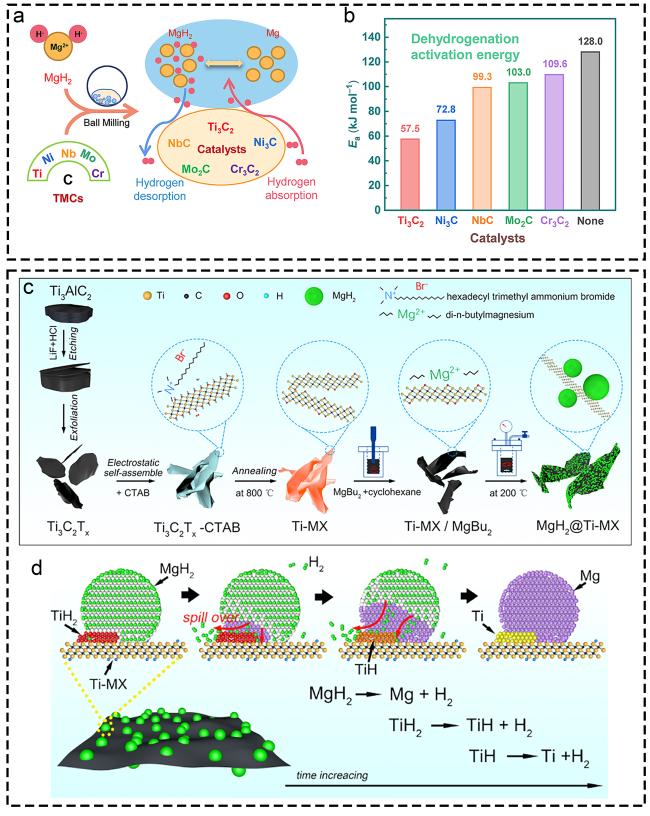
Fig. 14 Morphology, performance and mechanism characterization of TiCx-based materials. (a, b) Some transitional metal carbides. Reproduced with permission [292]. Copyright 2021, Elsevier. (c, d) 3D Ti3C2 MXene. Reproduced with permission [40]. Copyright 2021, American Chemical Society. |
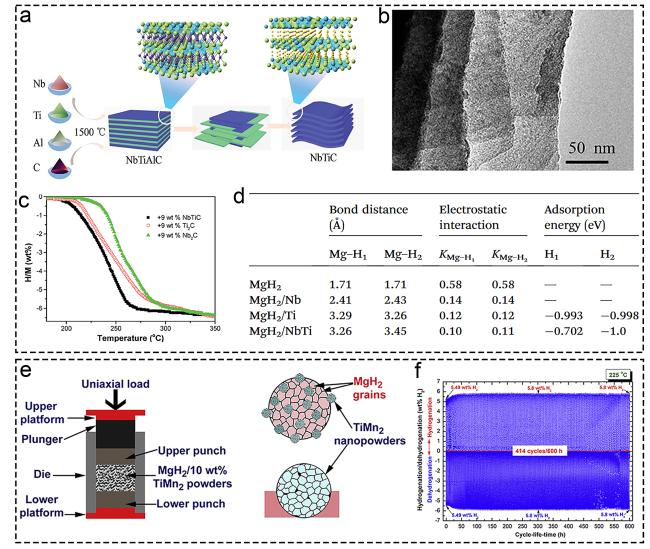
Fig. 15 The corresponding characterization from the morphology, performance and mechanism characterization of polymetallic titanium compounds. (a-d) NbTi cluster. Reproduced with permission [299]. Copyright 2019, Royal Society of Chemistry. (e, f) TiMn2 compound. Reproduced with permission [300]. Copyright 2019, Royal Society of Chemistry. |
The support as the framework of the active substance in catalysts has the advantages of supporting active components, dispersing active ingredients, and increasing the strength of the catalyst [310-313]. The designed catalysts with supports have promising in balancing the high dispersion and high efficiency [139,314]. In the fields of hydrogen storage, the supports have many applications. Ni/Ti3C2 with interfacial differences were synthesized by wet chemical method and the electron transfers in multiple valence Ti and unique structure of Ni/Ti3C2 enhanced the hydrogen storage performance [98]. Ni@C materials supported on Ti3C2 MXene as a catalyst boosted the hydrogen desorption of MgH2. The excellent performance is assigned to the formed Mg2NiH4 and metallic Ti NPs [139]. The remarkable catalytic effects of Ti3C2 MXene-based materials (Ni@Ti-MX) and the core−shell nanostructured MgH2@Mg2NiH4, the above-mentioned demonstrated that the interfacial coupling effects from different interfaces of catalyst-matrix boosted the hydrogen storage performance (Fig. 16a, 16b) [315]. MOF-derived Ni NPs dispersed on MXene was used for improving hydrogen storage kinetics of MgH2 and corresponding mechanism are also studied [101]. Effect of few-layer (FL) Ti3C2Tx supported nano-Ni on hydrogen storage performance of MgH2 was researched. FL-Ti3C2Tx acts as a supporting material and self-assembles with Ni2+ assisting in the reduction of nano-Ni. The combined effects of nano-Ni on FL-Ti3C2Tx, large specific area of FL-Ti3C2Tx, multiple-valence Ti, and electronic interaction between Ni and FL-Ti3C2Tx greatly facilitated the hydrogen storage performance of Mg-based materials [316] (Fig. 16c, 16d). TiO2/MXene heterostructures were obtained through one-step self-assembly. Abundant electrons from multiple valence Ti effectively enhance the reversible reaction of MgH2 [97]. A sandwich like Ti3C2/TiO2(A)-C prepared through gas-solid strategy was introduced into MgH2 through the operation of ball milling and conveyed excellent catalytic effect on hydrogen storage of MgH2, the enhancement of hydrogen storage performance was due to the synergistic catalysis between Ti3C2 and TiO2(A)-C [317]. Graphene-supported FeOOH nanodots (FeOOH NDs@G) were prepared through a simple hydrothermal strategy and then introduced into MgH2, which decrease the dehydrogenation and hydrogenation performance of MgH2. The excellent hydrogen storage performance of FeOOH NDs@G towards MgH2 is responsible for the synergistic effect between graphene nanosheets and the in situ generated Fe (Fig. 16e, 16f) [318].
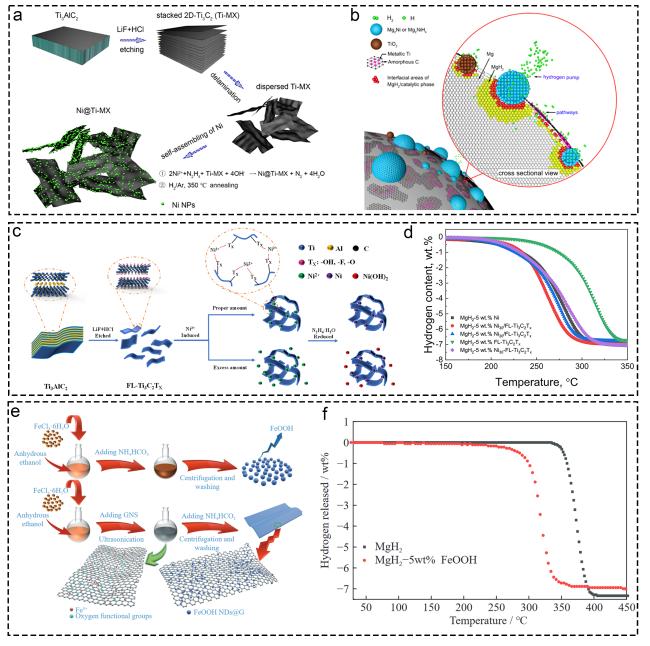
Fig. 16 The corresponding characterization from the morphology, performance and mechanism characterization of materials supported on Ti-based supports. (a, b) Ti3C2 MXene-based catalyst (Ni@Ti-MX). Reproduced with permission [315]. Copyright 2020, American Chemical Society. (c, d) few-layer Ti3C2Tx (FL-Ti3C2Tx) supporting highly dispersed nano-Ni particles. Reproduced with permission [316]. Copyright 2020, American Chemical Society. (e, f) graphene nanosheet-supported FeOOH nanodots. Reproduced with permission [318]. Copyright 2022, Springer. |
To sum up, from the above-mentioned research, the Ti-based metals as the additives are summarized and the corresponding catalytic performance are also studied. However, the disadvantages of stable thermodynamics and poor kinetics limit the practical application of MgH2. Therefore, the rational design strategy, such as, optimization of crystal structure, control of grain size and introduction of doping elements to improve the thermodynamics and dynamics is of significance for the performance of Mg-based hydrogen storage materials. Based on the experimental-theoretical results, the real reaction mechanism can be obtained and provide the guidance for the future design for the next-generation of hydrogen storage materials.
5.4 Designs aimed at destabilizing thermodynamics
Titanium fluoride compound (TiFx, x=4, 3, and 2) has been used to study the performance of hydrogen storage materials, such as MgH2, Mg(BH4)2, and Mg(AlH4)2 [319]. MgH2+TiF4 composites were prepared and the characterized for their structural, morphological and thermal properties were studied [320]. A mixture of Mg-Al-Ti-F-doped MgH2 is designed and prepared through high-energy ball milling [321]. The corresponding results show that TiF4 as an additive presented lower onset desorption temperature compare to pure MgH2. The addition of NbF5 or TiF4 to Ca(BH4)2+MgH2 was conducted to harvest a full reversible system [322]. The synergetic catalytic effect of TiF3 and Nb2O5 was also investigated [323]. Additionally, TiFx composites were used in mixed hydrogen storage system. The addition of K2TiF6 was introduced into hydrogen storage properties of MgH2+NaAlH4 and presented excellent hydrogen storage properties compared to undoped composites [324]. K2TiF6 composites were used in enhancing the hydrogen storage properties of 4MgH2-Li3AlH6 composite [325]. TiF3 was used as an additive to improve the hydrogen storage properties of ternary-hydride system of NaAlH4-MgH2-LiBH4 [326], destabilized MgH2-Sn system [327], Mg90Al10 system [328], 4MgH2-Na3AlH6 system [329]. Additionally, the combination of TiFx and carbon species were operated to boost the hydrogen storage performance. The composites of high-energy ball milling with multi-wall carbon nanotubes (MWCNTs) and TiF3 [330], multi-wall carbon nanotubes supported nano-nickel and TiF3 addition [331], TiF4 and MWCNTs [332] were synthesized and significantly decreases the dehydrogenation temperature of MgH2. The Ni-decorated multi-walled carbon nanotubes (Ni/MWCNTs) demonstrating enhanced catalytic functionality when incorporated into MgH2 through a combined process of hydriding combustion synthesis and mechanical milling. Subsequent introduction of TiF3 into the Mg-Ni/MWCNTs composite system demonstrated markedly enhanced hydrogen sorption kinetics.
In a nutshell, the effect of Ti-F derivatives, such as, TiF4, TiF3 and TiF2, on hydrogen storage performance was studied to elucidate the effect of F for the catalytic reaction. The F- anion plays a key role in improving the dehydrogenation properties. The strong chemical interaction between TiFx and MgH2 has the ability to boost the formation of TiH2 and Ti-Mg-F species and thus enhances the hydrogen storage kinetics of MgH2.
Additionally, Ti derivatives based on metals have aroused much attention because of their unique physical and chemical properties. The titanium derivatives based on metals have also been shown to have a positive effect on hydrogen storage materials. Hamamelis-like structure of K2Ti6O13 is synthesized by alkali treatment of MXene, which exhibits excellent catalytic performance for hydrogen storage from MgH2. MgH2 reacts with K2Ti6O13 during ball milling and produces KMgH3, TiO, and Ti. In addition, O or Ti deficiencies in TiO boosts the hydrogen storage properties of MgH2 [333] (Fig. 17a-17c). Ultrathin K2Ti8O17 was obtained using TiO2 and KOH as resources and conveyed an excellent hydrogen storage of MgH2 [91]. Na2Ti3O7 nanotubes (NTs) and Na2Ti3O7 nanorods (NRs) is prepared via hydrothermal and solid-state strategies, respectively. Comparing with bulk MgH2 and MgH2-Na2Ti3O7 NRs composite, MgH2-Na2Ti3O7 NTs has an excellent performance in hydrogen storage system [334]. Na2Ti3O7 with rich oxygen vacancies (Na2Ti3O7-Ov) was designed from Ti3C2 MXene, and confirm an enhancement to the hydrogen storage performance of MgH2. Both experimental and theoretical calculations results verified that oxygen vacancies in Na2Ti3O7-Ov reduce the activation energy during MgH2 hydrogen storage and convey an excellent hydrogen storage kinetics [90] (Fig. 17d, 17e). A bimetallic Ti-Nb oxide of TiNb2O7 with high surface area was synthesized and shown excellent catalytic effect for MgH2 hydrogen storage [335] (Fig. 17f, 17g). TiVO3.5 as an active catalytic precursor presents excellent performance for improving hydrogen storage properties of MgH2 [71]. Research on Mg2TiO4, MgTiO3 and TiO2 additives incorporated MgH2 were operated to investigate the corresponding performance. These results confirmed that in situ generation of reduced Ti containing active species play an important role in the hydrogen storage performance of MgH2 [336]. BaTiO3 plays an effective role in the hydrogen storage process of MgH2 [337,338]. TMTiO3 (TM = Ni and Co) are synthesized and introduced into MgH2 system and the corresponding TMTiO3 exhibited perfect reaction effect on the hydrogen desorption performance of MgH2 [99]. NiTiO3 materials with different mole ratio of Ni to Ti were reported and doped into Mg to enhance its hydrogen storage properties. Mg-NiTiO3/TiO2, the nanosizing and catalyst doping led to a synergistic effect on the enhanced hydrogen storage performance of Mg-NiTiO3-C [134]. Additionally, MgH2 doped with Li2TiO3 also convey excellent performance in hydrogen storage system and started to release hydrogen at 170 ℃, which is lower than that of the as-milled MgH2 [339]. Table 3 was the performance comparison based on different Ti-based materials.
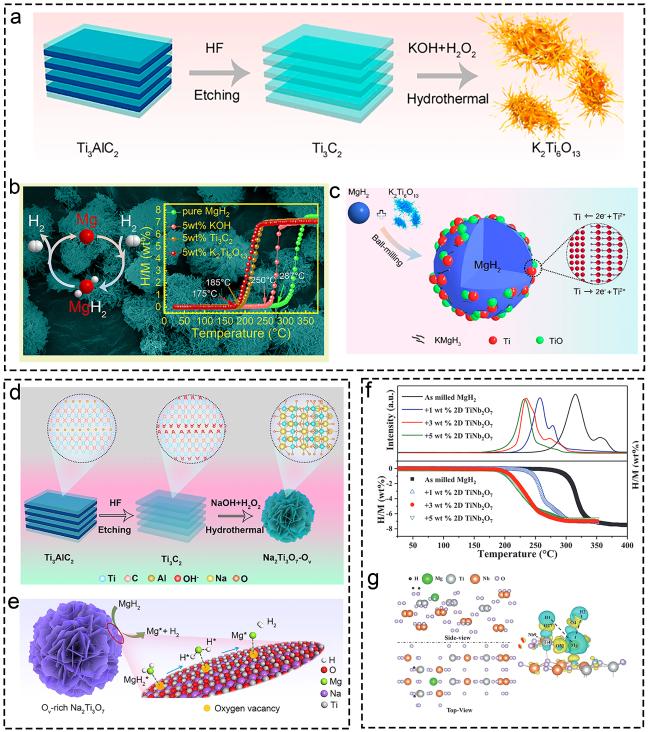
Fig. 17 Corresponding characterization from the morphology, performance and mechanism characterization of Ti-based materials. (a-c) K2Ti6O13. Reproduced with permission [333]. Copyright 2020, American Chemical Society. (d, e) Oxygen Vacancies modified Na2Ti3O7. Reproduced with permission [90]. Copyright 2022, American Chemical Society. (f, g) TiNb2O7. Reproduced with permission [335]. Copyright 2022, Wiley. |
Table 3. The performance comparison of different Ti-based materials. |
| Number | Materials | Onset dehydrogenation temperature (°C) | Release capacity (wt.%) | Activation energy (kJ/mol) | Ref. |
|---|---|---|---|---|---|
| 1 | MgH2-12Ti | 300 | 6.39 | - | [239] |
| 2 | 85MgH2+15Ti | 320 | 5.51 | - | [240] |
| 3 | Mg@Ti@Ni | 400 | 6.27 | 63.7 | [242] |
| 4 | Mg-Ti NPs | 280 | 5.3 | 68 | [243] |
| 5 | AlCl3/Ti | 400 | 6.0 | 113.7 | [245] |
| 6 | Ti-Mn-Cr | 362 | - | - | [247] |
| 7 | Mg-Ti-H | 150 | 5.0 | - | [249] |
| 8 | Ti/MgH2 | - | - | 89.4 | [250] |
| 9 | MgH2-TiH2 | - | 7.3 | - | [251] |
| 10 | MgH2-TiH2 NCs | 300 | 4.9 | - | [253] |
| 11 | MgH2-TiO2 | 200 | 6.29 | 75.3 | [263] |
| 12 | MgH2+ 5wt% TiO2 NS | 180.5 | 6.0 | 67.6 | [72] |
| 13 | MgH2-TiO2 | 350 | 5.5 | - | [264] |
| 14 | MgH2-DOM TiO2 | 300 | 5.75 | 72.8 | [265] |
| 15 | MgH2/5wt% TiO2 | 307 | - | 110.9 | [266] |
| 16 | K-TiO2−x | 194 | 6.0 | 69.1 | [268] |
| 17 | MgH2-10wt% TiO2@C | 205 | 6.5 | 106 | [274] |
| 18 | MgH2-TiO2@C | 199.2 | 6.0 | 67.10 | [96] |
| 19 | MgH2-TiO2 SCNPs/AC | 163.5 | 6.5 | 69.2 | [275] |
| 20 | MgH2-Ni/TiO2 | 232 | 6.5 | 43.7 | [95] |
| 21 | MgH2-Ti3AlCN | 205 | 6.6 | 94.2 | [282] |
| 22 | Mg+7wt% MAX | 236 | 5.6 | 60.9 | [283] |
| 23 | MgH2-7wt% Ti3AlC2 | 205 | 6.9 | 104.7 | [284] |
| 24 | MgH2-Ti3C2 | 205 | 4.6 | 57.5 | [292] |
| 25 | MgH2-5 wt%Ti2C | - | - | 157.9 | [293] |
| 26 | 60MgH2@Ti-MX | 140 | 6.4 | - | [40] |
| 27 | 5wt% Ti3C2-MgH2 | 300 | 6.2 | - | [294] |
| 28 | MgH2/5TiC/5Fe-12Cr | 275 | 5.5 | 97.74 | [295] |
| 29 | Mg96(TiC)4@C | 400 | 6.5 | 56.5 | [296] |
| 30 | Mg-20wt % Ti0.16Cr0.24V0.6 | 224 | - | 76.32 | [297] |
| 31 | MgH2-20wt% Ti0.35Cr0.45V0.2 | 256 | 5.30 | 86.43 | [298] |
| 32 | MgH2-9wt% NbTiC | 195 | 6.8 | 80.0 | [299] |
| 33 | MgH2/10wt% TiMn2 | 225 | 5.1 | 82.9 | [300] |
| 34 | MgH2+10wt%-TiFe | 175 | 6.5 | 60.7 | [135] |
| 35 | MgH2+Ni@Ti-MX | 250 | 5.2 | 73.0 | [315] |
| 36 | MgH2-5wt% Ni30-FLTi3C2Tx | 250 | 5.83 | 106.92 | [316] |
| 37 | MgH2-5wt% Ti3C2/TiO2(A)-C | 125 | 4.0 | 77.69 | [317] |
| 38 | MgH2-10wt% FeOOH NDs@G | 325 | 6.3 | 125.03 | [318] |
| 39 | MgH2+5wt% K2Ti6O13 | 175 | 6.7 | 105.67 | [333] |
| 40 | MgH2-Na2Ti3O7 NTs | 233.5 | 6.5 | 70.43 | [334] |
| 41 | MgH2-TiNb2O7 | 178 | 5.7 | 100.4 | [335] |
| 42 | MgH2+20wt% BaTiO3 | 270 | - | 108 | [337] |
| 43 | MgH2-10wt% SrTiO3-Ni | 260 | 6.0 | 98.6 | [338] |
| 44 | MgH2-6wt% NiTiO3 | 235 | 7.4 | 74 | [99] |
| 45 | Mg-NiTiO3/TiO2 | 193.2 | 6.6 | 69.8 | [134] |
| 46 | MgH2-Li2TiO3 | 170 | - | 84 | [339] |
| 47 | MgH2-5wt% PrF3/Ti3C2 | 180 | 7.0 | 78.11 | [92] |
5.5 Conclusion and reflection of Ti-based materials
The investigation on design of Ti-based additives, such as, metallic Ti-based materials, titanium oxides-based materials, titanium-carbon composites, titanium hydrides, titanium fluoride compounds, titanium derivatives, polymetallic Ti-based compounds, and materials supported on Ti-based additives was summarized. (1) Catalysts design based on “hydrogen pump” effect, such as, metal Ti NPs, TiHx, and some Ti-carbon composites, the core effect of these catalysts is to provide efficient hydrogen dissociation/interfaces and fast hydrogen atom diffusion channels to improve the kinetics. (2) Catalytic designs using “multiple valence titanium mechanism”, such as titanium oxide, titanium fluoride, and other titanium derivatives. The Ti ions in these compounds have the potential to change valence in the reaction, which can promote the heterocleavage and dissociation of hydrogen atom and boost kinetics. (3) The design of Ti-carbon composites and supported materials have the ability to limit the growth of Mg particles, disperse Ti-based catalyst and prevents agglomeration, thus significantly improving kinetics and cycle life. (4) The introduction of synergistic effect is important for the design of materials. Such as, polymetallic Ti-based compounds, the introduction of second or more metal elements will generate a synergistic catalysis effect with Ti element, which is significance to reduce reaction barriers and improve reaction kinetics. In conclusion, the comprehensive improvement on dynamic performance and cycle life is an important direction for large-scale application in the field of hydrogen storage in the future. The detailed reflection was as follows,
(1) Summary on Ti-based materials. The above-mentioned Ti-based materials presented excellent hydrogen storage performance of MgH2. The special electronic structure and crystal structure of materials has the ability to boost the adsorption, dissociation and recombination of hydrogen molecules, and accelerate the progress of hydrogen absorption and release reactions. Moreover, the introduction of Ti-based materials will have promised in refining the grains and introducing lattice defects, promoting the diffusion and reaction of hydrogen atoms in the material, and improving their kinetic properties. Additionally, Ti-based additives have excellent chemical and thermal stability in the process of hydrogen absorption and release, and can maintain the relative stability of the structure and properties, and thus ensure the long-term effectiveness of the additives.
(2) Future research direction. Developing new Ti-based additives with higher catalytic activity and selectivity is an important role in the hydrogen storage system. Currently, preparation strategies have problems such as complex process, high cost and low output, which limit their large-scale application. By optimizing the process through the introduction of high entropy catalysts, flash firing method and mechano-chemical synthesis method to obtain the additives, and improve their feasibility in the field of actual hydrogen storage. Additionally, although there is certain understanding of the action mechanism of Ti-based additives in hydrogen storage, further research is still needed. The advanced characterization techniques, such as in situ X-ray diffraction, high-resolution transmission electron microscopy, DFT calculations, and so on, have been promising in revealing the interaction mechanism between additives at the atomic and electronic levels, and providing a more solid theoretical basis for the optimal design of additives.
(3) Inspiration for researchers. The application of Ti-based additives in hydrogen storage involves materials science, chemistry, and physics. On the basis of in-depth study of the action mechanism of Ti-based additives, translating the results of basic research into practically usable hydrogen storage materials and technologies. Additionally, a systematic research approach is required when studying the performance of Ti-based additives in hydrogen storage. Considering the influence of multiple factors such as type, content, preparation process of additives on the hydrogen absorption and release conditions on the performance of the system is significance to provide comprehensive and accurate reference for follow-up research.
6. Final summary and future outlook
The hydrogen storage materials based on MgH2 have promising in hydrogen station, hydrogen-electric energy storage station, hydrogen chemical industry, hydrogen power/hydrogen energy storage power generation system and so on [340,341]. This review summarized advanced insights into Ti-based materials for MgH2 hydrogen storage, which consists of design paradigms, activity evaluation and mechanism elucidation. Many works should be done in improving the dynamic and thermodynamic catalytic performance of Mg-based hydrogen storage materials. And challenges still remain in the further research of Mg-based composites system. With the rapid development of new generation of information technology and intelligent manufacturing, high quality and high activity for Mg-based materials are the dominating development direction. Based on this review, the rational suggestions for design paradigms, activity evaluation and mechanism elucidation are proposed as follows (Fig. 18),
6.1 Innovative design of Ti-based additives
Currently, Ti-based additives have many researches in the field of hydrogen storage. Upcoming studies aim to eliminate sizable particles and incorporate high-efficiency catalysts into synthesis, thereby improving the kinetics of absorption and desorption for practical use. Developing novel synthetic strategy to realize the accurate position control of additives on the surfaces of MgH2 hydrogen storage materials and thus maximizing the catalytic effect of the additives under the optimal hydrogen storage capacity of Mg-based hydrogen storage system is crucial for developing hydrogen storage system. Moreover, noble-metal-based materials as co-additives to boost the catalytic performance of hydrogen storage system and the corresponding mechanism can be also investigated. Such as, (1) SACs, when it in contact with MgH2, these sites can dissociate extremely efficiently hydrogen molecules, significantly reducing the reaction energy barrier [342]. DFT simulations confirmed that single atoms can significantly change the local electronic structure and weaken the Mg-H bond, thereby improving the thermodynamic stability [343,344]. The challenge is to controllably synthesize high-load SACs with high dispersion on a large scale. (2) High-entropy alloy catalysts (HEAs) have the advantage of high entropy effect and lattice distortion [345,346]. HEAs can change the components, and electronic structure of catalysts, thereby optimizing its interaction strength with hydrogen, which allows HEAs to maintain the stability of phase structure and catalytic activity [347-350]. However, the multi-component making it difficult to clarify the specific role of each element, and elucidate catalytic mechanism.
6.2 Characterizations of MgH2 composites in hydrogen storage system
The characterizations of MgH2-based composites in hydrogen storage system are necessary to study their materials structures, thermal and structural stability, chemical compositions environment and the others. The results achieved from methods such as XRD, XPS, SEM, TEM and so on are common strategy to achieve the materials [351]. For materials, the common characterizations still have some challenge in the development of the investigation of performance and mechanism. The hydrogen absorption and release process is a dynamic, non-equilibrium process, conventional characterization is mostly performed before and after the reaction, which can provide a static snapshot. This will lead to the loss of key information during reaction process. Mg and MgH2 are very reactive and highly susceptible to air oxidation to form a magnesium oxide (MgO) surface layer, which can seriously interfere with the analysis of real surfaces. The characterization of HRTEM also has the possible to alter material structure. The type and reactivity of the phase structure present on the surface of materials can determine the macroscopic reaction performance of the hydrogen storage materials. Thus, in situ/Operando characterization is the most important direction to observe dynamic processes in real time. Additionally, the application of multi-technology combination (integrates spatial, temporal and energy information), the combination of theory and experiment, and the others is necessary for the analysis of hydrogen storage field. Thus, the excavation of in situ or Operando spectroscopy analyses technologies have promising in leading to unprecedented advantages on the solid-state hydrogen storage system.
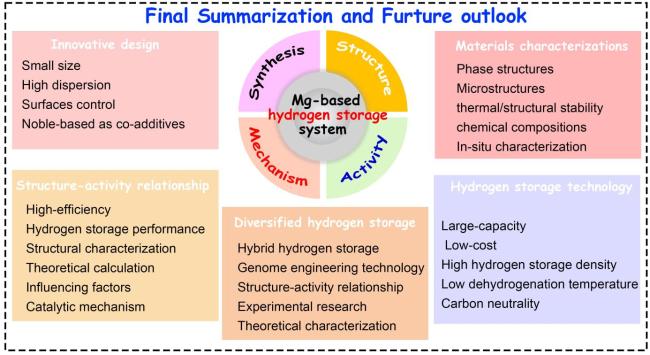


Fig. 18 Final summary and future outlook of Ti-based additives on Mg-based hydrogen storage system. |
6.3 Investigation on structure-activity relationship of hydrogen storage system
Development of efficient and stable Ti-based metal materials is the key to analyzing the microscopic reaction kinetics in hydrogenation/dehydrogenation reaction and the dynamically evolving behavior during the environment. Through the rational regulation of hydrogen storage materials on the structures to generate more active substances and increase abundant active sites is of significance for enhancing hydrogen storage performance of Ti-based materials. Combining relevant spectroscopic characterizations, the relationship between species configuration and reactive properties of hydrogen storage materials can be harvested from the atomic level. The investigation on structure-activity relationship of hydrogen storage system provides the theoretical guidance for excavating high-efficiency materials. However, developing efficient hydrogen storage materials urgently requires understanding the active source of active sites in hydrogen storage system due to the uncertainty of structure-activity relationship and complex and changeable influencing factors of hydrogen storage system. Thus, the identification of reactive sites to establish a clear relationship between atomic structure and catalytic performance is helpful for rational improvements and design of hydrogen storage materials. Illustratively, it is necessary to combine the characterization and performance testing, and seen them as an interlocking chain of evidence that collectively points to a scientific conclusion. Finally, with strict logical language and theoretical calculations to reveal the structure-effect relationship.
6.4 Construction of diversified hydrogen storage system
With the development of technology and application, solid-state hydrogen storage system plays an important position in the diversified hydrogen energy storage and transportation system in future. In particular, the hybrid hydrogen storage system is a new research direction and development of hydrogen storage materials in the future. The hybrid hydrogen storage system has the ability to develop safe and efficient composite hydrogen storage materials as premise to achieve large-scale preparation and recycling of hydrogen storage materials, such as hybrid hydrogen storage system derived from LiBH4, NaAlH4, KSiH3, NaMgH3, LiNH2-LiH and so on. Additionally, investigation on Mg-based hydrogen storage device plays an important role in the hydrogen energy industry chain [352]. However, the limitations of Mg-based hydrogen storage technology in the construction of diversified hydrogen storage systems mainly stem from its own technical characteristics and application. The introduction of Mg-based hydrogen storage technology requires the renovation of existing infrastructure or the construction of new dedicated facilities, which incurs huge initial investment costs and conversion costs. Therefore, it is still a challenge to design hydrogen storage materials for specific purposes, which should be strengthened in future.
6.5 Development strategy of hydrogen storage technology
Creating materials for solid-state hydrogen storage, characterized by dense hydrogen storage and reduced dehydrogenation temperatures, represents a crucial path in advancing large-scale hydrogen storage and transportation technologies. Advancements in extensive hydrogen storage and transport technology are crucial for attaining the “carbon neutrality” objective and fostering energy transformation, a key factor in enhancing energy security. Within this framework, investigating new compositions of Ti-based compounds offers a hopeful avenue for enhancing solid-state storage efficiency. It is significance to employ sophisticated in-situ/operando characterization methods like synchrotron X-ray diffraction, neutron scattering, and Raman spectroscopy to clarify reaction routes and corresponding mechanistic discussions. Additionally, it is crucial to thoroughly assess the expandability and financial feasibility of synthesizing Ti-based catalytic substances to enhance their industrial incorporation into commercial hydrogen storage systems.
CRediT author statement
Huanhuan Zhang: writing - original draft, writing - review & editing, formal analysis. Yanping Fan: writing - review & editing, formal analysis. Shuyan Guan: formal analysis. Wen-Gang Cui: formal analysis. Mingchang Zhang: formal analysis. Zhenglong Li: formal analysis. Yuhai Dou: formal analysis. Jiarui Yang: formal analysis. Zechao Zhuang: formal analysis. Zhenluo Yuan: formal analysis. Shiqian Zhao: formal analysis. Dingsheng Wang: visualization, formal analysis, supervision, conceptualization. Baozhong Liu: project administration, visualization, formal analysis, supervision. Hongge Pan: visualization, formal analysis, supervision, conceptualization. All authors have given approval to the final version of the manuscript.
Declaration of competing interest
The authors declare that they have no known competing financial interests or personal relationships that could have appeared to influence the work reported in this article. Dingsheng Wang is an Editorial Board Member of this journal and he was not involved in the editorial review or the decision to publish this article.